Ecomusee d'Alsace
Around seventy threatened Alsatian buildings dismantled, moved and rebuilt into a working village.
Updated 4 September 2026
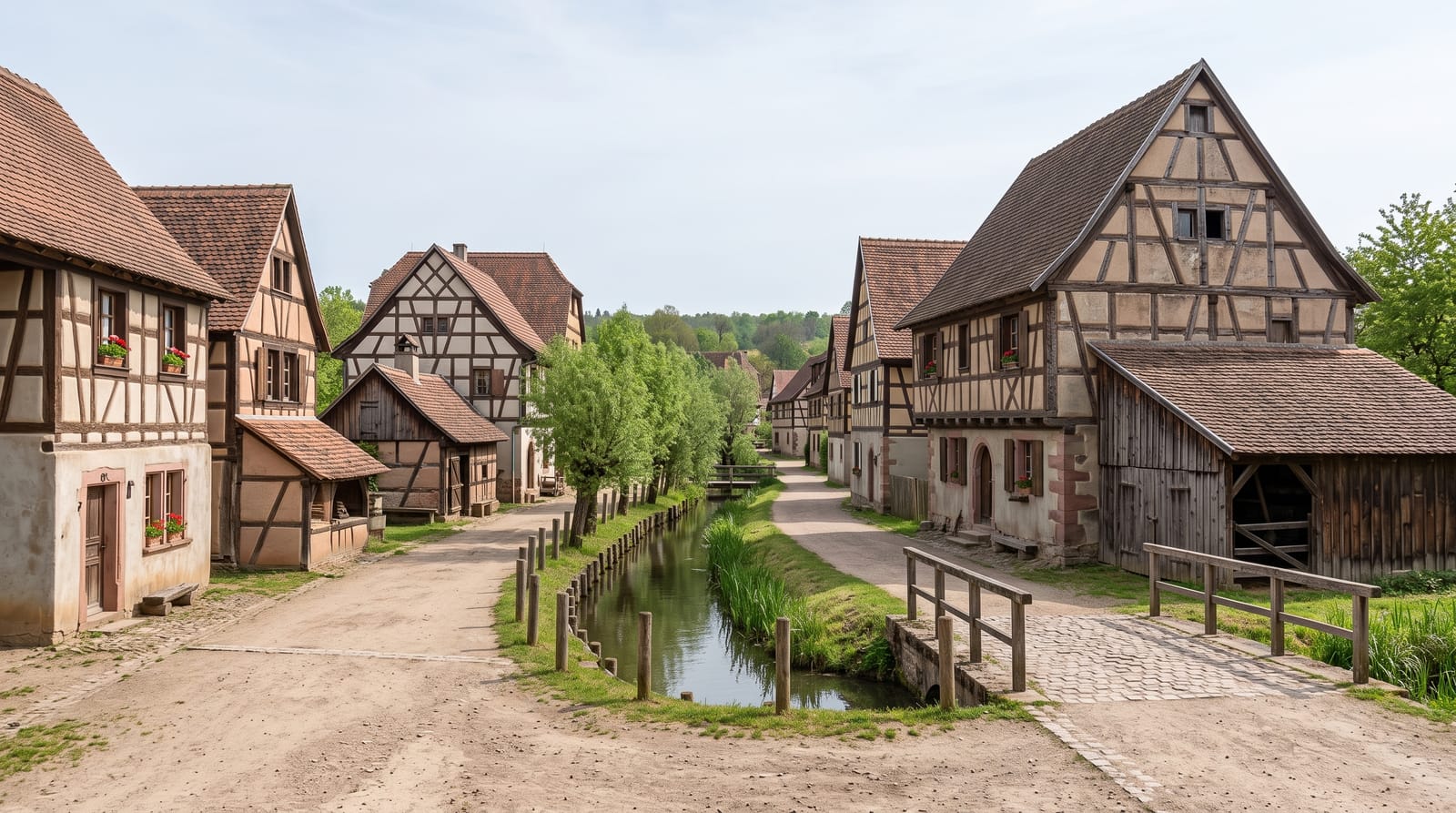
AI illustration
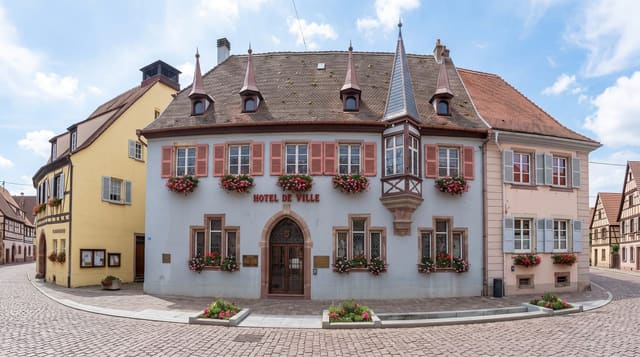
From 1980 a group began rescuing timber-framed Alsatian farmhouses due for demolition, taking them apart beam by beam and reassembling them on a site at Ungersheim; there are now around seventy buildings arranged as a village with farms, a chapel, a school, workshops and a station. It is not a static display: crops are grown, a blacksmith and potter work, bread is baked, horses and Alsatian farm breeds are kept, and storks nest on the roofs, which was part of the point since stork numbers had collapsed and the site helped their recovery. Costumed staff work the trades and seasonal festivals follow the farming year.
What to look for
- The rebuilt village - about seventy rescued timber-framed buildings.
- The working trades - smith, potter, baker and farm work in season.
- The stork colony - nests on roofs from a species recovery effort.
- The seasonal festivals - harvest, slaughter and midsummer events.
When to go
April to October for full operation; the site runs winter and Christmas seasons with reduced buildings open. Storks are present spring and summer. Weekdays outside holidays are calmest.
Good to know
It is large and involves a lot of walking on open ground with little shade. Not all buildings are open on any given day. Some activity is aimed squarely at children.
Nearby
Mulhouse lies southeast; the Alsace wine road is north.
Key facts
Source: Wikidata, item Q273653, read on 18 October 2026.
What to pack for Ecomusee d'Alsace
Chosen from what this place is for. Tap a kit for the full checklist.
- Comfortable walking shoes - Sightseeing means kilometres of pavement and cobbles daily. Find on Amazon
- A slim anti-theft daypack - Zips that close properly; keep it in front in crowds and on transit. Find on Amazon
- A refillable water bottle - Many cities have public fountains; save money and plastic. Find on Amazon
- A light layer + compact umbrella - For museum air-con and a sudden shower. Find on Amazon
Some links on this page are Amazon affiliate links - if you buy through them we may earn a small commission at no extra cost to you.
All packing kitsPlan your trip
Where to start if Ecomusee d'Alsace is going on the list.
Booking links on this page are affiliate links - if you book through them we may earn a small commission at no extra cost to you. It never changes what we write about a place.
Opening times, ticket prices and seasonal closures change - check the official source before you go: official site.