Cite de l'Automobile
The Schlumpf brothers' secret hoard of some four hundred cars, including over a hundred Bugattis.
Updated 19 October 2026
AI illustration
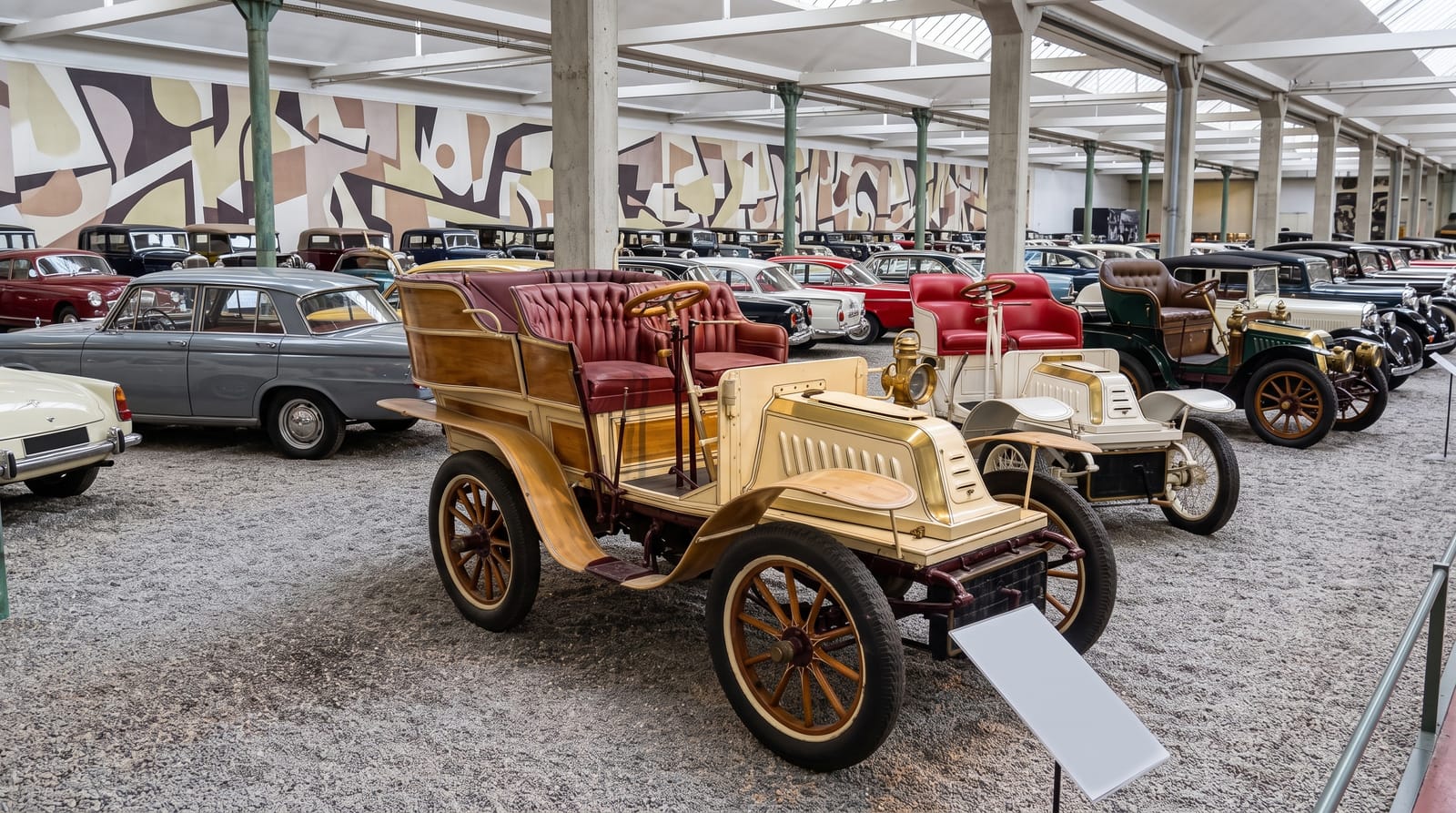
Fritz and Hans Schlumpf ran textile mills in Mulhouse and spent the profits, quietly, on cars: by the early 1970s they had assembled several hundred in a mill building, restored and displayed under rows of lamp posts copied from a Paris bridge, known to almost nobody. When the textile business collapsed in 1976 the workers occupied the factory and found the collection; the brothers left for Switzerland, and after a long legal fight the cars were classified as a national monument and opened to the public. The holdings include over a hundred Bugattis, among them two Royales, of which only six were ever built.
History
Hans and Fritz Schlumpf were Swiss citizens born in Italy, brought up in Mulhouse, their mother's home town, where in 1935 they founded a company making spun wool and grew rich after the Second World War. Fritz had wanted a Bugatti since childhood, and from the early 1950s, as prewar cars became cheap, the brothers collected obsessively: in the summer of 1960 alone they bought 40 cars, in 1962 nearly 50 Bugattis, in the spring of 1963 18 of Ettore Bugatti's own cars including the Royale Coupé Napoléon, and the same year the 30 Bugattis of the American collector John Shakespeare, so that by 1967 they owned 105 examples of the marque. In all nearly 400 vehicles, chassis and engines were gathered in Mulhouse, now the largest collection of Bugattis in the world and the core of the national automobile museum (Wikipedia, Cité de l'Automobile).
What to look for
- The Bugatti hall - over a hundred cars including two Type 41 Royales.
- The lamp post gallery - rows of cars under Paris-style street lighting.
- The early machines - steam and pioneer vehicles from the 1870s onward.
- The racing collection - grand prix cars from several eras.
When to go
Year-round; the museum is indoors and opens most days, closing some Mondays in winter. A test track and demonstration runs operate in the warmer months.
What to expect
It is very large and can be exhausting in one visit. Some cars are behind ropes at a distance. The story of how the collection was formed is as interesting as the cars and worth reading first.
Nearby
The Cite du Train is in the same city; the Ecomusee lies north.
Key facts
Source: Wikidata, item Q867719, read on 18 October 2026.
What to pack for Cite de l'Automobile
Chosen from what this place is for. Tap a kit for the full checklist.
- Comfortable walking shoes - Sightseeing means kilometres of pavement and cobbles daily. Find on Amazon
- A slim anti-theft daypack - Zips that close properly; keep it in front in crowds and on transit. Find on Amazon
- A refillable water bottle - Many cities have public fountains; save money and plastic. Find on Amazon
- A light layer + compact umbrella - For museum air-con and a sudden shower. Find on Amazon
Some links on this page are Amazon affiliate links - if you buy through them we may earn a small commission at no extra cost to you.
All packing kitsPlan your trip
Where to start if Cite de l'Automobile is going on the list.
Booking links on this page are affiliate links - if you book through them we may earn a small commission at no extra cost to you. It never changes what we write about a place.
Opening times, ticket prices and seasonal closures change - check the official source before you go: official site.