Henrykow Abbey
The Cistercian house whose thirteenth-century chronicle contains the first sentence ever written down in Polish.
Updated 22 October 2026
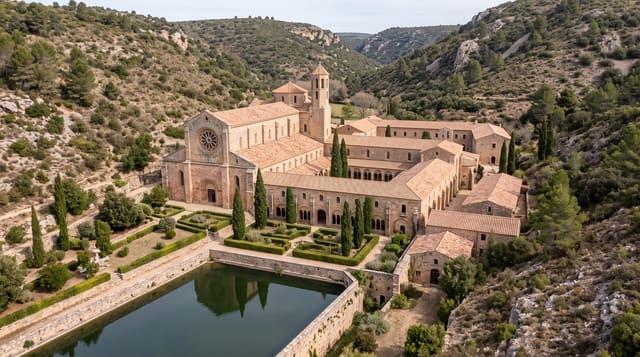
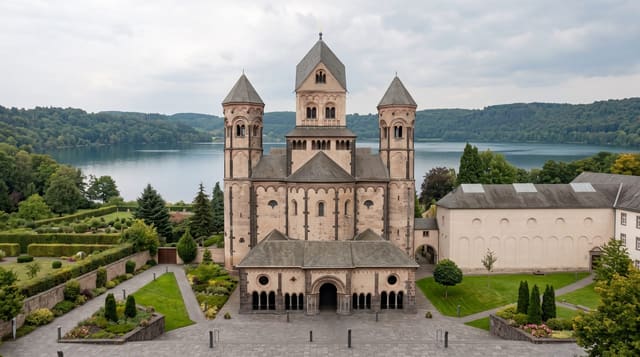
The Cistercians were granted Henrykow in 1222, the first monks arrived in 1227, and they kept a chronicle recording how the abbey acquired its lands, the Liber fundationis claustri sancte Marie Virginis in Heinrichow, and in it, written down around 1270, is a sentence in Polish rather than Latin: a peasant named Boguchwal is recorded saying to his wife, who was grinding grain at the quern, day ut ia pobrusa a ti poziwai - let me grind and you rest. The scribe wrote it in the vernacular because he was quoting. It is the oldest sentence in Polish known to be written down, and the manuscript is kept at the archdiocesan museum in Wroclaw. The abbey itself is a large baroque complex over a Gothic church, with painted vaults, stalls, a Willmann altarpiece and a monumental prelate's hall; it was dissolved in 1810, and the buildings now house a priory and a Catholic high school, with a branch of the Wroclaw seminary here until 2018. The church and parts of the buildings are open on guided visits.
History
In 1222 Duke Henry I the Bearded allowed Nicholas, a canon of Wrocław cathedral, to found a Cistercian house here as a daughter of Lubiąż, and nine monks led by Abbot Henry arrived on 28 May 1227; the foundation document followed in 1228, with a first wooden church. Abbot Peter later wrote the Book of Henryków to set the abbey's affairs in order, and it contains the first sentence written in Polish; the monks founded a daughter house at Krzeszów in 1292 and began a new Gothic church in 1304 (Wikipedia, Cistercian Monastery Complex in Henryków).
What's there
- The first Polish sentence - recorded in the abbey's chronicle around 1270.
- A Gothic church in baroque dress - painted vaults, stalls and a Willmann altarpiece.
- The prelate's hall - the monumental ceremonial room of the complex.
- A priory and school - part of the buildings still in church use.
When to go
April to October. Half a day.
Things to know
The chronicle itself is in Wroclaw, not here. Visits are guided and to a schedule, and much of the complex is closed as a seminary. The church shuts during services. The village is small.
Nearby
Ziebice is eight kilometres away; Wroclaw is north.
Key facts
Source: Wikidata, item Q1775330, read on 18 October 2026.
What to pack for Henrykow Abbey
Chosen from what this place is for. Tap a kit for the full checklist.
- Comfortable walking shoes - Sightseeing means kilometres of pavement and cobbles daily. Find on Amazon
- Modest clothing - Shoulders and knees covered - the single most common requirement. Find on Amazon
- A slim anti-theft daypack - Zips that close properly; keep it in front in crowds and on transit. Find on Amazon
- A scarf or shawl - To cover the head or shoulders on entry; women especially at mosques. Find on Amazon
Some links on this page are Amazon affiliate links - if you buy through them we may earn a small commission at no extra cost to you.
All packing kitsPlan your trip
Where to start if Henrykow Abbey is going on the list.
Booking links on this page are affiliate links - if you book through them we may earn a small commission at no extra cost to you. It never changes what we write about a place.
Opening times, ticket prices and seasonal closures change - check the official source before you go: official site.