Maria Laach Abbey
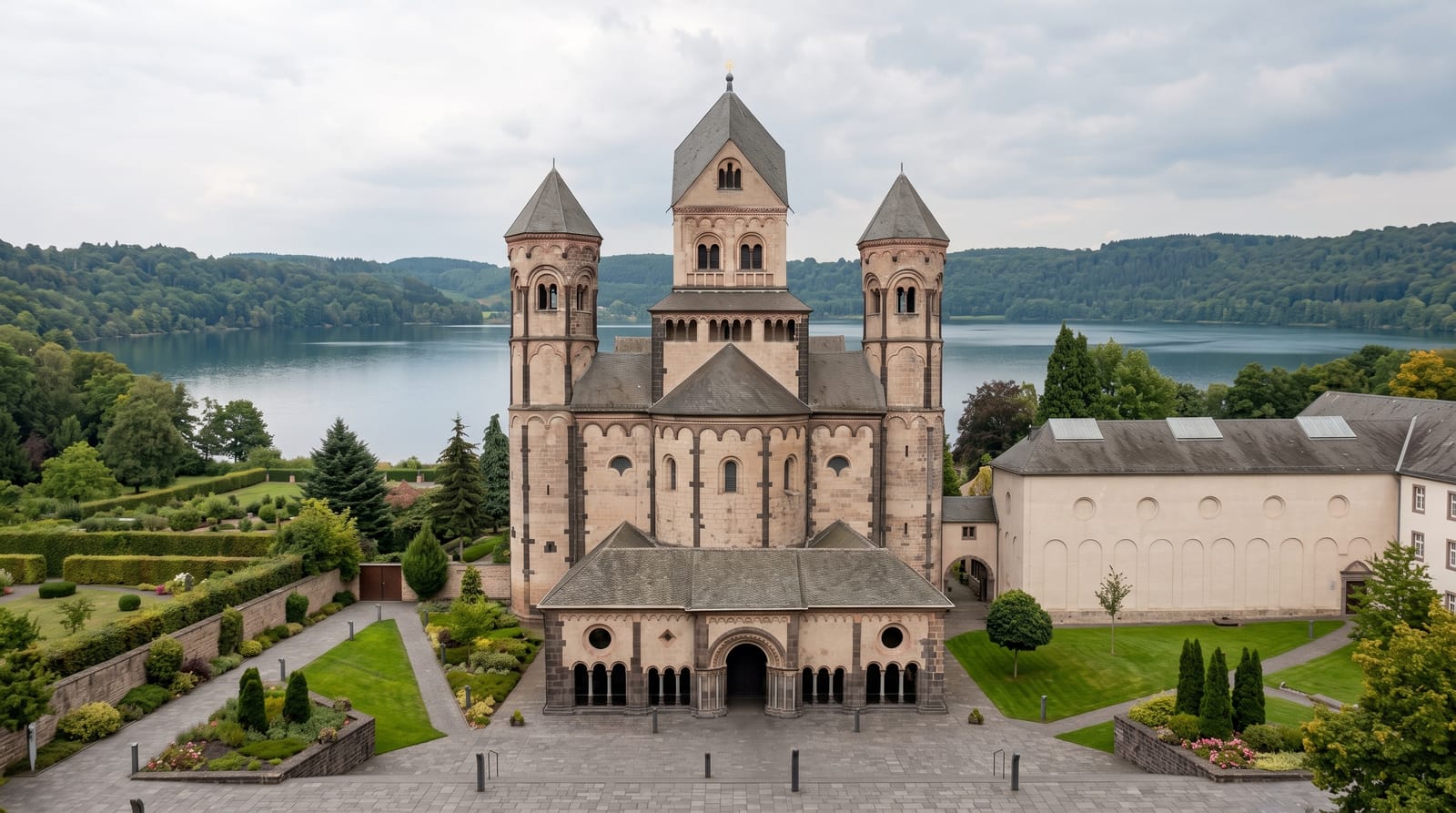
A six-towered Romanesque abbey beside a volcanic crater lake that still releases carbon dioxide into the water.
Updated 12 October 2026
AI illustration
The abbey was founded in 1093 and its church, built over the following century and a half in dark tufa and pale stone, keeps six towers and a western forecourt called a paradise, an arcaded court rare north of the Alps. Benedictines returned in 1892 and still live here, running a nursery, a bookshop, a metal workshop and a farm. The Laacher See beside it is a caldera lake formed by an eruption around thirteen thousand years ago that spread ash across central Europe; carbon dioxide still bubbles up through the water at the southeastern shore, visible as mofettes, showing the volcanic system beneath is not extinct.
Highlights
- The six towers - a Romanesque church in dark tufa with a west forecourt.
- The paradise court - an arcaded western courtyard, rare in Germany.
- The mofettes - carbon dioxide bubbling through the lake shallows.
- The caldera lake - a crater from an eruption about thirteen thousand years ago.
When to go
April to October; the church closes during services and monastic offices, which are sung through the day and open to visitors. The lake path takes about two hours.
Good to know
It is a working monastery with services interrupting access. Parking is paid. The site is busy with coach groups and day visitors on fine weekends.
Nearby
Andernach and its geyser lie east; the Eifel maars are west.
Key facts
Source: Wikidata, item Q334032, read on 18 October 2026.
What to pack for Maria Laach Abbey
Chosen from what this place is for. Tap a kit for the full checklist.
- Comfortable walking shoes - Sightseeing means kilometres of pavement and cobbles daily. Find on Amazon
- Modest clothing - Shoulders and knees covered - the single most common requirement. Find on Amazon
- Swimwear - Needed at most public thermal pools; some traditional baths are nude and single-sex. Find on Amazon
- A slim anti-theft daypack - Zips that close properly; keep it in front in crowds and on transit. Find on Amazon
Some links on this page are Amazon affiliate links - if you buy through them we may earn a small commission at no extra cost to you.
All packing kitsPlan your trip
Where to start if Maria Laach Abbey is going on the list.
Booking links on this page are affiliate links - if you book through them we may earn a small commission at no extra cost to you. It never changes what we write about a place.
Opening times, ticket prices and seasonal closures change - check the official source before you go: official site.