Gniezno Cathedral
The brick cathedral of Poland's first archbishopric, keeping a pair of bronze doors cast around 1175 with eighteen carved scenes.
Updated 22 October 2026
Gniezno was the seat of the first Polish archbishopric, founded in the year 1000, and the Gothic brick cathedral that stands there now covers the remains of the earlier churches beneath it. Inside the south porch hang the Gniezno Doors, two bronze leaves cast around 1175 and divided into eighteen relief panels telling the life of Saint Adalbert, whose remains lie under a silver shrine carried on columns in the nave. The doors are the finest Romanesque bronze work in the country; the left leaf was cast in one piece and the right assembled from 24 separately cast parts. Below the floor, a lit underground route runs through the foundations of the churches that came before.
History
An oratory stood here by the end of the ninth century, and Duke Mieszko I built a church on a cruciform plan in the late tenth; Duchess Dąbrówka was buried here in 977. In March 1000 Emperor Otto III came to pray at the tomb of Saint Adalbert and the Archdiocese of Gniezno was created, and in 1025 Bolesław the Brave was crowned here as the first king of Poland; the church was rebuilt in Romanesque style and consecrated in 1064, the bronze doors were made in 1175, and after the church was ruined in 1331 a Gothic cathedral was begun on the same site ten years later (Wikipedia, Gniezno Cathedral).
What to look for
- The bronze doors - eighteen Romanesque relief panels cast around 1175 in the south porch.
- The silver shrine - the seventeenth century reliquary of Saint Adalbert raised on angels in the nave.
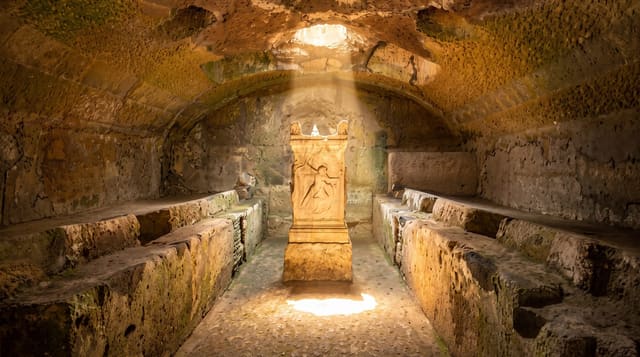
- The underground route - foundations and fragments of the earlier churches under the floor.
- The tower climb - a stair up to the roofs of a town that once crowned kings.
When to go
Weekday mornings outside service times are best, since the cathedral is a working church and visits stop during Mass. April to October keeps the crypt and tower open on longer hours. The doors are lit but the porch is dim, so a bright day helps. Early May brings pilgrimages and processions and a much fuller building.
Practical notes
Gniezno is a small provincial town and there is not a great deal else to fill a day. The cathedral interior is austere and largely rebuilt after fire and wartime damage, so the doors and the shrine do most of the work. Labelling is thin and often Polish only. The underground route is short and cool, and low in places.
Nearby
The reconstructed Iron Age lake settlement at Biskupin and the island church at Lednica lie on the same route.
Key facts
Source: Wikidata, item Q1236543, read on 18 October 2026.
What to pack for Gniezno Cathedral
Chosen from what this place is for. Tap a kit for the full checklist.
- Head torch + spare batteries - Hands-free light is essential; caves are truly dark. Find on Amazon
- Comfortable walking shoes - Sightseeing means kilometres of pavement and cobbles daily. Find on Amazon
- Modest clothing - Shoulders and knees covered - the single most common requirement. Find on Amazon
- Grippy closed shoes - Cave floors are wet, muddy and slick with formations. Find on Amazon
Some links on this page are Amazon affiliate links - if you buy through them we may earn a small commission at no extra cost to you.
All packing kitsPlan your trip
Where to start if Gniezno Cathedral is going on the list.
Booking links on this page are affiliate links - if you book through them we may earn a small commission at no extra cost to you. It never changes what we write about a place.
Opening times, ticket prices and seasonal closures change - check the official source before you go: official site.