The Sacred Valley of the Incas
The Incas' fertile heartland - a green valley of the Urubamba river dotted with dramatic ruins, terraced fortresses and colourful markets between Cusco and Machu Picchu.
Updated 21 October 2026
AI illustration
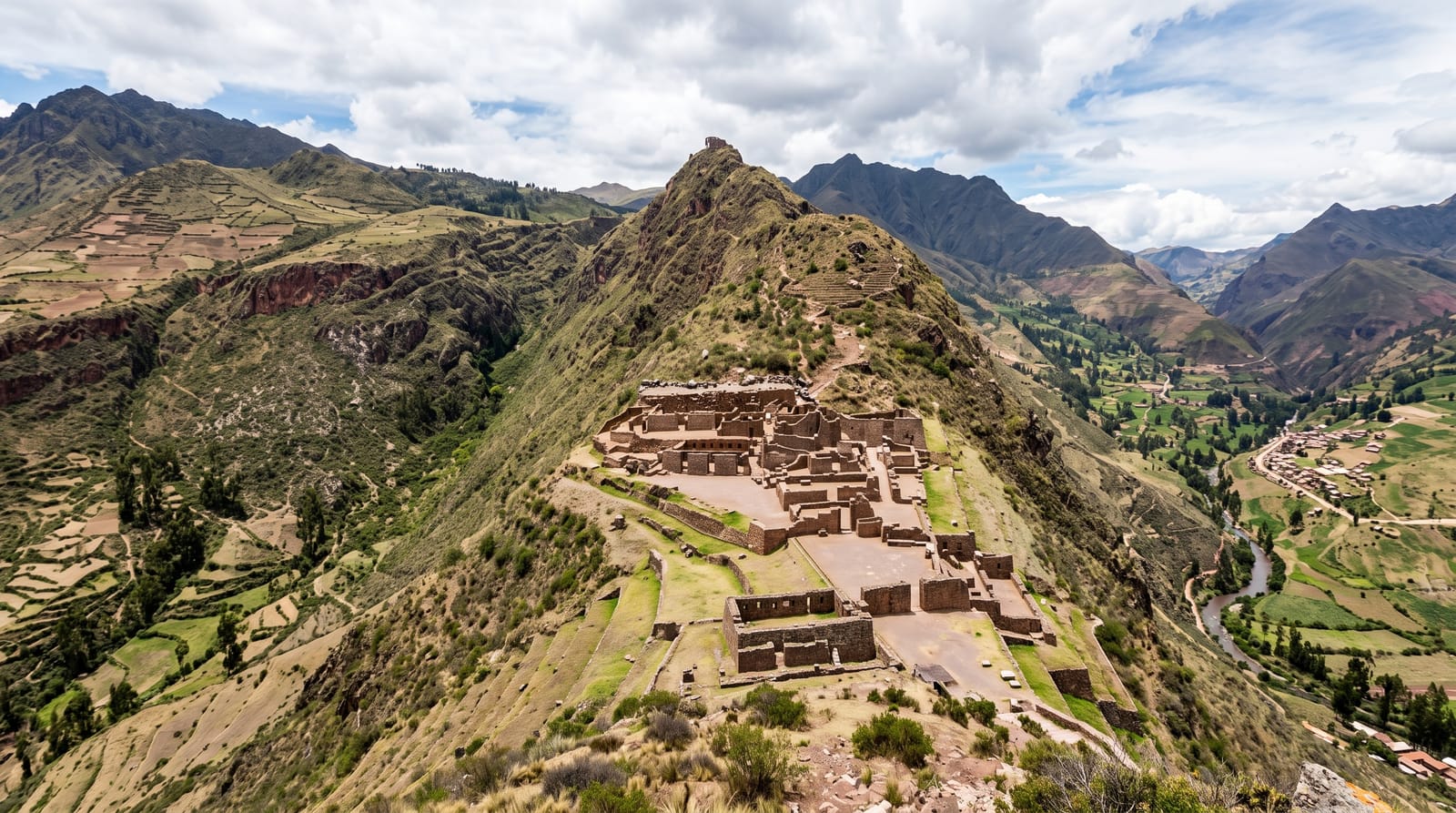
The Sacred Valley of the Incas, cradling the Urubamba river between Cusco and Machu Picchu, was the fertile heartland of the empire, and remains a landscape of dramatic Inca ruins, terraced hillsides, traditional villages and colourful markets. Lower and warmer than Cusco, it makes an ideal place to acclimatise, with the fortress-temple of Ollantaytambo, the terraces of Pisac and the salt pans of Maras among its highlights.
History
The Chanapata people farmed the valley from around 800 BCE and the Qotacalla from 500 to 900 CE, and between 1000 and 1400 the Inca gained control of it, valuing its lower, warmer floor for growing maize for chicha. In the 1400s it became a land of royal estates; the estate of Yawar Waqaq, around 1380, lay at Paullu and Lamay, and terraces called andenes still climb its hillsides (Wikipedia, Sacred Valley).
Highlights
- Ollantaytambo - the great terraced fortress-temple and living Inca town.
- Pisac - the hilltop ruins and the famous artisan market.
- The Maras salt pans - the thousands of terraced salt pools.
- Moray - the concentric agricultural terraces of the Incas.
When to go
May to September, the dry season, for the best weather; the valley is warmer and lower than Cusco, making it a good place to acclimatise. Market days at Pisac and Chinchero are especially colourful.
Things to know
The sites are spread along the valley, so a tour, hired driver or the local colectivo minibuses are needed to link them, and a combined tourist ticket covers most. It is often done as a rushed day tour, but staying overnight lets you acclimatise gently and see the ruins without the crowds. Markets can be touristy.
Nearby
Ollantaytambo is the train gateway to Machu Picchu; Cusco is up the valley.
What to pack for The Sacred Valley of the Incas
Chosen from what this place is for. Tap a kit for the full checklist.
- Layers for big temperature swings - Warm sun by day, near-freezing at night, even near the equator. Find on Amazon
- Comfortable walking shoes - Sightseeing means kilometres of pavement and cobbles daily. Find on Amazon
- Modest clothing - Shoulders and knees covered - the single most common requirement. Find on Amazon
- Shelter suited to the place - Tent, tarp or hut booking - match it to the terrain and rules. Find on Amazon
Some links on this page are Amazon affiliate links - if you buy through them we may earn a small commission at no extra cost to you.
All packing kitsPlan your trip
Where to start if The Sacred Valley of the Incas is going on the list.
Booking links on this page are affiliate links - if you book through them we may earn a small commission at no extra cost to you. It never changes what we write about a place.
Opening times, ticket prices and seasonal closures change - check the official source before you go: official site.