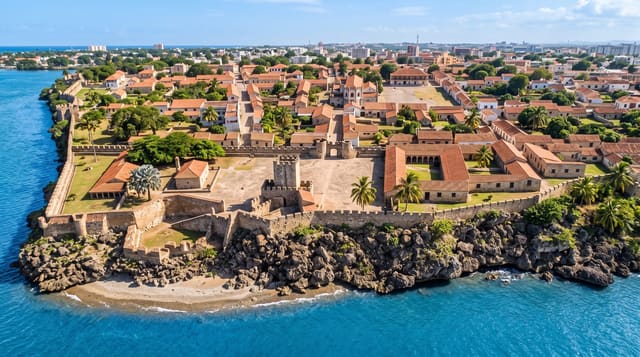
Kuélap
A Chachapoya citadel on a limestone ridge, ringed by walls up to twenty metres high and built long before the Inca arrived.
Updated 21 October 2026
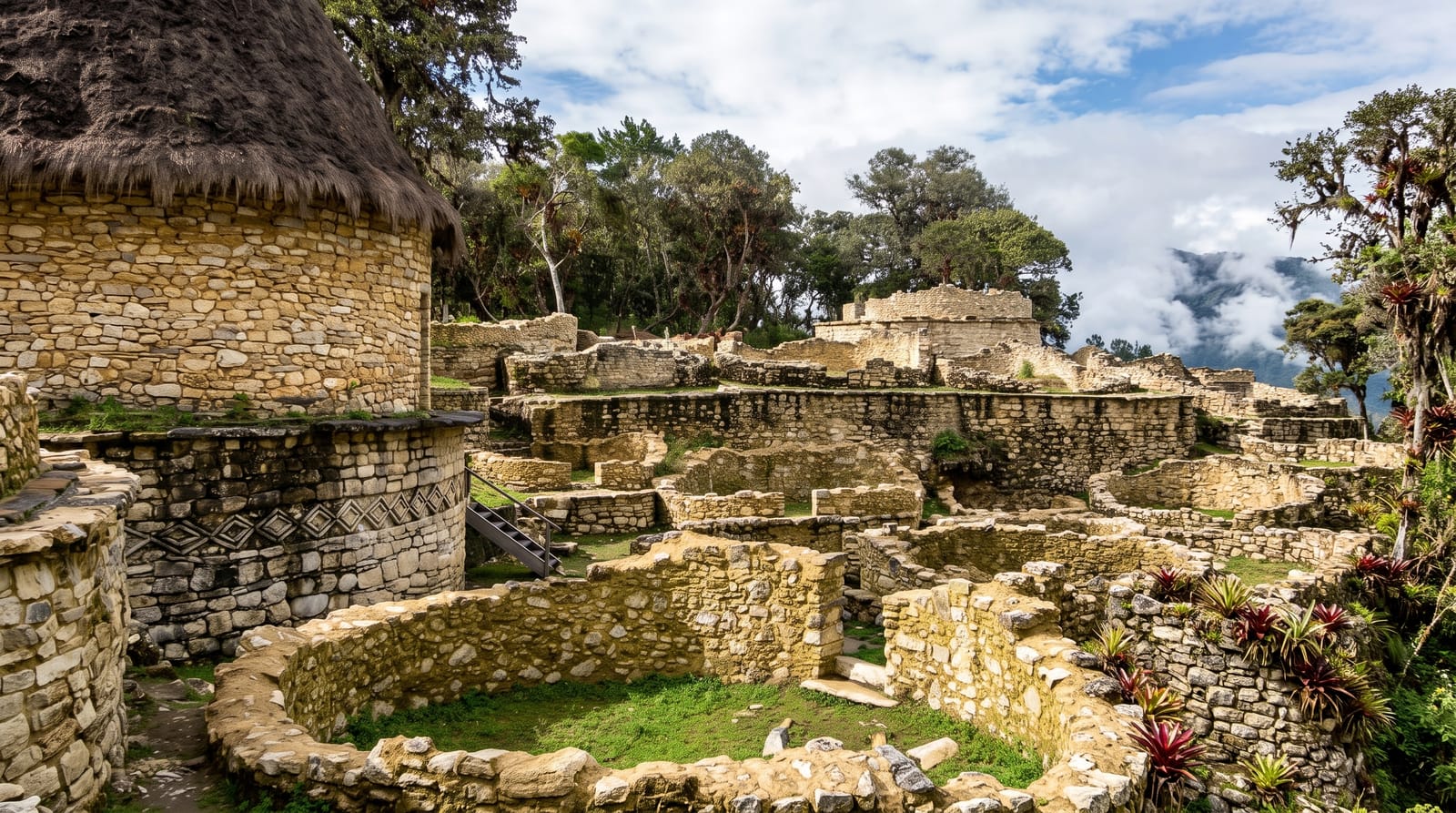
AI illustration
Kuélap stands on a limestone ridge above the Utcubamba valley at around 3,000 metres, and it was built by the Chachapoya, the cloud forest people, from roughly the sixth century onwards, long before the Inca expanded north. The outer wall reaches close to twenty metres in places and encloses hundreds of circular stone houses, many decorated with zigzag and rhomboid friezes. Access is deliberately awkward: three narrow entrance passages that funnel inwards and would admit people only in single file. The setting does much of the work, with cloud drifting through the bromeliads and orchids that grow directly out of the ruins. It has long been described as the northern alternative to Machu Picchu, which sets the wrong expectation; it is older, emptier and considerably less understood.
History
People lived on the ridge from the 5th century AD, but most structures were built between 900 and 1100, for a city of perhaps 3000 people, abandoned in 1570. The judge Juan Crisóstomo Nieto of Chachapoyas came upon it in 1843, Antonio Raimondi surveyed it in 1870 and Charles Wiener visited in 1881; after years of instability a section of the outer wall collapsed in April 2022 (Wikipedia, Kuélap).
The main sights
- The outer walls - massive limestone ramparts, in places close to twenty metres high.
- The narrow entrances - funnel passages that narrow to single-file width.
- Circular houses with friezes - hundreds of round stone dwellings, some with zigzag decoration.
- The cloud forest setting - bromeliads and orchids growing out of the stonework.
When to go
The drier months from May to September make the roads and the ridge more reliable. Cloud is part of the experience year-round and often rolls in during the afternoon, so aim to be up early.
Good to know
Access has been genuinely unreliable. A structural collapse of part of the walls and subsequent conservation work led to closures, and the cable car built to shorten the approach has also had extended stoppages, so the current situation must be checked rather than assumed. Getting to Chachapoyas at all is a long journey from anywhere. Altitude is moderate but not trivial.
Nearby
Gocta waterfall and the sarcophagi of Karajía are both in the Chachapoyas region.
Key facts
Source: Wikidata, item Q1361820, read on 18 October 2026.
What to pack for Kuélap
Chosen from what this place is for. Tap a kit for the full checklist.
- Layers for big temperature swings - Warm sun by day, near-freezing at night, even near the equator. Find on Amazon
- Comfortable walking shoes - Sightseeing means kilometres of pavement and cobbles daily. Find on Amazon
- Extra-strong sun protection - Thin air means fierce UV; hat, sunglasses and high-SPF sunscreen. Find on Amazon
- A slim anti-theft daypack - Zips that close properly; keep it in front in crowds and on transit. Find on Amazon
Some links on this page are Amazon affiliate links - if you buy through them we may earn a small commission at no extra cost to you.
All packing kitsPlan your trip
Where to start if Kuélap is going on the list.
Booking links on this page are affiliate links - if you book through them we may earn a small commission at no extra cost to you. It never changes what we write about a place.
Opening times, ticket prices and seasonal closures change - check the official source before you go: official site.