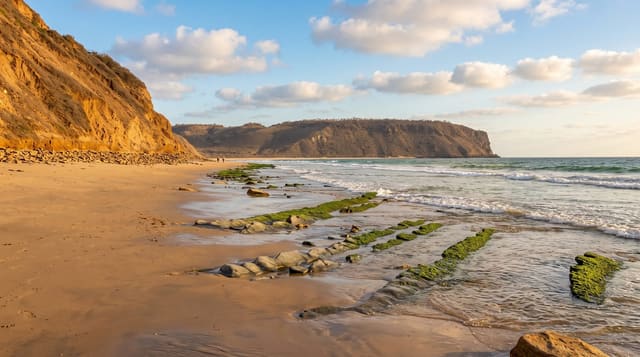
Altos de Campana
Panama's first national park, declared in 1966 on volcanic hills above the Pacific, with one of the golden frog's last wild habitats.
Updated 21 October 2026
Altos de Campana was declared in 1966, the first national park in Panama, protecting a block of volcanic hills rising to a thousand metres above the Pacific coast an hour from the capital. The rock is basalt and the forest changes fast with altitude, from dry Pacific scrub at the bottom to cloud forest on the ridges. It was one of the last places the Panamanian golden frog lived in the wild before the chytrid fungus swept through, and it remains an important site for amphibian research. Trails climb to viewpoints looking down over the Gulf of Panama, and on a clear day the skyline of the capital is visible.
History
The park was established on 28 June 1966 by Executive Decree No. 153, chiefly to protect watersheds supplying the Panama Canal; it began as a biological reserve, and its boundaries were enlarged under Decree No. 35 in 1977 (Wikipedia, Altos de Campana National Park).
Highlights
- The viewpoints - over the Gulf of Panama and, on clear days, the capital.
- The forest gradient - dry scrub to cloud forest within a few hundred metres.
- Amphibian habitat - among the last wild golden frog sites.
- The volcanic rock - basalt cliffs and outcrops along the ridges.
When to go
December to April is the dry season and the clearest for views. Mornings are best before cloud fills the ridges. Trails are short but steep. The park is quiet almost all the time.
What to expect
Facilities are minimal and the ranger station is not always staffed. Trails are short, steep and poorly marked in places. The park is small and sees very few visitors, which is pleasant but means little infrastructure. The access road is rough after the highway turn.
Nearby
El Valle de Antón is an hour west; Panama City is an hour east.
Key facts
Source: Wikidata, item Q9055955, read on 18 October 2026.
What to pack for Altos de Campana
Chosen from what this place is for. Tap a kit for the full checklist.
- Broken-in walking shoes or boots - Grip and ankle support matter more than looks; never hike in brand-new boots. Find on Amazon
- Binoculars - The single best wildlife tool - even a compact pair transforms a sighting. Find on Amazon
- Layers + a waterproof shell - Mountain weather turns fast; a packable rain jacket saves the day. Find on Amazon
- A zoom camera or long lens - Animals rarely come close; reach beats megapixels. Find on Amazon
Some links on this page are Amazon affiliate links - if you buy through them we may earn a small commission at no extra cost to you.
All packing kitsPlan your trip
Where to start if Altos de Campana is going on the list.
Booking links on this page are affiliate links - if you book through them we may earn a small commission at no extra cost to you. It never changes what we write about a place.
Opening times, ticket prices and seasonal closures change - check the official source before you go: official site.