Sur
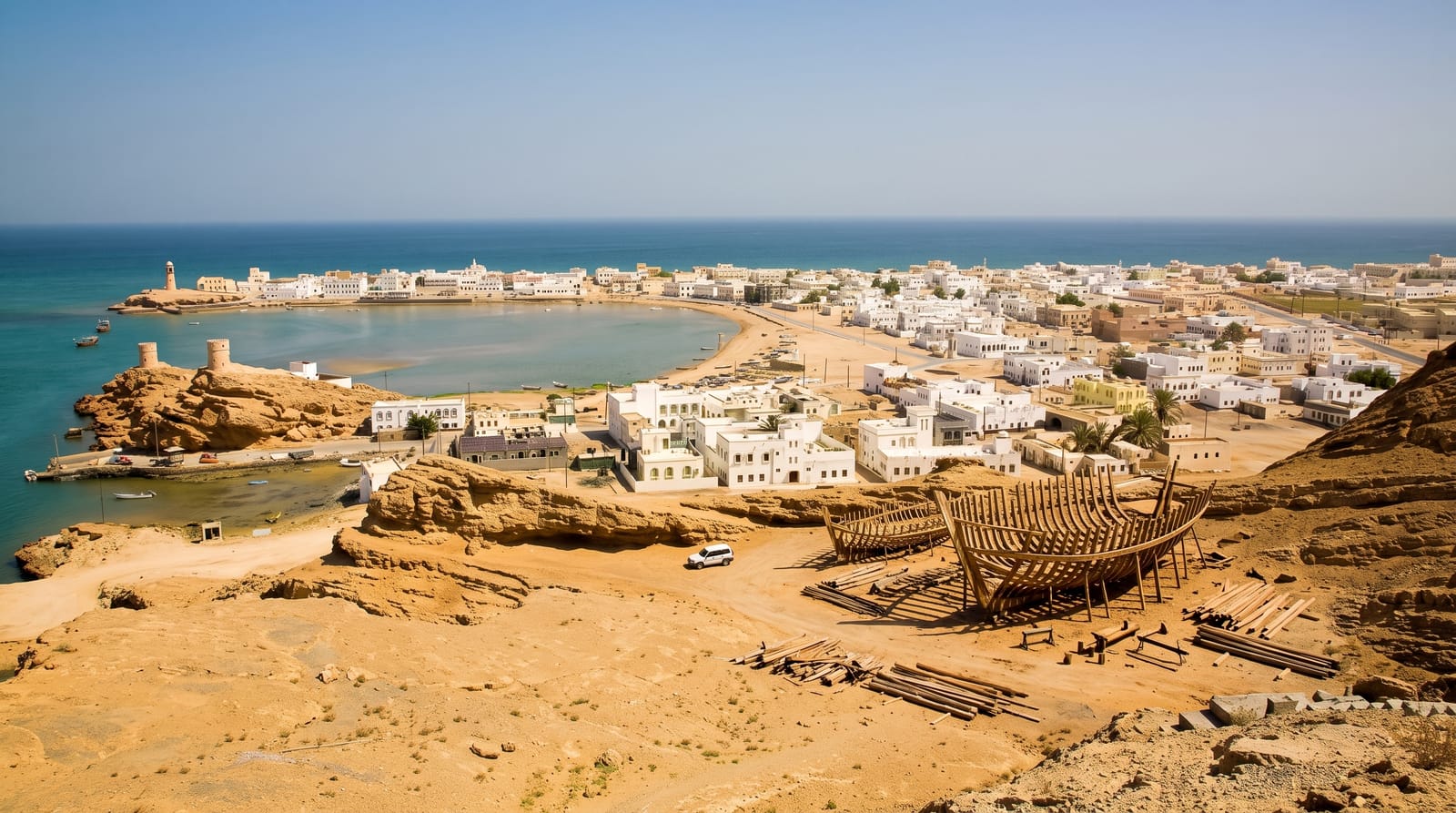
A coastal town where wooden dhows are still built by hand in open yards, using methods that predate the country's oil era.
Updated 1 September 2026
AI illustration
Sur was one of the great dhow ports of the Indian Ocean, trading to East Africa and India, and it is one of the few places where the boats are still built the traditional way. In open yards along the lagoon, shipwrights shape timber by eye rather than from drawings, planking hulls that will be finished with rope, nails and caulking much as they were generations ago. Visitors can generally walk in and watch, and the smell of sawn wood and varnish carries across the yard. A small maritime museum sets out the town's trading history, and an old lighthouse stands at Ayjah across the lagoon, reached by a footbridge, with a view back over the harbour and the white houses along the water.
The main sights
- The dhow yards - hulls under construction in open-air workshops by the lagoon.
- Ayjah - the old quarter across the footbridge, with the lighthouse and watchtowers.
- The maritime museum - Sur's trading history and dhow types.
- The lagoon and corniche - moored dhows and the walk around the water.
When to go
October to April for bearable temperatures. Work in the yards happens in the cooler morning hours, so arrive early to see anything actually being built. Fridays are quiet.
Things to know
This is a working boatyard, not a museum: what you see depends on whether a hull is under construction that week, and sometimes there is little activity. The craft is in decline, with fewer yards each decade, so it may not last. Ask before photographing people at work.
Nearby
Ras Al Jinz turtle reserve is 45 minutes east; Wadi Shab lies west on the coast road.
What to pack for Sur
Chosen from what this place is for. Tap a kit for the full checklist.
- Reef-safe sunscreen - High SPF that will not bleach the coral you are swimming over. Find on Amazon
- Binoculars - The single best wildlife tool - even a compact pair transforms a sighting. Find on Amazon
- Comfortable walking shoes - Sightseeing means kilometres of pavement and cobbles daily. Find on Amazon
- Quick-dry towel - A microfibre towel packs small and dries in minutes. Find on Amazon
Some links on this page are Amazon affiliate links - if you buy through them we may earn a small commission at no extra cost to you.
All packing kitsPlan your trip
Where to start if Sur is going on the list.
Booking links on this page are affiliate links - if you book through them we may earn a small commission at no extra cost to you. It never changes what we write about a place.
Opening times, ticket prices and seasonal closures change - check the official source before you go: official site.


