Birkat al Mouz
A half-ruined mud village at the foot of Jebel Akhdar, with a falaj running through banana and date plantations.
Updated 1 September 2026
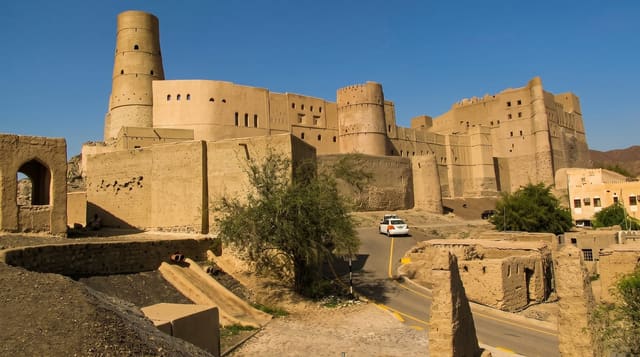
Birkat al Mouz, the pool of bananas, sits where the Jebel Akhdar road leaves the plain, and the old quarter of Harat al Bilad is a mud-brick village in an advanced state of collapse, with walls, staircases and rooms open to the sky and a few restored houses among them. Below it runs Falaj al Khatmeen, one of the five aflaj inscribed as World Heritage, still carrying water through the plantations of banana, date, lime and mango that give the village its name. A path follows the channel through the gardens, shaded and cool, which is the best part of a visit. Bait al Redidah, a restored fort house, stands at the edge of the old quarter.
What you'll find
- The collapsing mud quarter - Harat al Bilad open to the sky.
- Falaj al Khatmeen - the World Heritage water channel through the gardens.
- Banana and date plantations - the shaded gardens the falaj feeds.
- Bait al Redidah - the restored fort house at the village edge.
When to go
October to March; the interior is severely hot in summer. Morning and late afternoon are best. The garden walk is shaded and cooler than the ruins.
Good to know
The old quarter is genuinely unstable and walking through it carries risk. There is no interpretation on site. The gardens are private property and paths run between working plots. Facilities are limited to the village.
Nearby
Jebel Akhdar rises above; Nizwa lies west.
Key facts
Source: Wikidata, item Q4916379, read on 18 October 2026.
What to pack for Birkat al Mouz
Chosen from what this place is for. Tap a kit for the full checklist.
- Comfortable walking shoes - Sightseeing means kilometres of pavement and cobbles daily. Find on Amazon
- A slim anti-theft daypack - Zips that close properly; keep it in front in crowds and on transit. Find on Amazon
- A refillable water bottle - Many cities have public fountains; save money and plastic. Find on Amazon
- A light layer + compact umbrella - For museum air-con and a sudden shower. Find on Amazon
Some links on this page are Amazon affiliate links - if you buy through them we may earn a small commission at no extra cost to you.
All packing kitsPlan your trip
Where to start if Birkat al Mouz is going on the list.
Booking links on this page are affiliate links - if you book through them we may earn a small commission at no extra cost to you. It never changes what we write about a place.
Opening times, ticket prices and seasonal closures change - check the official source before you go: official site.