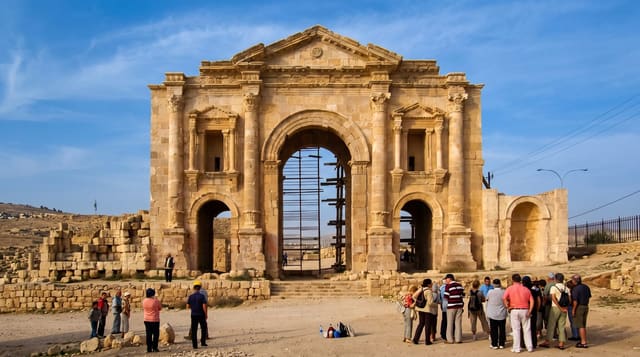
Al Baleed Archaeological Park
The ruins of the medieval frankincense port of Zafar on Salalah's shore, with a substantial museum beside them.
Updated 1 September 2026
UNESCO World Heritage
Al Baleed is the site of Zafar, the port through which Dhofari frankincense left for India, China and the Mediterranean from around the eighth century until its decline after the sixteenth, and it is one of the four components of the Land of Frankincense World Heritage property. The ruins cover a large area between a lagoon and the sea, with the great mosque, the citadel, houses, walls and the harbour channel exposed, walked on paths or seen from an electric shuttle and small boats on the creek. The Museum of the Frankincense Land beside it covers the maritime history of Oman and the incense trade in some detail, and is the better museum in the country.
The main sights
- The great mosque - the columned prayer hall foundations.
- The citadel and walls - the fortified core of the port.
- The lagoon - the water channel and the birds on it.
- The Frankincense Land Museum - the maritime and incense galleries.
When to go
October to April; summer is hot, though the khareef monsoon from late June to early September brings cloud, drizzle and green to Dhofar and is the region's peak domestic season. Late afternoon is cooler on the open site.
Good to know
The ruins are at foundation level and the site is large and exposed with limited shade. The shuttle costs extra. The museum is strong but the site interpretation is thinner. Salalah traffic around the coast road is heavy in khareef.
Nearby
Salalah city is west; Sumhuram and Taqah lie east.
Key facts
Source: Wikidata, item Q12184607, read on 18 October 2026.
What to pack for Al Baleed Archaeological Park
Chosen from what this place is for. Tap a kit for the full checklist.
- Reef-safe sunscreen - High SPF that will not bleach the coral you are swimming over. Find on Amazon
- Strong insect repellent - DEET or picaridin; the jungle is where bites and disease risk are highest. Find on Amazon
- Comfortable walking shoes - Sightseeing means kilometres of pavement and cobbles daily. Find on Amazon
- Modest clothing - Shoulders and knees covered - the single most common requirement. Find on Amazon
Some links on this page are Amazon affiliate links - if you buy through them we may earn a small commission at no extra cost to you.
All packing kitsPlan your trip
Where to start if Al Baleed Archaeological Park is going on the list.
Booking links on this page are affiliate links - if you book through them we may earn a small commission at no extra cost to you. It never changes what we write about a place.
Opening times, ticket prices and seasonal closures change - check the official source before you go: official site.