Roldal Stave Church
A mountain stave church whose crucifix was believed to sweat healing moisture, drawing pilgrims for centuries after the Reformation.
Updated 21 October 2026
AI illustration
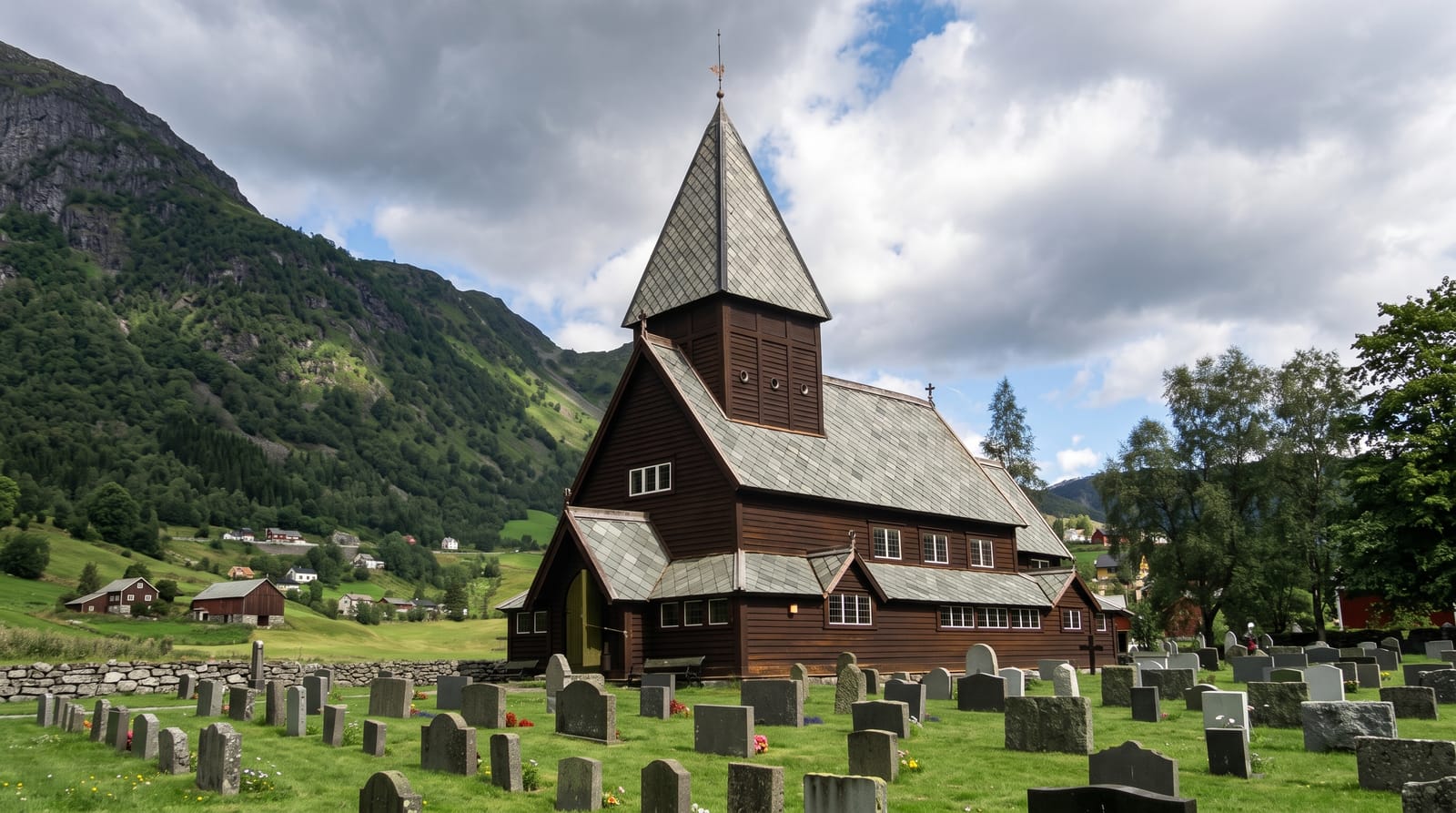
Roldal stave church was built around 1250 in a high valley on the route between eastern and western Norway, and its fame rests on a crucifix hanging inside: tradition held that on midsummer night the figure produced moisture, and that touching it cured illness. Pilgrims came in numbers, and the practice continued long after the Reformation banned such devotion, in defiance of church and state authority, into the nineteenth century. The building itself is small and dark, with a low ceiling and painted decoration from the seventeenth century; its medieval altar frontal and wooden figures of saints are now in the Bergen Museum. The valley around it is high and enclosed, on a road that until modern tunnelling was closed for much of the winter.
History
The church is generally thought to have been built between 1200 and 1250, and its soapstone font and crucifix date from about the same time; the Bergen Museum holds its medieval altar frontal and wooden figures of St Olaf and the Virgin Mary from about 1250. The nave was extended to the west in 1844, and in 1913-1918 a restoration led by Jens Zetlitz Monrad Kielland, with colours by the painter Domenico Erdmann, brought back the Renaissance interior (Wikipedia, Røldal Stave Church).
The main sights
- The crucifix - the medieval figure at the centre of the pilgrimage story.
- The small dark interior - low ceilings, painted walls and medieval fittings.
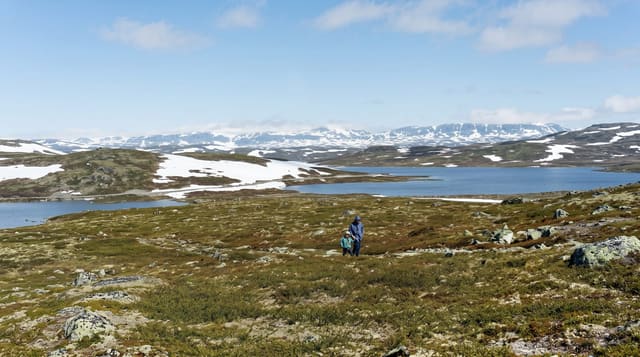
- The mountain valley - an enclosed high setting on a historic crossing route.
- The pilgrimage history - devotion that continued for centuries after the Reformation.
When to go
June to September, when the church is open and the mountain roads are clear; the E134 stays open in winter but conditions vary. Midsummer carries the historical association, though nothing is staged.
Good to know
The church is small and the visit brief, with seasonal opening and short hours. Roldal village is little more than a road stop. The healing story is folklore, and the church presents it as such.
Nearby
Odda and the Hardangerfjord lie west; the Haukeli mountain road runs east toward Telemark.
Key facts
Source: Wikidata, item Q2038116, read on 18 October 2026.
What to pack for Roldal Stave Church
Chosen from what this place is for. Tap a kit for the full checklist.
- Comfortable walking shoes - Sightseeing means kilometres of pavement and cobbles daily. Find on Amazon
- Modest clothing - Shoulders and knees covered - the single most common requirement. Find on Amazon
- A slim anti-theft daypack - Zips that close properly; keep it in front in crowds and on transit. Find on Amazon
- A scarf or shawl - To cover the head or shoulders on entry; women especially at mosques. Find on Amazon
Some links on this page are Amazon affiliate links - if you buy through them we may earn a small commission at no extra cost to you.
All packing kitsPlan your trip
Where to start if Roldal Stave Church is going on the list.
Booking links on this page are affiliate links - if you book through them we may earn a small commission at no extra cost to you. It never changes what we write about a place.
Opening times, ticket prices and seasonal closures change - check the official source before you go: official site.