Midgard Viking Centre
A museum and reconstructed chieftain's hall beside the Borre burial mounds, the largest such grave field in Scandinavia.
Updated 12 October 2026

AI illustration
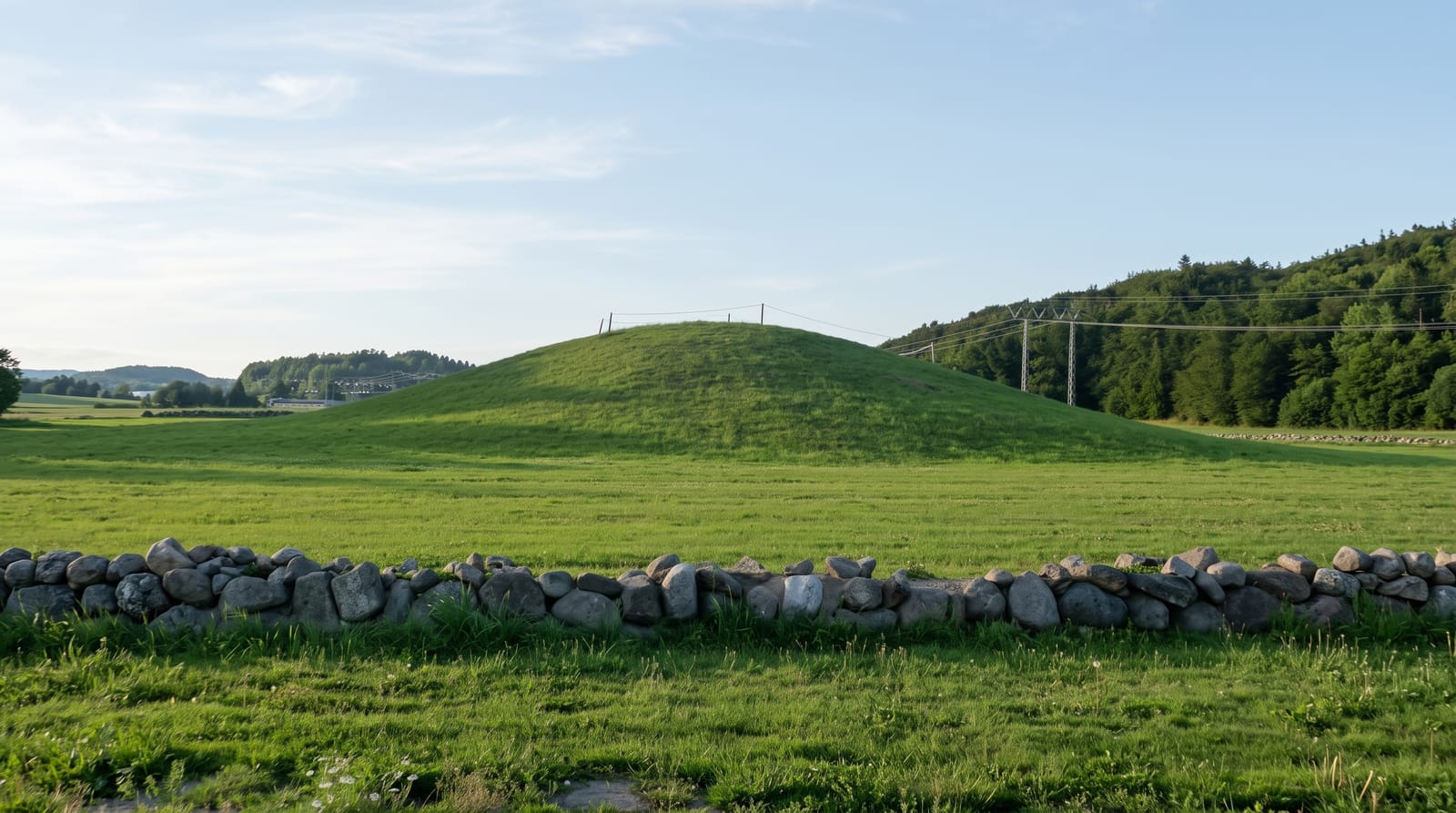
Borre holds the largest concentration of monumental burial mounds in Scandinavia: seven large mounds and around thirty smaller ones in a park by the shore, built between the sixth and tenth centuries and associated with the Ynglings, the dynasty from which later Norwegian kings claimed descent. A ship burial found here in 1852 gave its name to the Borre style of Viking ornament. The Midgard Historical Centre beside the park interprets the site, and in 2013 a full-size reconstruction of a chieftain's hall, the Gildehall, was built based on postholes found nearby, timber-framed with carved decoration, used for feasts and events. The mound park itself is free, open and used as a public park.
The main sights
- The mound field - seven large and around thirty smaller burial mounds.
- The Gildehall - a reconstructed chieftain's hall with carved decoration.
- The museum - interpretation of the mounds and the Borre ornament style.
- The shore park - open coastal parkland around the monuments.
When to go
May to September for the fullest opening, events and hall access; the mound park is free and open year-round, and autumn light on the grass mounds is good. Winter closes most of the indoor programme.
Things to know
The Gildehall is a modern reconstruction based on limited evidence, and it is used for private events, which closes it to visitors on some days. The mounds are grass hills, impressive in scale but with nothing to enter. Museum hours are seasonal.
Nearby
Horten and the Moss ferry are close; the Oseberg mound and Tonsberg lie south.
Key facts
Source: Wikidata, item Q13451157, read on 18 October 2026.
What to pack for Midgard Viking Centre
Chosen from what this place is for. Tap a kit for the full checklist.
- Comfortable walking shoes - Sightseeing means kilometres of pavement and cobbles daily. Find on Amazon
- A slim anti-theft daypack - Zips that close properly; keep it in front in crowds and on transit. Find on Amazon
- A refillable water bottle - Many cities have public fountains; save money and plastic. Find on Amazon
- A light layer + compact umbrella - For museum air-con and a sudden shower. Find on Amazon
Some links on this page are Amazon affiliate links - if you buy through them we may earn a small commission at no extra cost to you.
All packing kitsPlan your trip
Where to start if Midgard Viking Centre is going on the list.
Booking links on this page are affiliate links - if you book through them we may earn a small commission at no extra cost to you. It never changes what we write about a place.
Opening times, ticket prices and seasonal closures change - check the official source before you go: official site.