Lovatnet
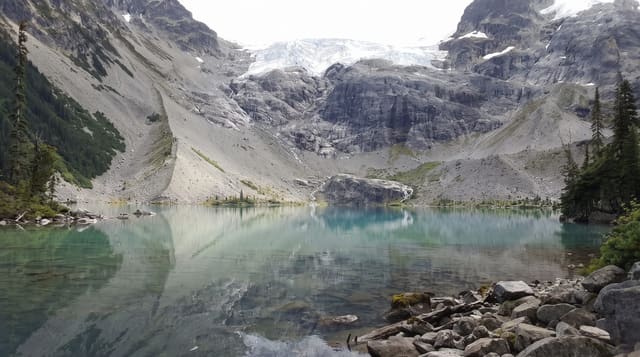
A lake of intense turquoise held between vertical walls near Loen, coloured by rock flour from the glaciers above.
Updated 21 October 2026

AI illustration
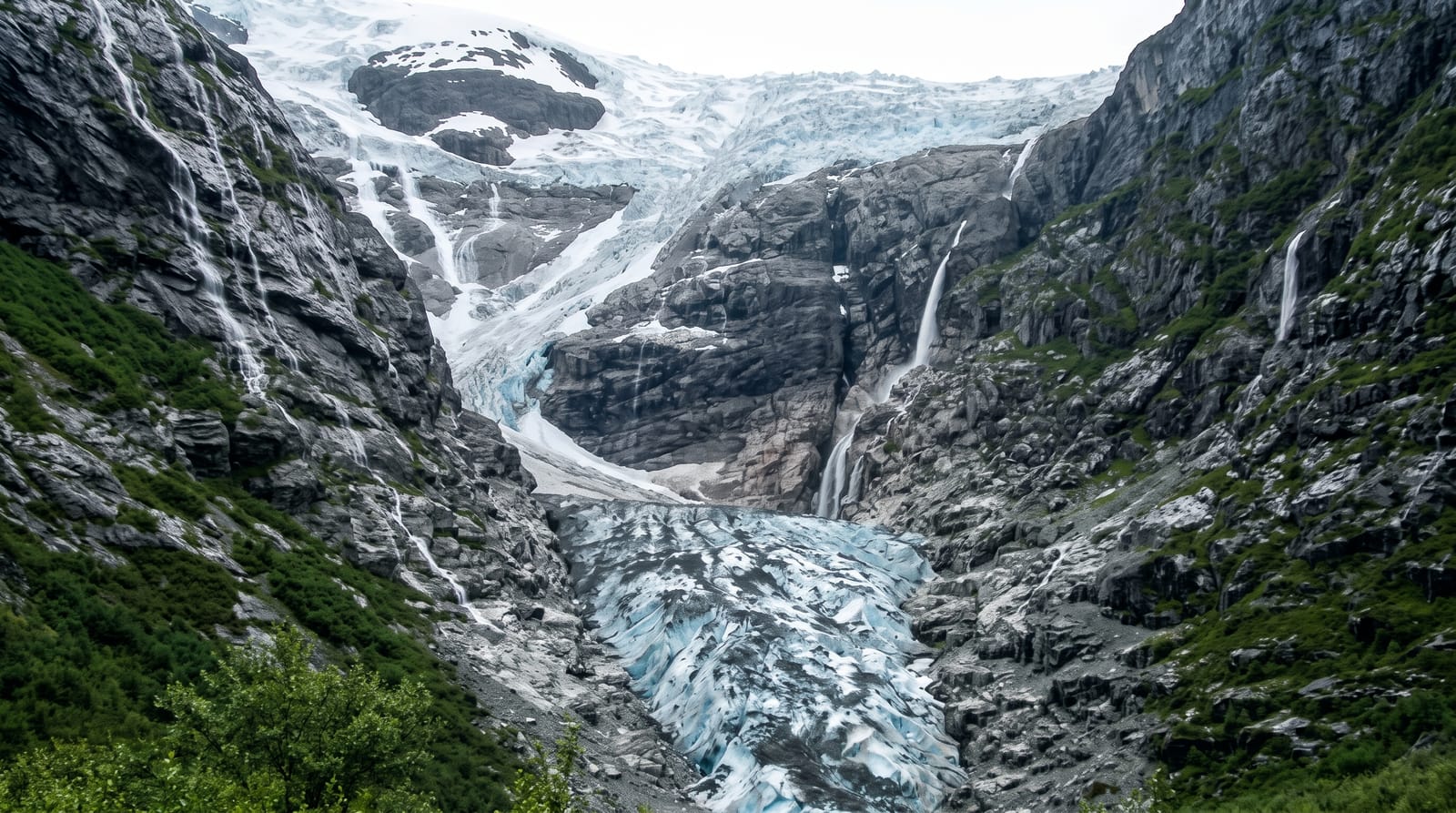
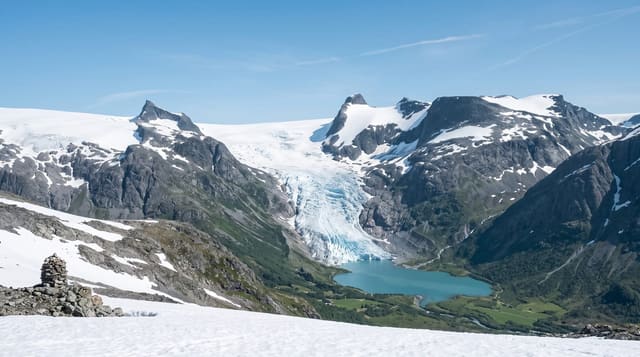
Lovatnet lies in a trench about eleven kilometres long between mountains that rise nearly straight from the water, and it takes its colour from glacial flour, rock ground to powder by the ice above and suspended in the meltwater, which scatters light into an opaque turquoise that changes with the season and the light. A road runs along the northern shore to the head of the lake, where the Kjenndalsbreen glacier arm sits above, and passes the small farm settlement of Bodal. The lake's history is grim: rockfalls from the Ramnefjell face in 1905 and 1936 caused waves that destroyed the lakeside villages with heavy loss of life, and memorials stand along the shore.
History
On 15 January 1905 a landslide of 350,000 cubic metres fell into the lake from Ramnefjellet, raising waves of up to 40.5 metres that swept over Bødal and Nesdal and killed 61 people. The villages were rebuilt, but on 13 September 1936 a second slide of 1,000,000 cubic metres fell from 800 metres and raised waves of up to 74 metres (Wikipedia, Lovatnet).
Highlights
- The turquoise water - opaque colour from suspended glacial flour.
- The vertical walls - mountains rising directly from the lake surface.
- The Kjenndalsbreen road - a drive to the glacier at the head of the lake.
- The rockslide memorials - markers recalling the 1905 and 1936 disasters.
When to go
June to September; the colour is strongest in high summer when melt is greatest, and weakest after heavy rain. Morning light on calm water gives the clearest reflections. The road to the head closes in winter.
Before you go
The road is narrow with limited passing and parking, and the popular viewpoints have space for only a few cars. The water is close to freezing year-round, so swimming is brief and risky. Overcast days flatten the colour considerably.
Nearby
Kjenndalsbreen glacier is at the head; Loen, the Skylift and Briksdalsbreen are within a short drive.
Key facts
Source: Wikidata, item Q6516110, read on 18 October 2026.
What to pack for Lovatnet
Chosen from what this place is for. Tap a kit for the full checklist.
- Broken-in walking shoes or boots - Grip and ankle support matter more than looks; never hike in brand-new boots. Find on Amazon
- Reef-safe sunscreen - High SPF that will not bleach the coral you are swimming over. Find on Amazon
- Warm base layers - Merino or synthetic against the skin - never cotton, which chills when damp. Find on Amazon
- Layers + a waterproof shell - Mountain weather turns fast; a packable rain jacket saves the day. Find on Amazon
Some links on this page are Amazon affiliate links - if you buy through them we may earn a small commission at no extra cost to you.
All packing kitsPlan your trip
Where to start if Lovatnet is going on the list.
Booking links on this page are affiliate links - if you book through them we may earn a small commission at no extra cost to you. It never changes what we write about a place.
Opening times, ticket prices and seasonal closures change - check the official source before you go: official site.