Haraldshaugen
A national monument north of Haugesund raised in 1872 for the thousandth anniversary of Norway's unification.
Updated 4 September 2026
AI illustration
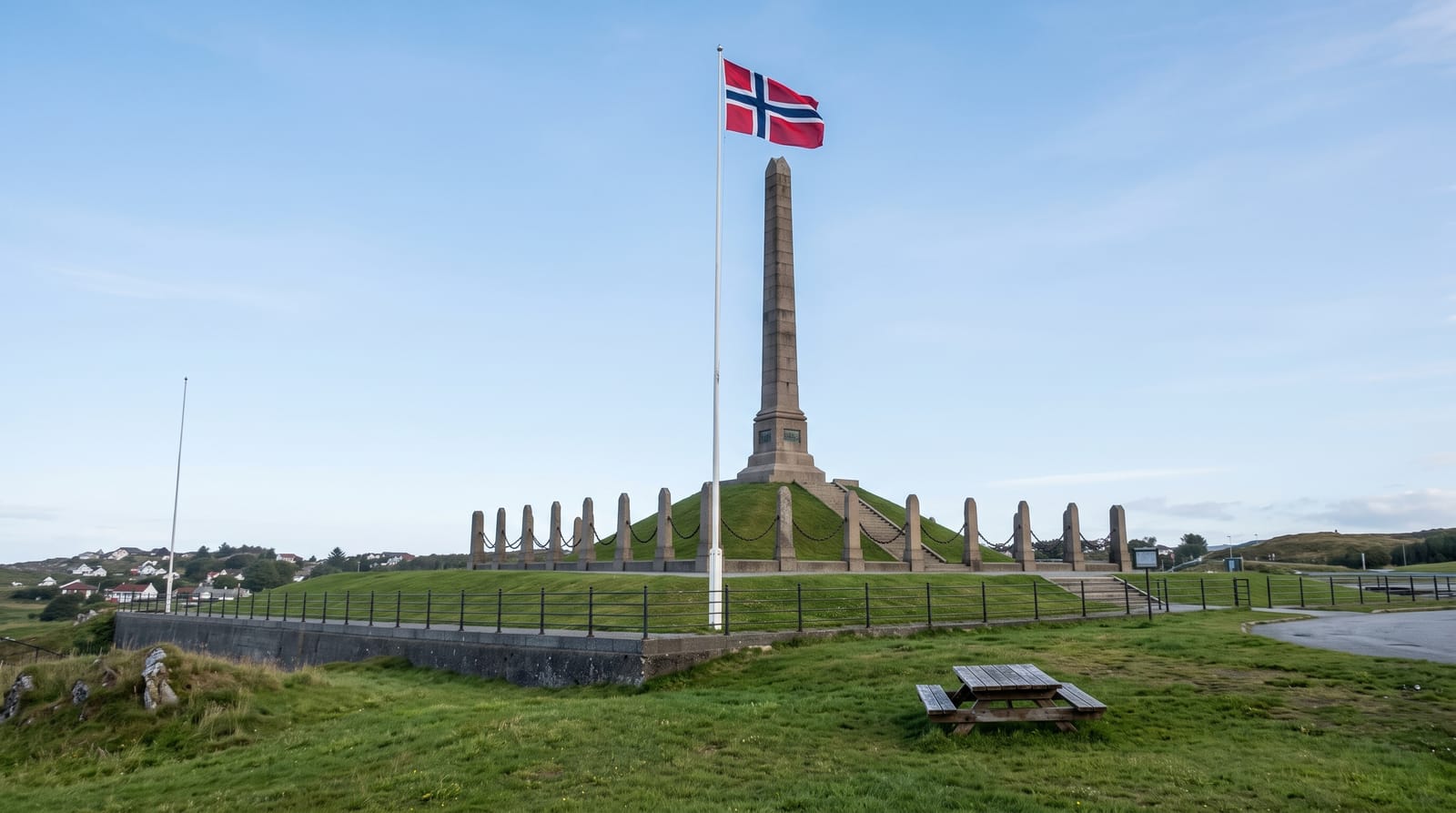
Haraldshaugen was raised in 1872 to mark a thousand years since the battle of Hafrsfjord and the unification of Norway under Harald Fairhair, who according to saga tradition was buried near here at Haugar. The monument is a granite obelisk about seventeen metres high on a mound, surrounded by twenty-nine smaller stones representing the old Norwegian districts, enclosed by a low wall. It stands on open ground near the shore with the sea beyond. The site has been a place of national ceremony since, with constitution day gatherings held here. Nearby stands the Krosshaugen stone cross, a much older monument from the early Christian period, and the coastal path runs past both.
What you'll find
- The granite obelisk - a seventeen-metre monument on a burial mound.
- The twenty-nine stones - smaller markers for the old Norwegian districts.
- Krosshaugen - an early Christian stone cross nearby.
- The coastal setting - open ground and shoreline north of the town.
When to go
May to September for the best weather; the site is open ground accessible year-round. Constitution day on 17 May brings ceremonies here, which is the one time it is genuinely busy.
Before you go
The monument is nineteenth-century national romanticism rather than an ancient site, and the burial tradition is not archaeologically confirmed. The visit takes thirty minutes. There are no facilities beyond parking.
Nearby
Haugesund town is south; Avaldsnes with its medieval church and Viking farm lies on Karmoy.
Key facts
Source: Wikidata, item Q1771194, read on 18 October 2026.
What to pack for Haraldshaugen
Chosen from what this place is for. Tap a kit for the full checklist.
- Comfortable walking shoes - Sightseeing means kilometres of pavement and cobbles daily. Find on Amazon
- A slim anti-theft daypack - Zips that close properly; keep it in front in crowds and on transit. Find on Amazon
- A refillable water bottle - Many cities have public fountains; save money and plastic. Find on Amazon
- A light layer + compact umbrella - For museum air-con and a sudden shower. Find on Amazon
Some links on this page are Amazon affiliate links - if you buy through them we may earn a small commission at no extra cost to you.
All packing kitsPlan your trip
Where to start if Haraldshaugen is going on the list.
Booking links on this page are affiliate links - if you book through them we may earn a small commission at no extra cost to you. It never changes what we write about a place.
Opening times, ticket prices and seasonal closures change - check the official source before you go: official site.