Avaldsnes
A royal seat controlling the coastal shipping lane for centuries, with a medieval stone church and a Viking farm reconstruction.
Updated 21 October 2026
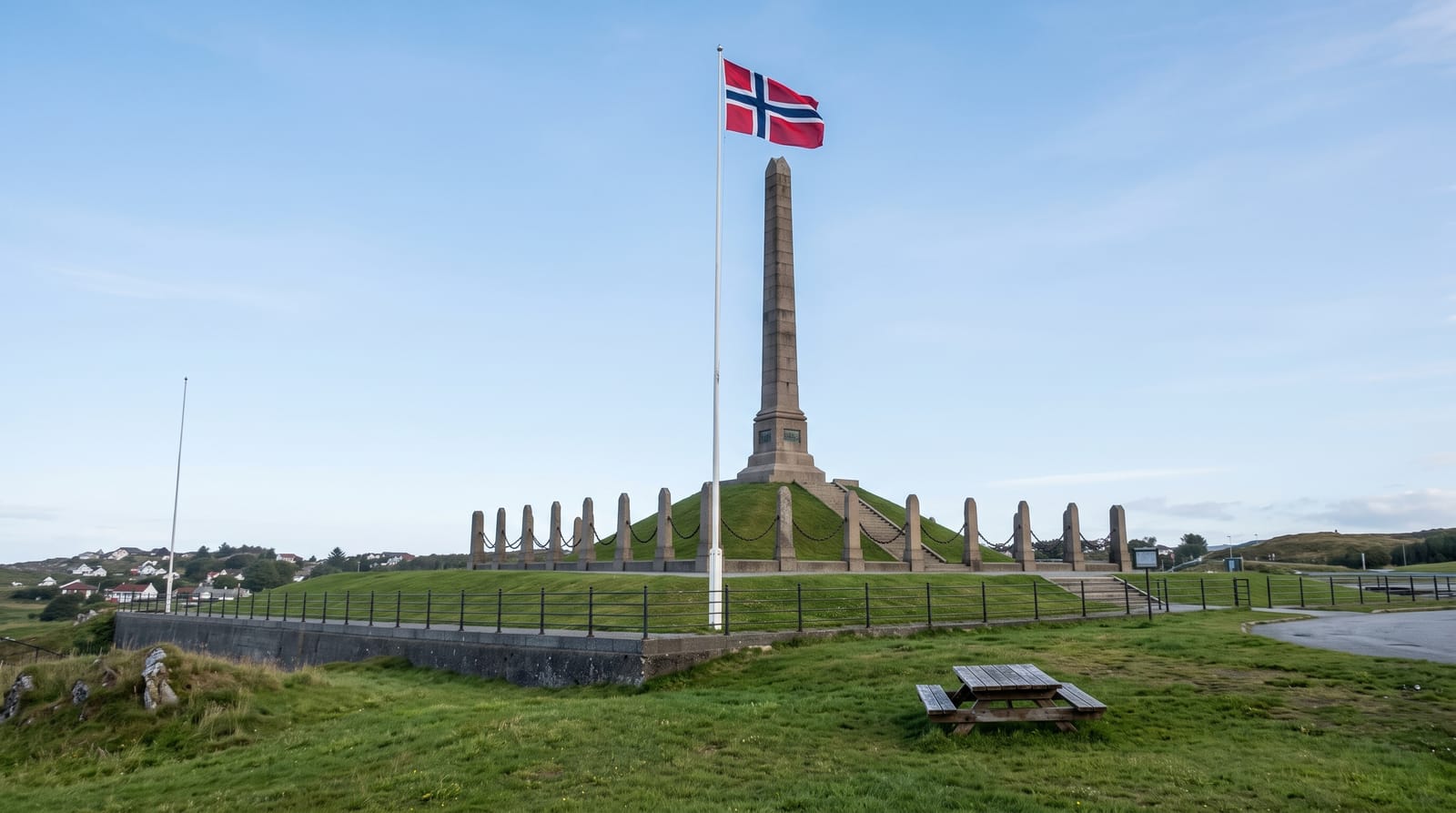
AI illustration
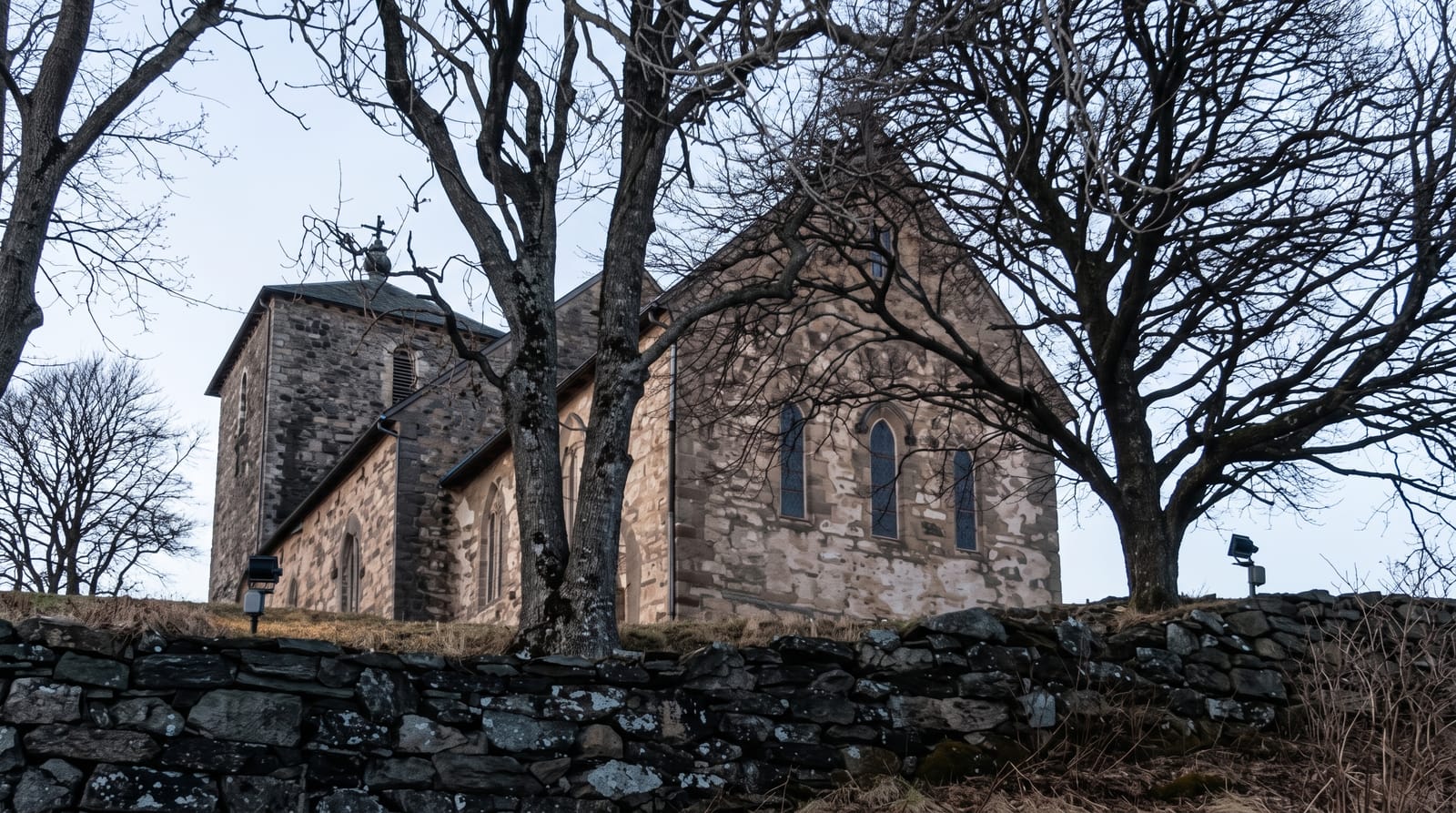
Avaldsnes sits on the Karmsund, the narrow channel that gave the coastal route, the Nordvegen, its name and eventually gave Norway its own; whoever held this point controlled traffic and the tolls on it, and it was a royal seat from the Iron Age through the Viking period into the Middle Ages. Harald Fairhair is said to have had his main residence here. Saint Olav's Church, built in stone around 1250 by Haakon Haakonsson, still stands, with a leaning stone pillar beside it, the Virgin Mary's Needle, and a legend about the world ending when it touches the wall. The Nordvegen History Centre is built underground beside the church, and across a footbridge on Bukkoy a Viking farm has been reconstructed.
History
The place is believed to be named after the legendary King Augvald, and Harald Fairhair chose it for his main royal estate about 870, making it the oldest royal seat in Norway; the narrow Karmsund shipping lane past it was the source of its power. St Olav's Church was begun about 1250 on the orders of King Håkon Håkonsson and finished nearly 1320, and the Flagghaugen mound held Norway's richest grave of the Roman period (Wikipedia, Avaldsnes).
What to look for
- Saint Olav's Church - a stone church of about 1250 on the royal site.
- The Virgin Mary's Needle - a leaning stone pillar with its legend.
- The Nordvegen centre - an underground museum on the royal seat.
- The Viking farm - reconstructed buildings on the neighbouring island.
When to go
May to September, when the Viking farm and history centre are fully open and events run; the church and grounds are accessible year-round. Summer brings Viking-themed events on Bukkoy.
Practical notes
The Viking farm is a reconstruction, and its opening is seasonal. The church interior keeps limited hours and closes for services. The history centre is underground and compact, taking about an hour.
Nearby
Haugesund and Haraldshaugen are north; Skudeneshavn lies at the southern end of Karmoy.
Key facts
Source: Wikidata, item Q790084, read on 18 October 2026.
What to pack for Avaldsnes
Chosen from what this place is for. Tap a kit for the full checklist.
- Head torch + spare batteries - Hands-free light is essential; caves are truly dark. Find on Amazon
- Comfortable walking shoes - Sightseeing means kilometres of pavement and cobbles daily. Find on Amazon
- Grippy closed shoes - Cave floors are wet, muddy and slick with formations. Find on Amazon
- A slim anti-theft daypack - Zips that close properly; keep it in front in crowds and on transit. Find on Amazon
Some links on this page are Amazon affiliate links - if you buy through them we may earn a small commission at no extra cost to you.
All packing kitsPlan your trip
Where to start if Avaldsnes is going on the list.
Booking links on this page are affiliate links - if you book through them we may earn a small commission at no extra cost to you. It never changes what we write about a place.
Opening times, ticket prices and seasonal closures change - check the official source before you go: official site.