Grimstad
A Sorlandet harbour town of white lanes where the young Henrik Ibsen worked as an apothecary's assistant.
Updated 4 September 2026

AI illustration
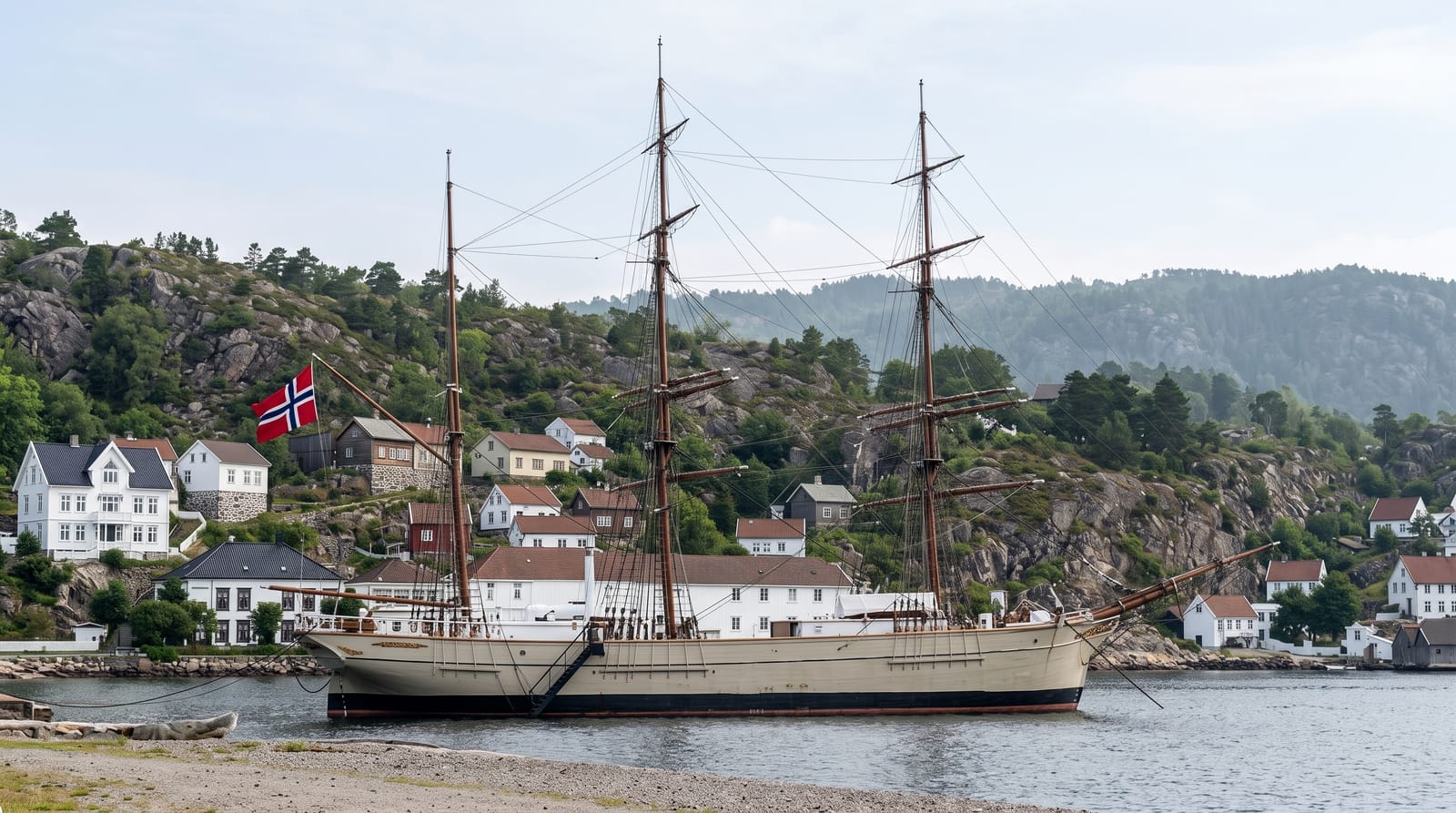
Grimstad grew on shipbuilding and sail: in the nineteenth century it had one of the largest merchant fleets in Norway, and the town of white timber houses climbing from the harbour dates largely from that period. Henrik Ibsen arrived here in 1844 aged fifteen to work as an apothecary's assistant and stayed six years, writing his first play, Catiline, and the pharmacy building is now the Ibsen Museum with rooms preserved as he knew them. Knut Hamsun later farmed at Norholm just outside town. The harbour is full of boats in summer, the islands offshore are reached by small ferries, and the surrounding district is known for early strawberries and for the Fjaere church with its medieval stone cross.
What's there
- The Ibsen Museum - the pharmacy where the young Ibsen worked and wrote.
- The white lanes - narrow streets of timber houses above the harbour.
- The summer harbour - guest boats filling the quays through July.
- The island ferries - small boats to the skerries offshore.
When to go
June to August for the full harbour season, ferries and open museums; the town is quiet the rest of the year with reduced hours. Strawberry season in early summer is a local event.
Things to know
Summer brings large numbers of Norwegian boat holidaymakers and prices to match. Museums keep short seasonal hours. Outside the harbour and old lanes the town is ordinary.
Nearby
Arendal and Raet National Park lie east; Lillesand and the Blindleia channel are west.
What to pack for Grimstad
Chosen from what this place is for. Tap a kit for the full checklist.
- Comfortable walking shoes - Sightseeing means kilometres of pavement and cobbles daily. Find on Amazon
- A slim anti-theft daypack - Zips that close properly; keep it in front in crowds and on transit. Find on Amazon
- A refillable water bottle - Many cities have public fountains; save money and plastic. Find on Amazon
- A light layer + compact umbrella - For museum air-con and a sudden shower. Find on Amazon
Some links on this page are Amazon affiliate links - if you buy through them we may earn a small commission at no extra cost to you.
All packing kitsPlan your trip
Where to start if Grimstad is going on the list.
Booking links on this page are affiliate links - if you book through them we may earn a small commission at no extra cost to you. It never changes what we write about a place.
Opening times, ticket prices and seasonal closures change - check the official source before you go: official site.