Bodo
An Arctic city rebuilt after wartime destruction, gateway to Lofoten and European Capital of Culture in 2024.
Updated 21 October 2026
AI illustration
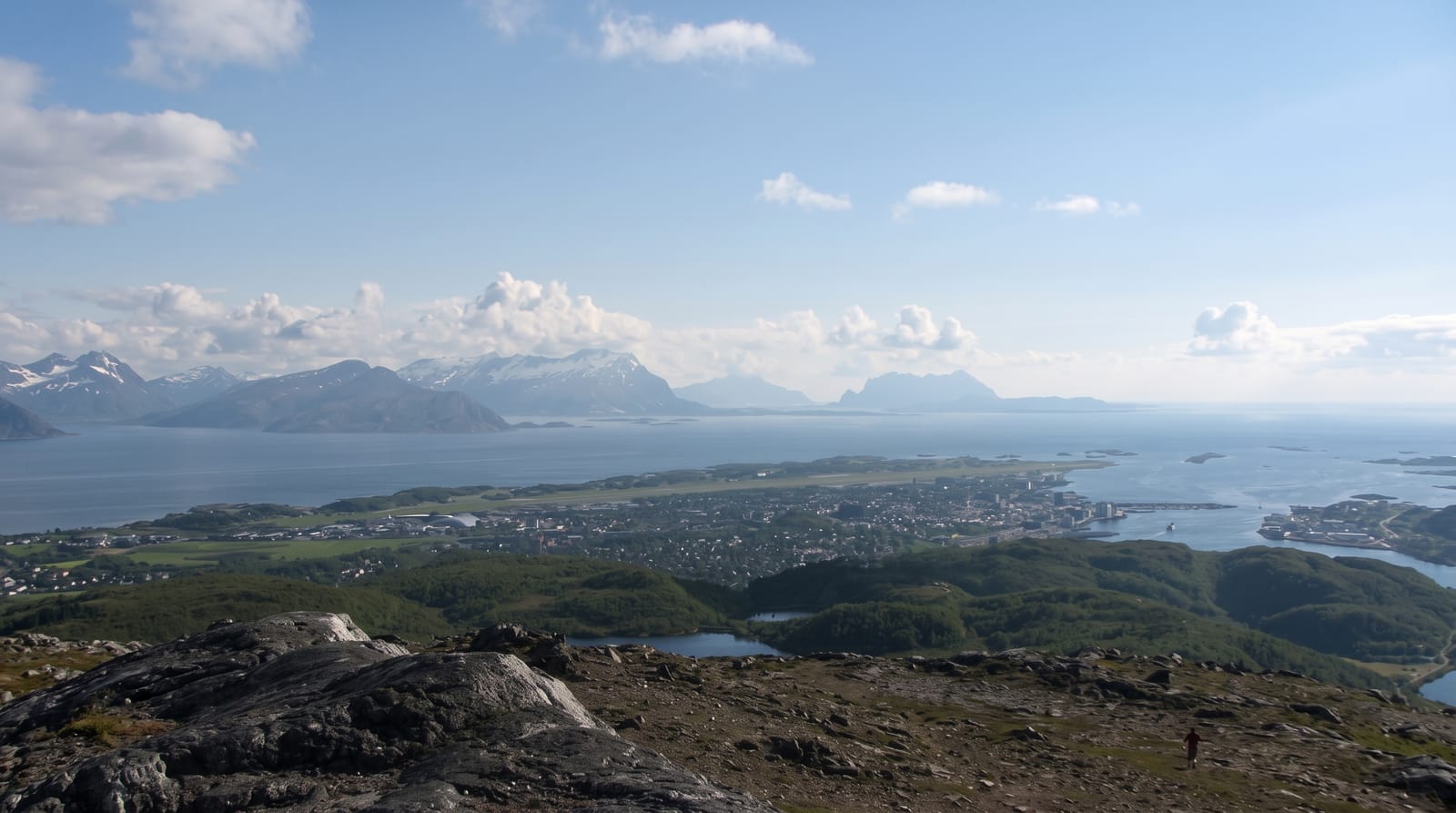
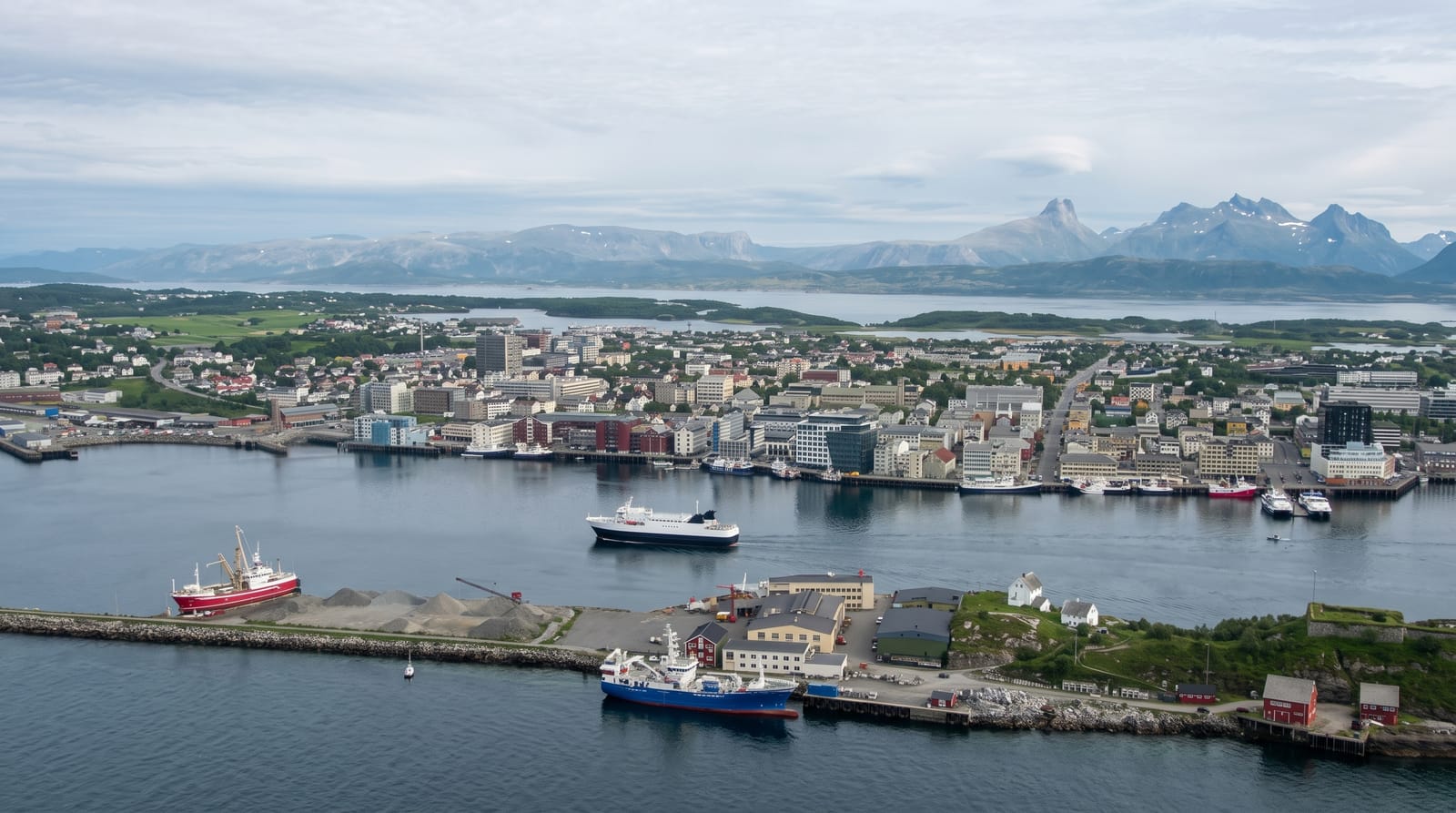
Bodo sits just north of the Arctic Circle on a peninsula between the Saltfjord and the open sea, and it is the practical hub of the region: the northern terminus of the railway, the ferry port for Lofoten and the Helgeland islands, and an airport that connects the far north. The town was almost entirely destroyed by bombing in 1940 and rebuilt afterwards, so the architecture is postwar with a few newer landmarks including the Stormen library and concert house of 2014. It was European Capital of Culture in 2024, the first city north of the Arctic Circle to hold the title. Around it are Saltstraumen, the world's strongest tidal current, the Keiservarden plateau and the Kjerringoy trading post.
History
The town is named after the old Bodøgård farm on whose land it was built; the first part of the name may mean "sunken rock" or "skerry" and the last part "meadow" or "pasture" (Wikipedia, Bodø Municipality).
What's there
- Stormen - a 2014 library and concert house on the waterfront.
- The Lofoten ferries - departures for the islands from the harbour.
- Saltstraumen - the tidal current thirty kilometres away.
- The Arctic light - midnight sun in summer and aurora in winter.
When to go
June to August for the midnight sun, which shines from early June to mid-July, and for full ferry schedules; September to March for the northern lights. Winter weather is wet and windy rather than deeply cold.
Practical notes
Postwar reconstruction left a functional rather than beautiful town, and the attractions are mostly outside it. Weather here is notoriously changeable and windy. Ferry and flight connections can be disrupted by storms.
Nearby
Saltstraumen and Kjerringoy are short drives; the Lofoten islands lie west across the Vestfjord.
Key facts
Source: Wikidata, item Q221119, read on 18 October 2026.
What to pack for Bodo
Chosen from what this place is for. Tap a kit for the full checklist.
- Spare batteries + cards - Cold and long shoots drain power; never run out at the good light. Find on Amazon
- Warm base layers - Merino or synthetic against the skin - never cotton, which chills when damp. Find on Amazon
- Comfortable walking shoes - Sightseeing means kilometres of pavement and cobbles daily. Find on Amazon
- A compact tripod - Essential for night skies, aurora, waterfalls and low light. Find on Amazon
Some links on this page are Amazon affiliate links - if you buy through them we may earn a small commission at no extra cost to you.
All packing kitsPlan your trip
Where to start if Bodo is going on the list.
Booking links on this page are affiliate links - if you book through them we may earn a small commission at no extra cost to you. It never changes what we write about a place.
Opening times, ticket prices and seasonal closures change - check the official source before you go: official site.