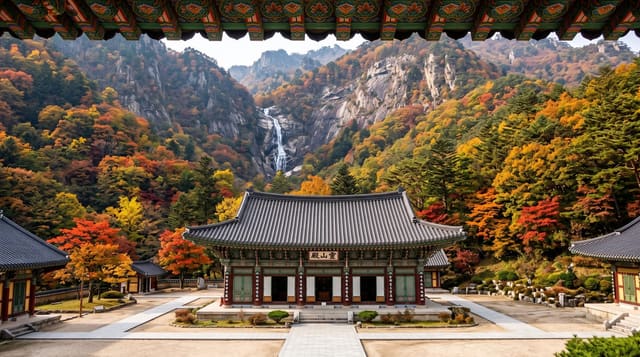
Kaesong
The ancient royal capital - the historic city of Kaesong, once seat of the Koryo dynasty that gave Korea its name, home to old gates, a Confucian academy and royal tombs recognised by UNESCO, a rare window on Korea's deep past.
Updated 18 October 2026
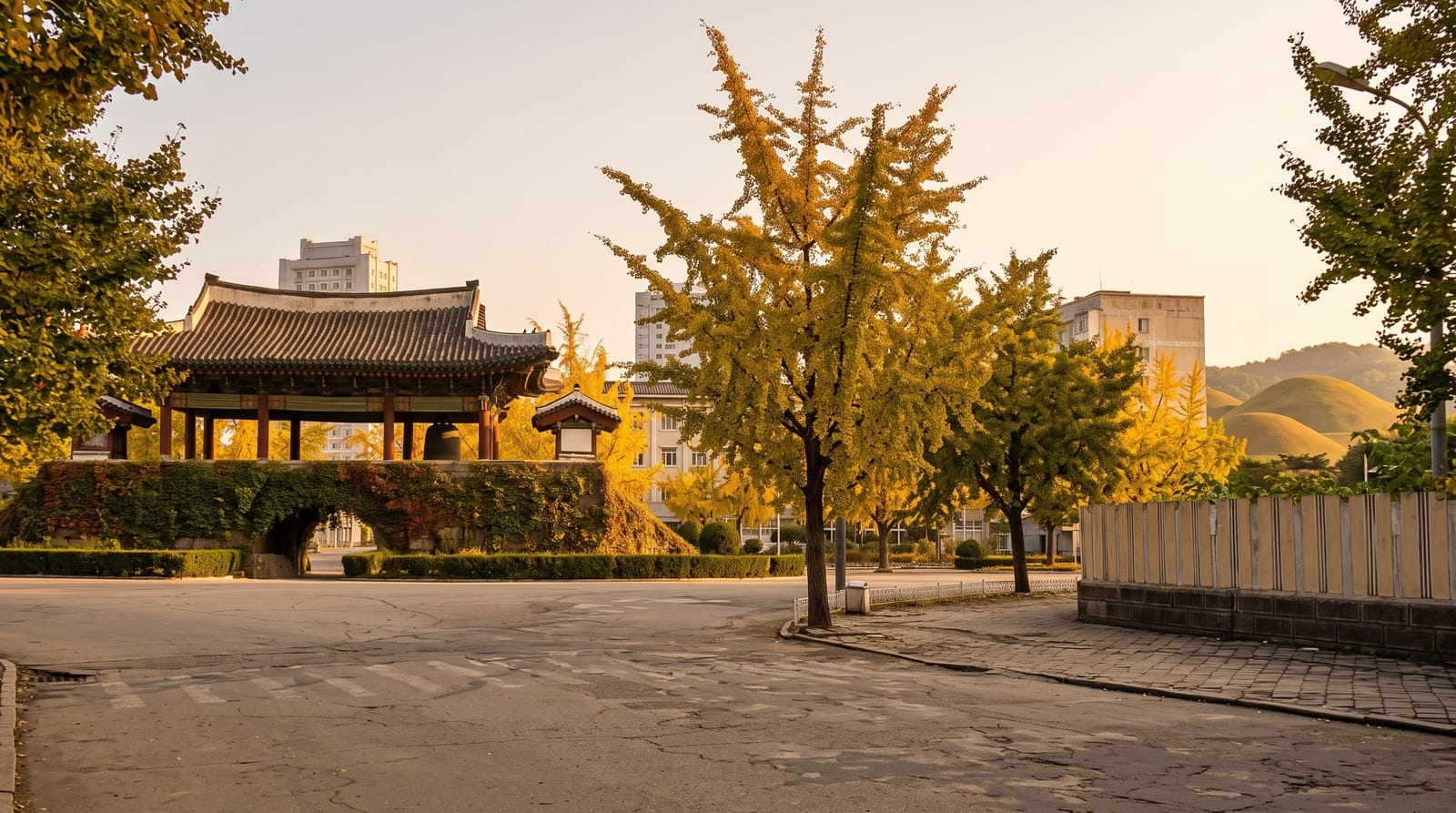
AI illustration
UNESCO World Heritage
Kaesong, in the south of North Korea near the DMZ, is one of the country's most historic cities, having served as the capital of the Koryo dynasty from the tenth to fourteenth centuries, the dynasty from which the name Korea derives. Unusually well preserved, it holds a rare concentration of pre-modern Korean heritage: old city gates, the Confucian Songgyungwan academy, historic bridges and stone monuments, and the royal tombs of the Koryo kings scattered in the surrounding hills, together inscribed by UNESCO as the Historic Monuments and Sites of Kaesong. It offers a genuine and dignified glimpse of Korea's deep past.
History
The earliest signs of settlement are Neolithic, with Jeulmun pottery and stone axes found at Osongsan and the double-walled fortress of Kaesong; the area passed through Mahan, Goguryeo, when it was called Busogap, and Baekje, and in 555 it became part of Silla, which built a castle here in 694, when it was known as Song'ak. In 898 it fell to Gung Ye, founder of Taebong, and in 919 Wang Geon, enthroned as Taejo of Goryeo, made it the capital, renamed Gaegyeong in 960; the palace and houses were almost all burnt in 1010 during the Goryeo-Khitan War, and in 1198 a slave named Manjeok plotted a revolt outside the city that was put down. Yi Song-gye overthrew Goryeo in 1392 and moved the capital to Hanyang, today's Seoul, in 1394. Under Japanese rule from 1910 to 1945 the city was called Kaijō, after 1945 it lay mostly south of the 38th parallel, and the 1953 armistice left it in North Korea (Wikipedia, Kaesong).
The main sights
- The Koryo royal tombs - the historic tombs of the Koryo kings.
- The Songgyungwan academy - the old Confucian academy and museum.
- The city gates - the surviving historic gates and bridges.
- The old quarter - the rare pre-modern Korean streetscape.
When to go
April to June and September to October are the mildest and loveliest months to explore Kaesong's old quarter and the royal tombs in the surrounding hills; the city is usually combined with a visit to the nearby DMZ on an organised tour. Spring and autumn light suit its historic setting best.
Good to know
Kaesong is visited as part of a guided programme, so exploration follows a set itinerary, and some of the historic interiors have seen restoration. As a genuinely historic city and one of the few places to glimpse Korea's ancient Koryo heritage and UNESCO-listed royal tombs, though, Kaesong is a rewarding and dignified highlight.
Nearby
The DMZ at Panmunjom lies close by and is usually visited together.
Key facts
Source: Wikidata, item Q109079, read on 18 October 2026.
What to pack for Kaesong
Chosen from what this place is for. Tap a kit for the full checklist.
- Comfortable walking shoes - Sightseeing means kilometres of pavement and cobbles daily. Find on Amazon
- A slim anti-theft daypack - Zips that close properly; keep it in front in crowds and on transit. Find on Amazon
- A refillable water bottle - Many cities have public fountains; save money and plastic. Find on Amazon
- A light layer + compact umbrella - For museum air-con and a sudden shower. Find on Amazon
Some links on this page are Amazon affiliate links - if you buy through them we may earn a small commission at no extra cost to you.
All packing kitsPlan your trip
Where to start if Kaesong is going on the list.
Booking links on this page are affiliate links - if you book through them we may earn a small commission at no extra cost to you. It never changes what we write about a place.
Opening times, ticket prices and seasonal closures change - check the official source before you go: official site.