Phillip Island
The red outlier - Norfolk's seabird island of Mars-coloured slopes, crossed by boat and climbed for the colonies' spectacle.
Updated 3 September 2026
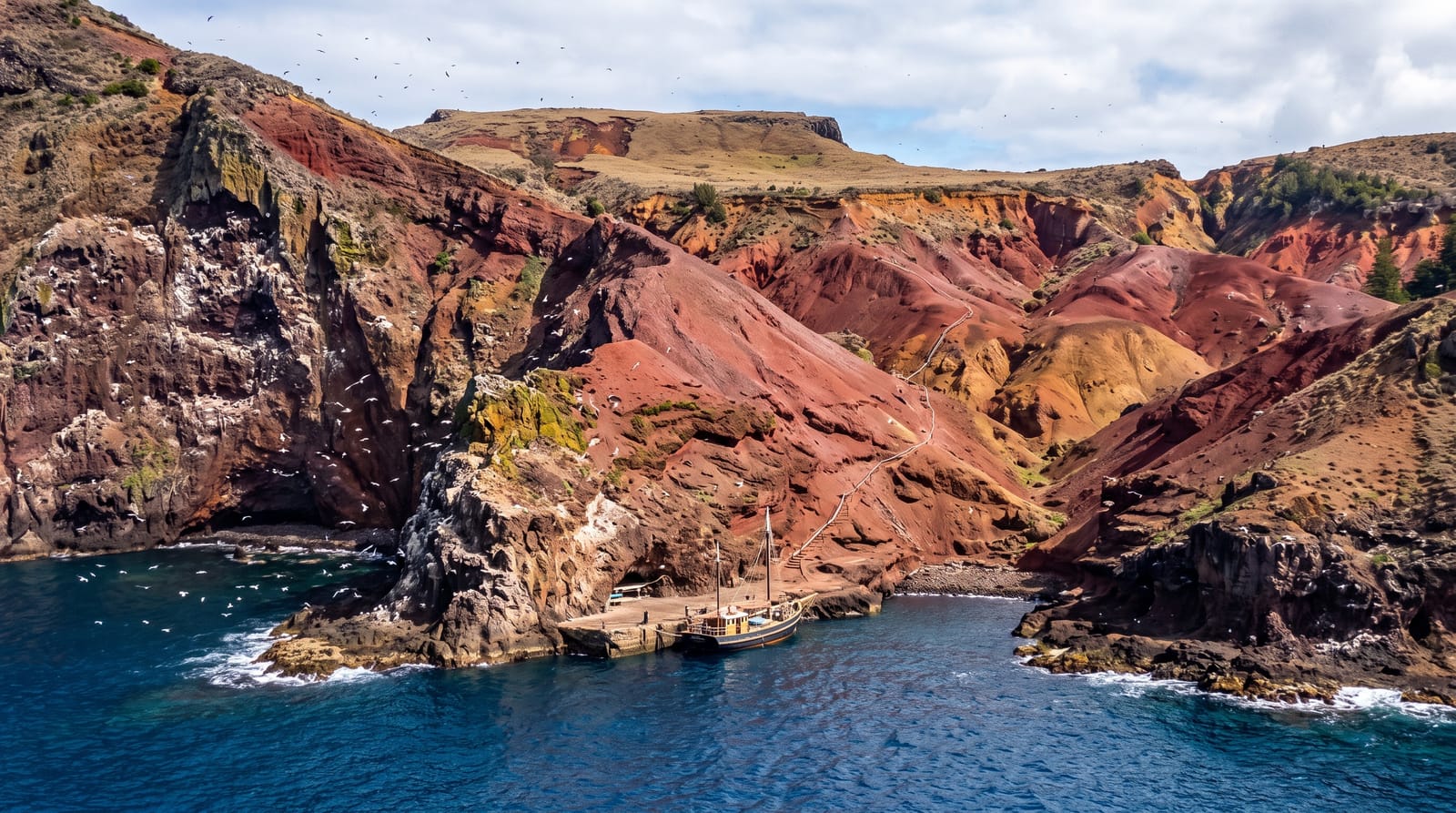
AI illustration
Across the water from Kingston, Phillip Island burns red on the horizon - the eroded outlier whose rabbit-and-pig century stripped it to Mars-coloured slopes now recovering under park care, and whose cliffs and gullies host the seabird spectacle: petrels, boobies, terns and the island's famous summer whalebirds colonising in thousands. Guided trips cross when seas allow, land at the rock shelf and climb the rope-assisted track to the plateau's colonies and colour fields - the red earth against blue Pacific making the day's second spectacle. It is Norfolk's expedition, one strait wide. The island lies around six kilometres off the Kingston shore and is visible from most of the south coast.
What you'll find
- The red slopes - Mars fields recovering to green.
- The seabird colonies - petrels and boobies in thousands.
- The rope track - the assisted climb to the plateau.
- The strait crossing - Kingston's water to the outlier.
When to go
October to April for landings and colonies both; sea state holds the veto - operators call the day.
Things to know
The landing and climb ask agility and the guides' word; no shade, carried water and colony distances are the terms.
Nearby
Kingston's pier and reef lagoon.
What to pack for Phillip Island
Chosen from what this place is for. Tap a kit for the full checklist.
- Reef-safe sunscreen - High SPF that will not bleach the coral you are swimming over. Find on Amazon
- Shelter suited to the place - Tent, tarp or hut booking - match it to the terrain and rules. Find on Amazon
- Quick-dry towel - A microfibre towel packs small and dries in minutes. Find on Amazon
- A warm sleeping bag + mat - Rated a little colder than you expect the nights to be. Find on Amazon
Some links on this page are Amazon affiliate links - if you buy through them we may earn a small commission at no extra cost to you.
All packing kitsPlan your trip
Where to start if Phillip Island is going on the list.
Booking links on this page are affiliate links - if you book through them we may earn a small commission at no extra cost to you. It never changes what we write about a place.
Opening times, ticket prices and seasonal closures change - check the official source before you go: official site.


