Nigerian Cuisine
Jollof rice, suya skewers and thick seed-and-leaf soups eaten with pounded starch, differing sharply by region.
Updated 1 September 2026
AI illustration
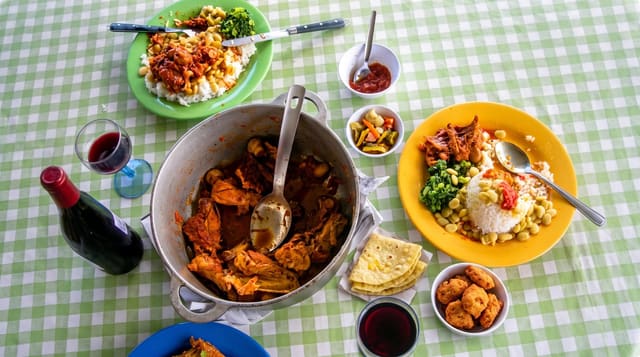
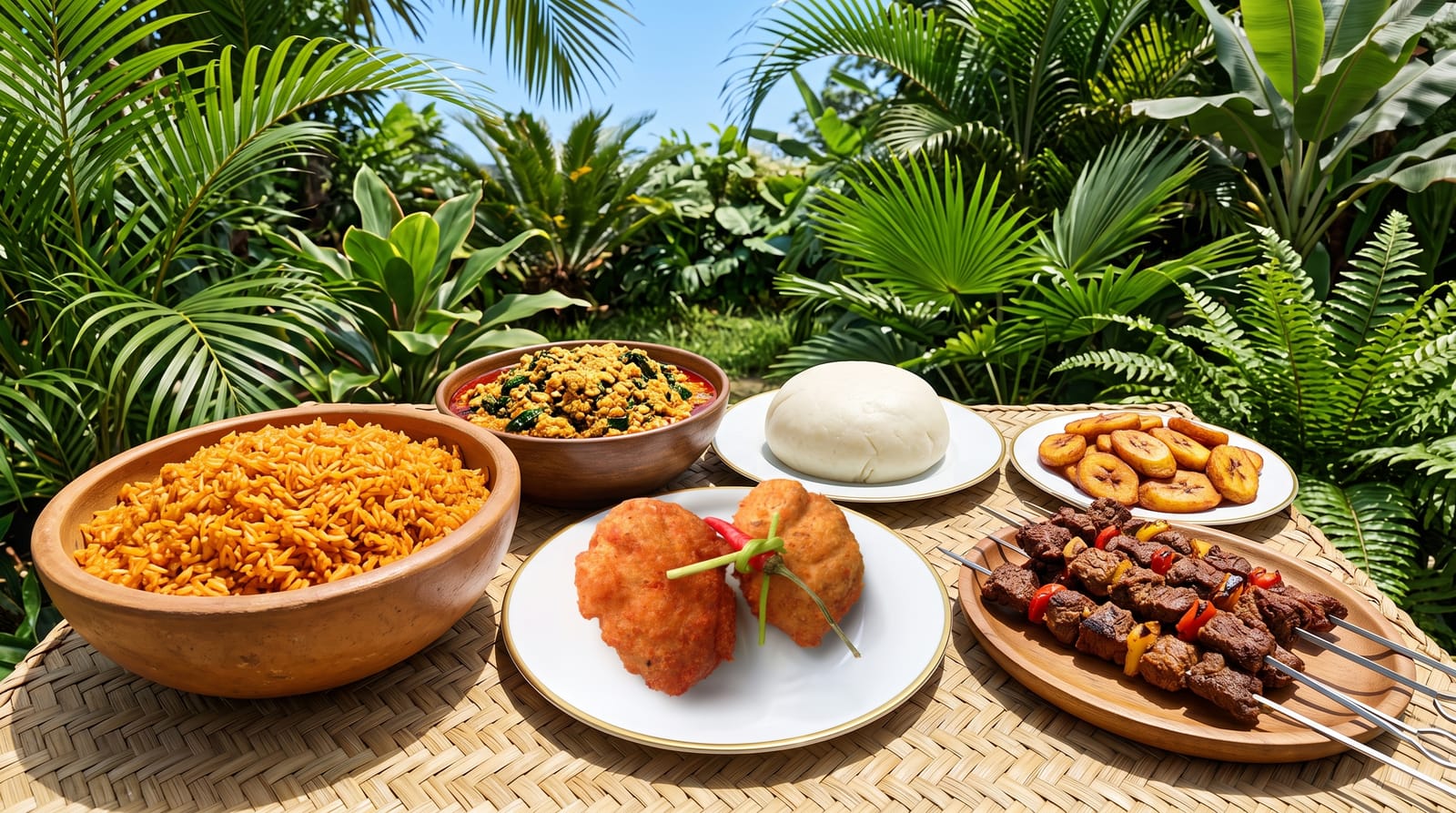
The food divides by region as much as anything. In the southwest, Yoruba cooking gives amala with ewedu and gbegiri, efo riro, and jollof rice cooked in a tomato and pepper base. In the southeast, Igbo cooking is built on soups thickened with egusi melon seed, ogbono or bitterleaf, eaten with fufu, garri or pounded yam torn by hand and swallowed. In the north, Hausa food runs to tuwo with miyan kuka, and to suya, thin beef skewers rubbed with yaji, a ground peanut and chilli spice, grilled over wood by street vendors in the evening. Pepper soup, moin moin, akara and fried plantain cross all of them. Chilli levels are high throughout.
What to look for
- Jollof rice - the tomato and pepper rice of celebrations.
- Suya - the spiced beef skewers grilled at evening street stands.
- Egusi and ogbono soups - the thickened soups eaten with swallow.
- Amala with ewedu - the Yoruba yam flour and jute leaf combination.
When to go
Year round. Suya is an evening food and appears after dark. Christmas and Eid bring large family cooking. Bukas, the small local eating houses, serve at lunchtime and are where most everyday food is eaten.
What to expect
Chilli levels are genuinely high and are not reduced for visitors. Swallow foods are eaten by hand from a shared bowl and the texture is unfamiliar to many. Buka hygiene varies and water should be bottled or sachet. Vegetarian eating is difficult since most soups use meat or fish stock.
Nearby
Lagos bukas and street stands; Kano and the north for suya.
What to pack for Nigerian Cuisine
Chosen from what this place is for. Tap a kit for the full checklist.
- A reusable bag or container - For market produce and cutting down on packaging. Find on Amazon
- Wet wipes + hand sanitiser - Street food and washbasins do not always go together. Find on Amazon
Some links on this page are Amazon affiliate links - if you buy through them we may earn a small commission at no extra cost to you.
All packing kitsPlan your trip
Where to start if Nigerian Cuisine is going on the list.
Booking links on this page are affiliate links - if you book through them we may earn a small commission at no extra cost to you. It never changes what we write about a place.
Opening times, ticket prices and seasonal closures change - check the official source before you go: official site.