Nepali Cuisine
Dal bhat twice a day, momos everywhere, and distinct Newar, Thakali and Himalayan cooking beneath the surface.
Updated 1 September 2026
AI illustration
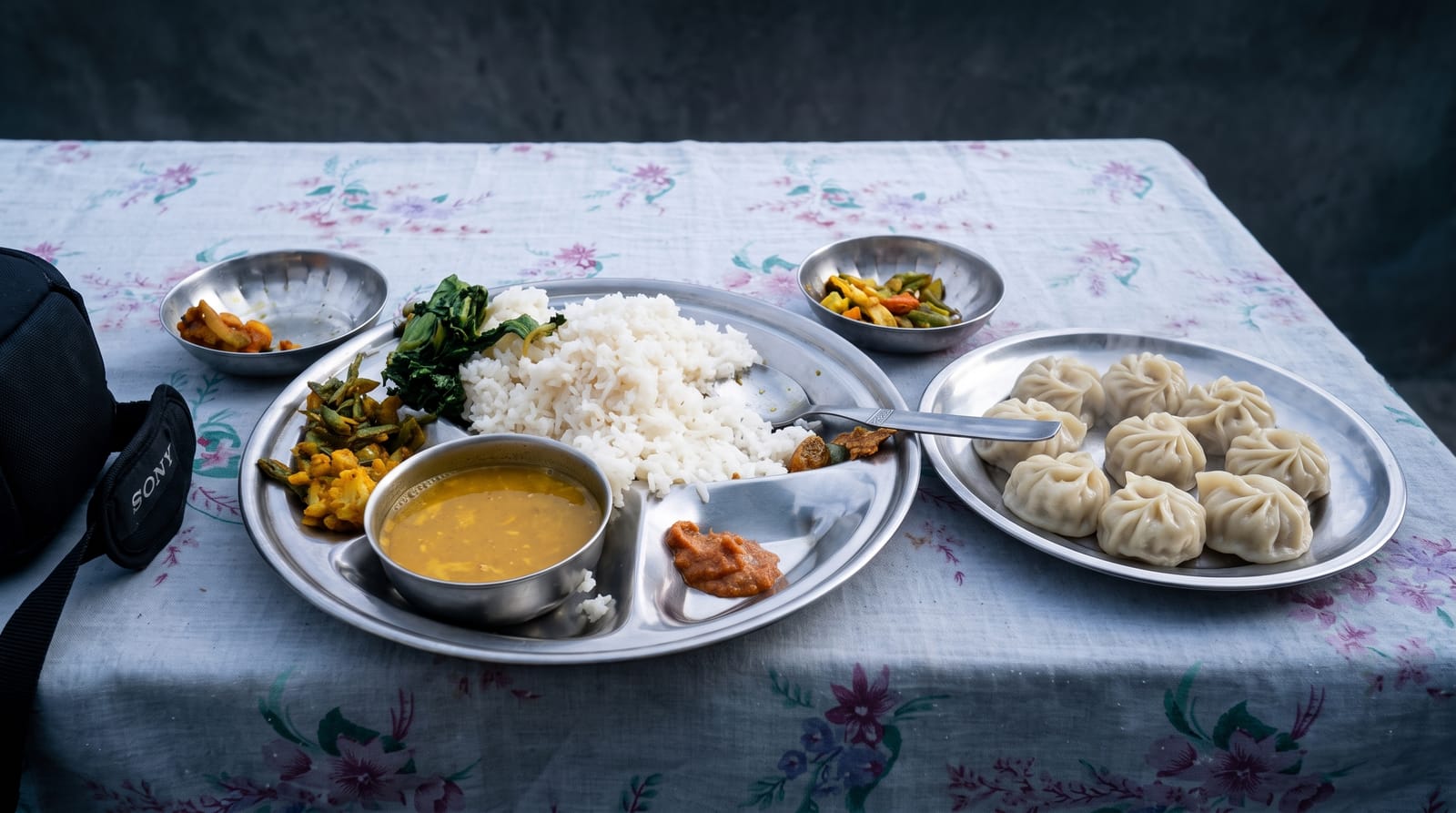
The everyday meal is dal bhat: rice, lentil soup, a vegetable curry, pickle and sometimes meat, eaten twice a day by most of the country and refilled until you stop. Beyond it the food divides by community rather than by region alone. Newar cooking in the Kathmandu valley is the most elaborate, built around buffalo, with bara lentil cakes, chatamari, spiced offal dishes, beaten rice and the samay baji platter served at festivals. Thakali food from the Kali Gandaki is the version most trekkers rate highest, with a sharper, cleaner dal bhat. Higher up the influence turns Tibetan, with thukpa, tsampa and momos, the steamed dumplings that have become the national snack. Sel roti, a ring of fried rice batter, appears at festivals.
The main sights
- Dal bhat - the refillable rice, lentil and curry plate.
- Momos - the steamed or fried dumplings sold everywhere.
- Newar dishes - bara, chatamari and the samay baji platter.
- Thakali sets - the Kali Gandaki version of dal bhat.
When to go
Year round. Festival food appears at Dashain and Tihar in autumn, when sel roti and meat dishes are made in quantity. Newar feast food is easiest to find in Kathmandu, Patan and Bhaktapur.
Practical notes
Trekking-lodge menus are repetitive and often poor away from Thakali kitchens. Buffalo is common in Newar food and beef is not eaten by most Hindus. Hygiene standards vary widely; stomach trouble is a common experience for visitors. Vegetarian eating is straightforward.
Nearby
Kathmandu and Patan for Newar food; the Kali Gandaki for Thakali.
What to pack for Nepali Cuisine
Chosen from what this place is for. Tap a kit for the full checklist.
- Broken-in walking shoes or boots - Grip and ankle support matter more than looks; never hike in brand-new boots. Find on Amazon
- A reusable bag or container - For market produce and cutting down on packaging. Find on Amazon
- Layers + a waterproof shell - Mountain weather turns fast; a packable rain jacket saves the day. Find on Amazon
- Wet wipes + hand sanitiser - Street food and washbasins do not always go together. Find on Amazon
Some links on this page are Amazon affiliate links - if you buy through them we may earn a small commission at no extra cost to you.
All packing kitsPlan your trip
Where to start if Nepali Cuisine is going on the list.
Booking links on this page are affiliate links - if you book through them we may earn a small commission at no extra cost to you. It never changes what we write about a place.
Opening times, ticket prices and seasonal closures change - check the official source before you go: official site.