Saudi Cuisine
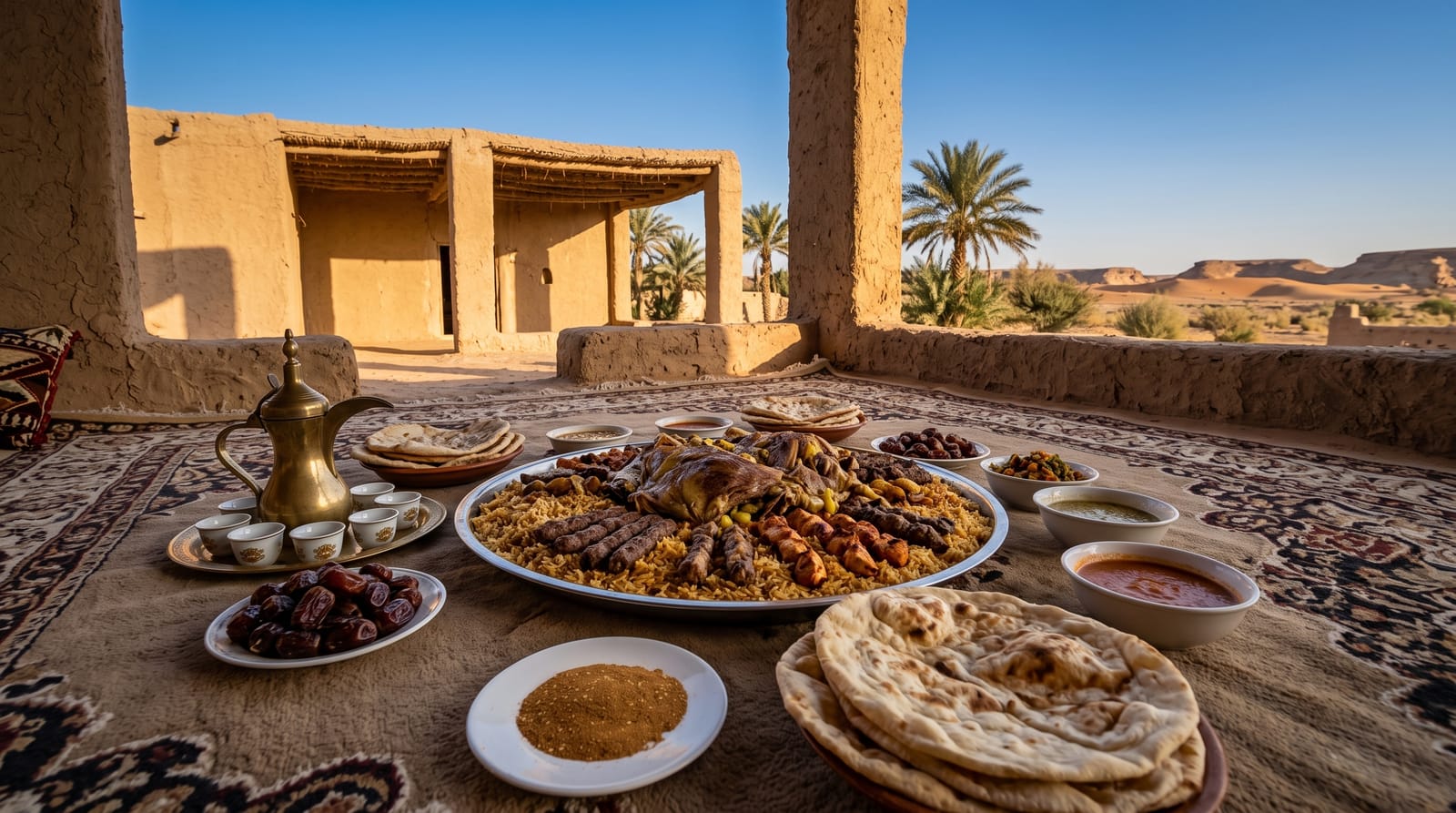
Kabsa and mandi rice with lamb, jareesh and saleeg from the regions, dates and cardamom coffee at every meeting.
Updated 1 September 2026
AI illustration
Kabsa is the dish most often named as national: long-grain rice cooked with lamb or chicken, tomato, dried lime and a spice mix, served on a communal platter with the meat on top. Mandi, from the Hadhramaut tradition and common in the south and the Hejaz, cooks the meat in a pit oven over the rice. Jareesh is crushed wheat cooked with meat and yoghurt to a porridge, a Najdi dish; saleeg from the Hejaz is rice cooked in milk and broth to a similar texture. Mutabbaq is a stuffed folded pastry sold from street windows. Dates and gahwa, pale cardamom coffee poured from a dallah into small cups, are served at every arrival and refused by shaking the cup.
Highlights
- Kabsa - the spiced rice and lamb served on a shared platter.
- Mandi - the pit-oven meat and rice of the southern tradition.
- Jareesh and saleeg - the Najdi and Hejazi porridge-textured dishes.
- Dates and gahwa - the coffee and dates offered at every visit.
When to go
Year round. Ramadan changes everything: eating and drinking in public in daylight is prohibited, and the iftar meal after sunset is when families and restaurants come alive. Eid brings large family cooking.
Good to know
Restaurant food in the cities is largely Levantine, Egyptian, Indian or international; genuinely Saudi cooking is domestic. Portions on shared platters are very large. Alcohol is prohibited throughout the country. During Ramadan daytime restaurant service is suspended.
Nearby
Riyadh and Jeddah for restaurants; the bazaars for dates and coffee.
What to pack for Saudi Cuisine
Chosen from what this place is for. Tap a kit for the full checklist.
- A reusable bag or container - For market produce and cutting down on packaging. Find on Amazon
- Wet wipes + hand sanitiser - Street food and washbasins do not always go together. Find on Amazon
Some links on this page are Amazon affiliate links - if you buy through them we may earn a small commission at no extra cost to you.
All packing kitsPlan your trip
Where to start if Saudi Cuisine is going on the list.
Booking links on this page are affiliate links - if you book through them we may earn a small commission at no extra cost to you. It never changes what we write about a place.
Opening times, ticket prices and seasonal closures change - check the official source before you go: official site.