Harakeke Weaving
Maori weaving of New Zealand flax into baskets, mats and feathered cloaks, harvested under rules that keep the plant standing.
Updated 4 September 2026
AI illustration
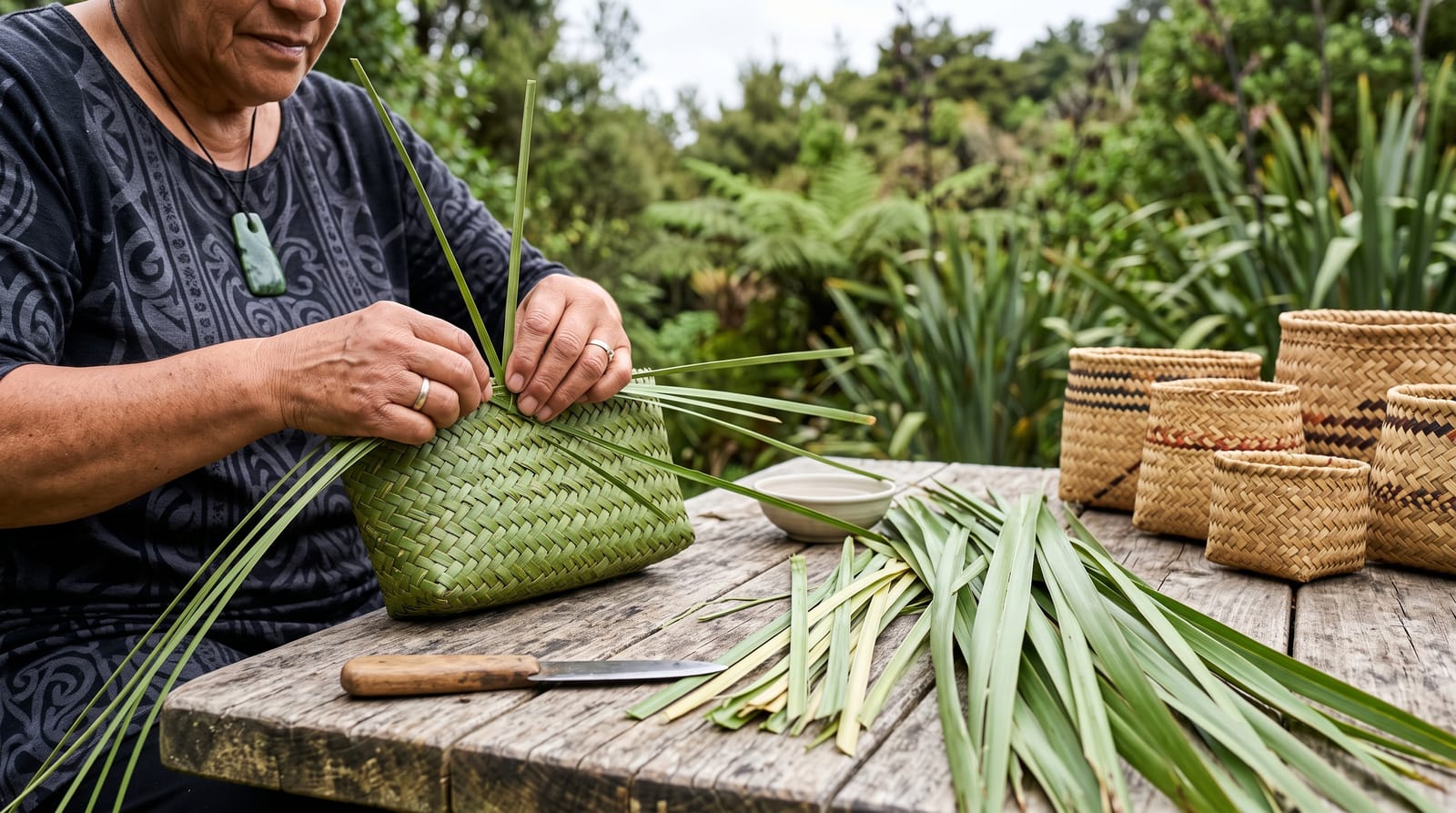
Harakeke is New Zealand flax, a big fan of strap leaves found in wetlands, gardens and roadsides, and it is not related to the flax that makes linen. Raranga, the weaving of it, produces kete baskets, whariki floor mats, cordage and, at the far end of skill, korowai, the cloaks finished with feathers or tassels that take months and are worn on serious occasions. Muka, the silky fibre inside the leaf, is stripped out with the edge of a mussel shell. Harvesting follows tikanga: only outer leaves are cut, the central rito shoot and the leaves flanking it are left standing, and offcuts go back to the plant.
What's there
- Korowai - feathered cloaks in museum collections, and worn at graduations and formal occasions.
- Kete - the everyday woven baskets, from rough field work to fine patterned pieces.
- Muka stripping - the fibre pulled from a leaf with a shell edge, usually shown in demonstrations.
- Harakeke growing - the plant itself in wetlands and gardens, with tall flower stalks in spring.
When to go
Any time of year. Cultural centres in Rotorua run weaving demonstrations daily, and museums in Auckland, Wellington and Christchurch keep cloaks on display, though light-sensitive pieces rotate out of the cases. Workshops through community centres and marae are small, run on set dates and book out early. Spring brings the flower stalks and the tui feeding on them.
Before you go
A beginner's kete takes several hours and looks like a beginner's kete, which is rather the point of making one. Workshops are infrequent and fill fast, so this needs planning rather than a spare afternoon. Korowai are not casually for sale, and anything cheap in a souvenir shop is machine-made from imported material. Museum textiles are kept dimly lit for preservation.
Nearby
Rotorua's cultural centres combine weaving with carving; wetland reserves near most cities grow harakeke in quantity.
What to pack for Harakeke Weaving
Chosen from what this place is for. Tap a kit for the full checklist.
- Comfortable walking shoes - Sightseeing means kilometres of pavement and cobbles daily. Find on Amazon
- A slim anti-theft daypack - Zips that close properly; keep it in front in crowds and on transit. Find on Amazon
- A refillable water bottle - Many cities have public fountains; save money and plastic. Find on Amazon
- A light layer + compact umbrella - For museum air-con and a sudden shower. Find on Amazon
Some links on this page are Amazon affiliate links - if you buy through them we may earn a small commission at no extra cost to you.
All packing kitsPlan your trip
Where to start if Harakeke Weaving is going on the list.
Booking links on this page are affiliate links - if you book through them we may earn a small commission at no extra cost to you. It never changes what we write about a place.
Opening times, ticket prices and seasonal closures change - check the official source before you go: official site.