Haka and Kapa Haka
A family of composed Maori performances with chanted words, stamping and body percussion, made for welcome, grief, celebration and challenge.
Updated 4 September 2026
AI illustration
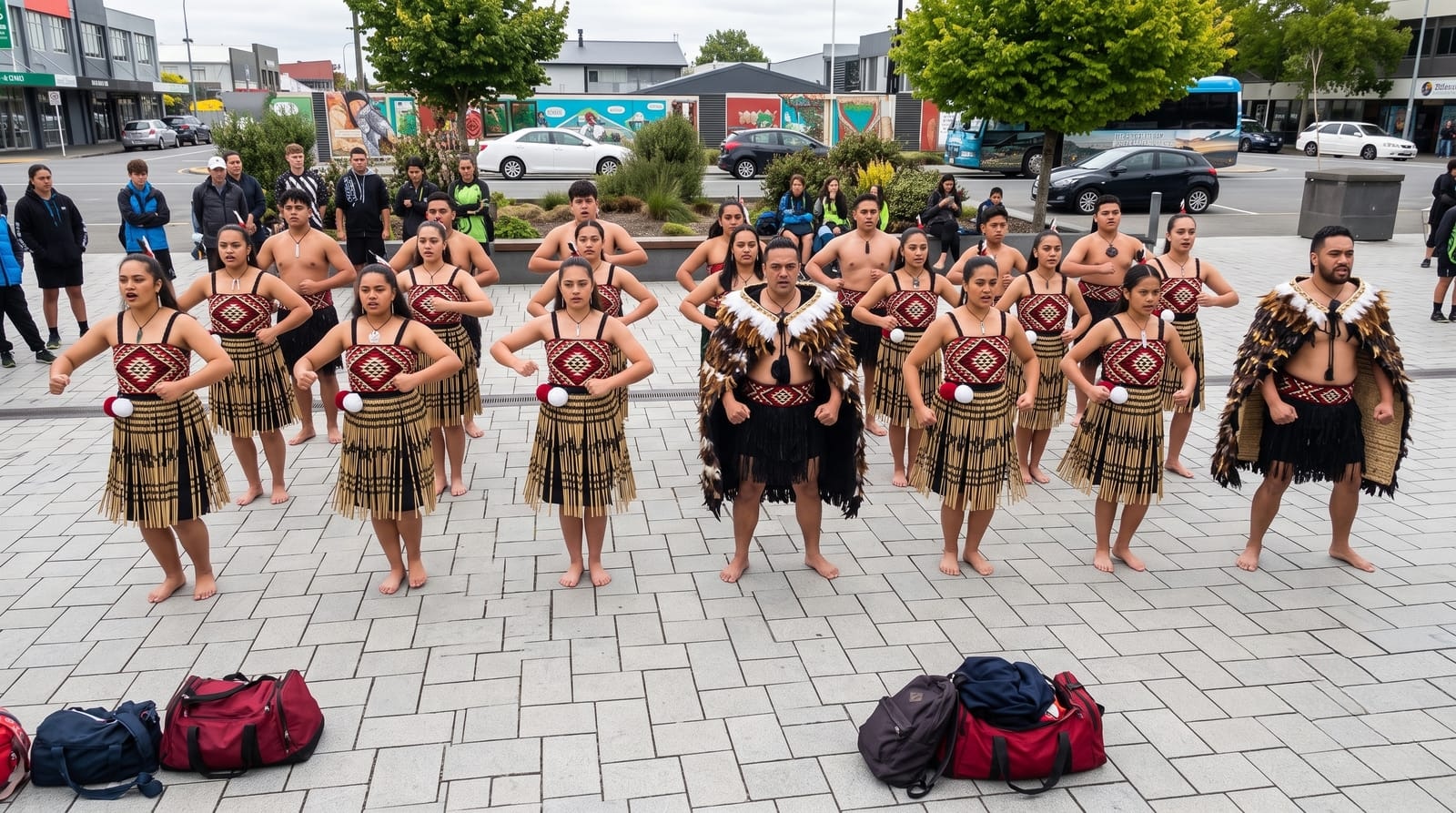
Haka is not one dance. It is a family of composed performances with chanted words, stamping, and rhythmic slapping of the chest, thighs and forearms, made for welcome, for farewell, for grief, for celebration and for challenge. The one most visitors know is Ka Mate, composed in the early nineteenth century and associated with Ngati Toa, which the national rugby teams have used for over a century. Within Aotearoa it sits inside the wider performing art of kapa haka, which also takes in waiata, poi and oratory, taught in schools, argued over by families, and contested seriously at regional competitions and at Te Matatini, the national festival held every two years in a different host city.
What's there
- Te Matatini and regional competitions - the national kapa haka festival and the regional heats that feed it.
- Haka powhiri - the welcome form performed as visitors are brought onto a marae.
- The detail - pukana, the widened eyes and set expressions, and the body percussion carrying the rhythm.
- Everyday haka - performed at graduations, weddings and funerals, well outside any tourist setting.
When to go
Kapa haka happens all year. Te Matatini runs every two years in late summer, and tickets and beds in the host city go early. Regional competitions and school festivals fill the middle of the year and are often free or cheap. Maori-owned cultural evenings in Rotorua operate nightly, year-round, and book out over the summer holidays.
What to expect
Packaged evening shows vary widely, and the weakest are a rushed twenty minutes after a buffet. Maori-owned operators and marae stays give something closer to the real thing. Filming without asking, joining in uninvited or treating a performance as a photo backdrop reads as rude. The version most visitors picture, forty seconds before a rugby match, is a sliver of the repertoire.
Nearby
Rotorua has the most cultural centres, and the national museum in Wellington and Auckland Museum both run regular performances.
What to pack for Haka and Kapa Haka
Chosen from what this place is for. Tap a kit for the full checklist.
- Comfortable walking shoes - Sightseeing means kilometres of pavement and cobbles daily. Find on Amazon
- A slim anti-theft daypack - Zips that close properly; keep it in front in crowds and on transit. Find on Amazon
- A refillable water bottle - Many cities have public fountains; save money and plastic. Find on Amazon
- A light layer + compact umbrella - For museum air-con and a sudden shower. Find on Amazon
Some links on this page are Amazon affiliate links - if you buy through them we may earn a small commission at no extra cost to you.
All packing kitsPlan your trip
Where to start if Haka and Kapa Haka is going on the list.
Booking links on this page are affiliate links - if you book through them we may earn a small commission at no extra cost to you. It never changes what we write about a place.
Opening times, ticket prices and seasonal closures change - check the official source before you go: official site.