Rotterdam's Modern Architecture
A city rebuilt from nothing into an open-air gallery of bold modern building, from tilted cube houses to a market hall shaped like an arch.
Updated 29 August 2026

AI illustration
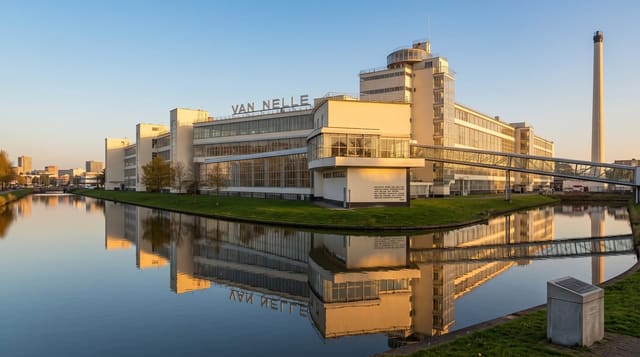
Rotterdam lost its old centre in 1940 and rebuilt not as a copy of what had gone but as a laboratory for modern architecture, and the result is the most striking skyline in the Netherlands and a city that reads as one long design experiment. Its landmarks are genuinely odd and genuinely loved: the Cube Houses, a cluster of yellow homes tilted onto their corners like dice, one of which is open to visit; the Markthal, a huge arch of apartments curving over a food market, its inner vault painted with an enormous mural of fruit and flowers; the Erasmus Bridge, a white asymmetric span nicknamed the Swan; and the Depot Boijmans Van Beuningen, a mirrored bowl that is the first publicly accessible art storage building in the world. Add the reborn harbour district and the old Delfshaven that survived, and it is a city best explored by simply looking up.
What to look for
- The Cube Houses - the tilted yellow cubes, with one open as a small museum.
- The Markthal - the arched market building with its vast painted inner vault.
- The Erasmus Bridge - the white asymmetric span over the Maas.
- The Depot Boijmans Van Beuningen - the mirrored bowl storing an entire art collection on view.
When to go
April to September is the mildest and best for walking and water taxis; the city is a good wet-weather destination too, with the Markthal, Depot and museums indoors. Summer brings festivals along the river. Weekdays are quieter in the market hall than Saturdays.
What to expect
Rotterdam divides people: it has none of Amsterdam's canal-house prettiness, and those who come expecting a classic Dutch old town are often disappointed by the concrete and glass. The interest is architectural, so it rewards curiosity about design more than casual sightseeing. Distances between landmarks are walkable but real, and the wind off the river is sharper than in the sheltered inland towns.
Nearby
Kinderdijk's windmills are a short boat ride away; Delft and The Hague are twenty minutes by train.
What to pack for Rotterdam's Modern Architecture
Chosen from what this place is for. Tap a kit for the full checklist.
- Comfortable walking shoes - Sightseeing means kilometres of pavement and cobbles daily. Find on Amazon
- A slim anti-theft daypack - Zips that close properly; keep it in front in crowds and on transit. Find on Amazon
- A refillable water bottle - Many cities have public fountains; save money and plastic. Find on Amazon
- A light layer + compact umbrella - For museum air-con and a sudden shower. Find on Amazon
Some links on this page are Amazon affiliate links - if you buy through them we may earn a small commission at no extra cost to you.
All packing kitsPlan your trip
Where to start if Rotterdam's Modern Architecture is going on the list.
Booking links on this page are affiliate links - if you book through them we may earn a small commission at no extra cost to you. It never changes what we write about a place.
Opening times, ticket prices and seasonal closures change - check the official source before you go: official site.