Hortus Botanicus Leiden
A university physic garden from 1590, still on its original ground, with a reconstructed Clusius garden, glasshouses and a Japanese section.
Updated 21 October 2026

AI illustration
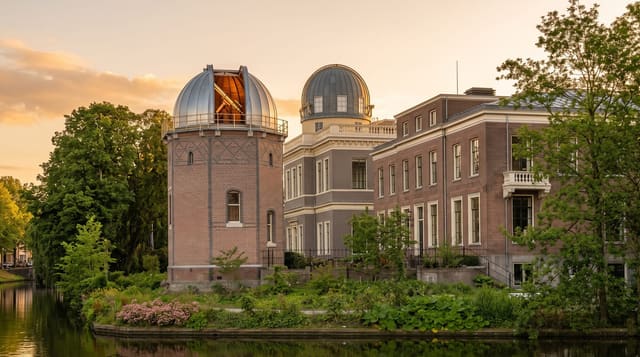
The university laid this garden out in 1590 to grow plants for teaching medicine, which makes it one of the oldest botanical gardens anywhere still on its original ground. Part of it is a reconstruction of the first plan, planted as Carolus Clusius had it in the 1590s, when the bulbs he was growing here helped start Dutch tulip cultivation. Elsewhere there is a Japanese garden built around the collections Philipp von Siebold brought back from Japan, glasshouses of tropical plants, a pond house for giant water lilies, and old trees including a ginkgo planted in the eighteenth century. It is walled, central and small, tucked behind the academy building, and it works as a quiet hour in the middle of a day in Leiden.
History
In 1587 the young University of Leiden asked to set up a teaching garden for its medical students, and permission came in 1590. The botanist Carolus Clusius arrived as prefect in 1593 and, through his contacts and the Dutch East India Company, built up a collection of more than 1000 plants in a garden of only about 35 by 40 metres (Wikipedia, Hortus Botanicus Leiden).
What to look for
- The Clusius garden - a reconstruction of the original sixteenth-century beds, laid out as the first keeper had them.
- The glasshouses - tropical and subtropical collections including a house for giant water lilies.
- The Japanese garden - a section built around plants and collections brought from Japan in the nineteenth century.
- The old trees - including a ginkgo planted in the eighteenth century, among the oldest in Europe.
When to go
April to September, with spring bulbs in the Clusius garden and the water lily house at its best in high summer. The glasshouses make a decent refuge in rain, though they fill quickly when the weather turns. Winter shows little outdoors. Mornings are the quietest, especially in university term time.
Good to know
It is small: an hour or two covers everything, and it charges full admission for that. This is a scientific collection rather than a display garden, so labels, beds and rarity matter more than mass colour, and anyone expecting the big spring bulb show elsewhere in the region will be disappointed. The glasshouses are hot and cramped when it rains and half the city takes shelter.
Nearby
Leiden's canals, university buildings and museums are all within a few minutes' walk.
Key facts
Source: Wikidata, item Q2468128, read on 18 October 2026.
What to pack for Hortus Botanicus Leiden
Chosen from what this place is for. Tap a kit for the full checklist.
- Comfortable walking shoes - Sightseeing means kilometres of pavement and cobbles daily. Find on Amazon
- A slim anti-theft daypack - Zips that close properly; keep it in front in crowds and on transit. Find on Amazon
- A refillable water bottle - Many cities have public fountains; save money and plastic. Find on Amazon
- A light layer + compact umbrella - For museum air-con and a sudden shower. Find on Amazon
Some links on this page are Amazon affiliate links - if you buy through them we may earn a small commission at no extra cost to you.
All packing kitsPlan your trip
Where to start if Hortus Botanicus Leiden is going on the list.
Booking links on this page are affiliate links - if you book through them we may earn a small commission at no extra cost to you. It never changes what we write about a place.
Opening times, ticket prices and seasonal closures change - check the official source before you go: official site.