Australian National Botanic Gardens
A Canberra garden devoted entirely to Australian native plants, from a misted rainforest gully to a red sand dune of desert species.
Updated 18 October 2026

AI illustration
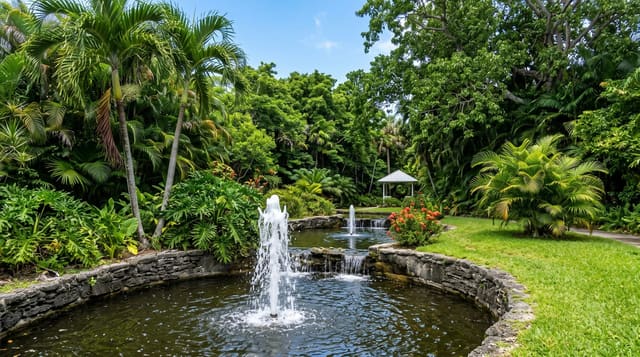
The Australian National Botanic Gardens sit on the lower slopes of Black Mountain in Canberra and grow only Australian plants, which makes them unlike most botanic gardens and more useful than they first look. The collection is arranged so you can walk from one climate to another in twenty minutes. The Rainforest Gully runs down a shaded valley under a misting system that keeps the humidity artificially high. The Red Centre Garden builds a genuine red sand dune planted with arid species. Elsewhere there are banksias, eucalypt lawns and a wattle collection that flowers in late winter. Birds are a large part of the appeal, including cockatoos and honeyeaters working the flowering shrubs, and free guided walks run most days.
History
A botanic garden for the new capital was recommended in 1933 by the Australian Capital Territory Advisory Council, the Dickson Report of 1935 set a framework, and a large site was set aside on Black Mountain, where Prime Minister Ben Chifley and Sir Edward Salisbury, director of Kew, planted the first trees in September 1949. The gardens were officially opened by Prime Minister John Gorton in October 1970, and for their 50th anniversary in 2020 a new Banksia garden was added (Wikipedia, Australian National Botanic Gardens).
The main sights
- Rainforest Gully - a shaded, misted valley of ferns and rainforest trees.
- Red Centre Garden - a constructed red sand dune planted with arid-zone species.
- The wattle collection - dense yellow flowering through late winter and early spring.
- Birdlife - cockatoos, parrots and honeyeaters feeding through the flowering beds.
When to go
August to November is the strongest stretch, starting with wattles and running into the spring flowering of banksias and other shrubs. Mornings are best for birds. Canberra summers are hot and dry and winters genuinely cold with frost, so the shoulder months are the most comfortable. Free guided walks run daily and are worth timing a visit around.
Before you go
Anyone expecting massed colour beds will find this restrained; Australian plants tend towards fine texture and muted green, and outside spring the impression can be uniformly scrubby. Parts of the site are steep. Some sections carry visible fire damage and regrowth from past years, and the gardens are small enough to exhaust in two hours.
Nearby
Black Mountain and its tower rise directly above, with the national museums around Lake Burley Griffin nearby.
Key facts
Source: Wikidata, item Q509884, read on 18 October 2026.
What to pack for Australian National Botanic Gardens
Chosen from what this place is for. Tap a kit for the full checklist.
- Binoculars - The single best wildlife tool - even a compact pair transforms a sighting. Find on Amazon
- Loose, light, long clothing - Covering up beats bare skin in the desert - and locals dress this way for a reason. Find on Amazon
- Strong insect repellent - DEET or picaridin; the jungle is where bites and disease risk are highest. Find on Amazon
- Comfortable walking shoes - Sightseeing means kilometres of pavement and cobbles daily. Find on Amazon
Some links on this page are Amazon affiliate links - if you buy through them we may earn a small commission at no extra cost to you.
All packing kitsPlan your trip
Where to start if Australian National Botanic Gardens is going on the list.
Booking links on this page are affiliate links - if you book through them we may earn a small commission at no extra cost to you. It never changes what we write about a place.
Opening times, ticket prices and seasonal closures change - check the official source before you go: official site.