Biesbosch National Park
A freshwater tidal wilderness of creeks, willow woods and reed islands created by a medieval flood, explored by canoe or whisper boat.
Updated 21 October 2026
AI illustration
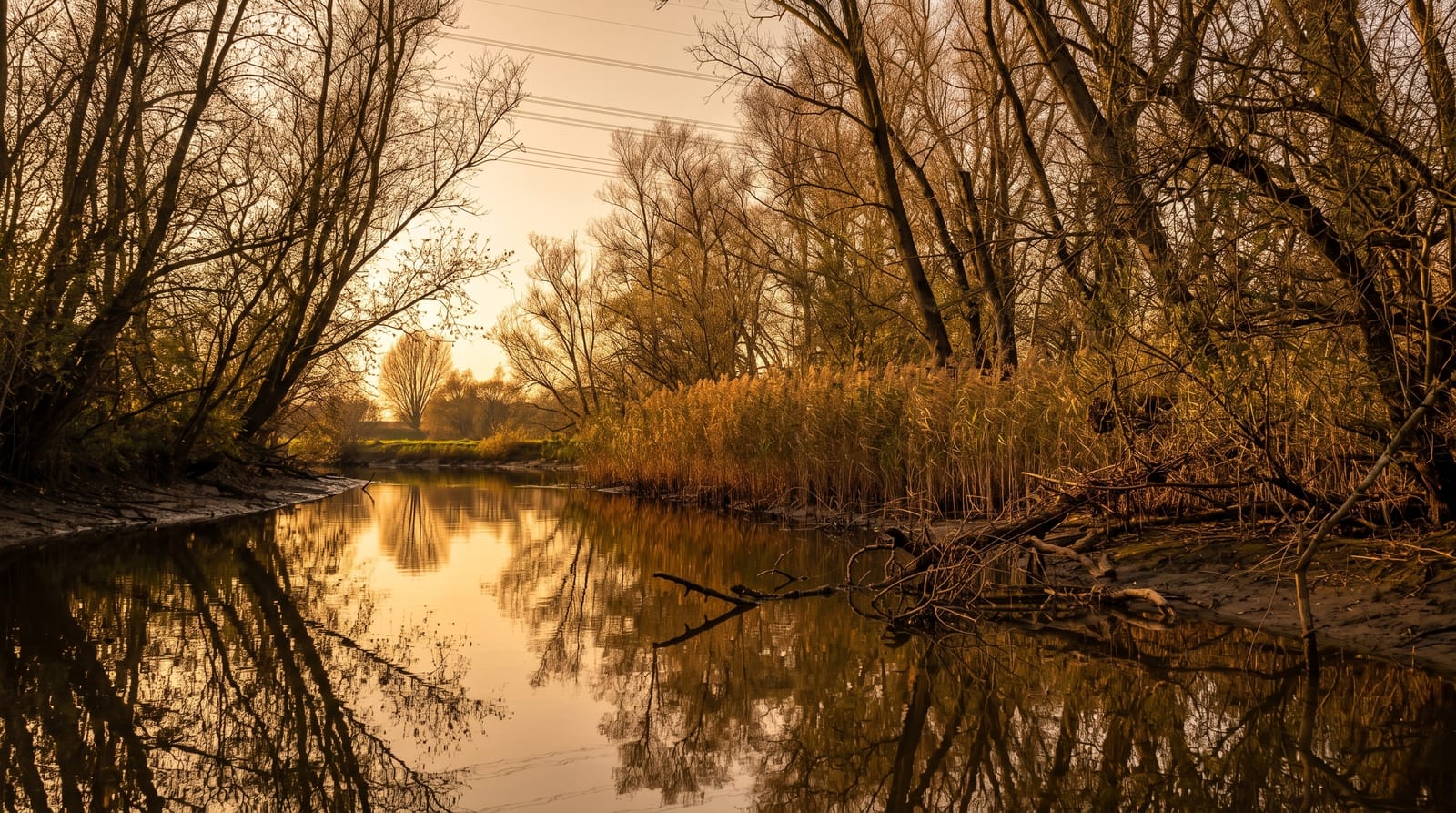
The Biesbosch began with a flood in 1421 that turned farmland into an inland sea, and it settled into a maze of creeks, willow woods and reed islands where the river tide still rises and falls, now by tens of centimetres rather than metres. Willow was cut here for basketry and dyke work for centuries, and the old coppice patterns are still visible in the wood. Beavers were brought back in the 1980s and are common now, though what you usually see is gnawed stumps and lodges rather than the animals. White-tailed eagles nest in the quieter sections. Marked canoe routes thread through the narrow creeks, whisper boats carry those who would rather not paddle, and cycle routes run along the polder dykes.
History
After the great flood, the area became a shallow inland water with high tides and mostly fresh water; as the rivers laid down silt, the land was flooded only at high tide and was called the Bergse Veld, and from the 18th century the Biesbosch, "forest of sedges", a network of creeks, mudflats and woods forming an inland delta (Wikipedia, De Biesbosch National Park).
What you'll find
- The creek canoe routes - marked water trails through willow and reed, narrow enough that the banks close in.
- Beaver signs - felled willows, gnawed stumps and lodges along the water, with the animals themselves mostly nocturnal.
- Whisper boats and water taxis - quiet electric craft linking the visitor centres with the interior.
- Polder dykes by bicycle - flat routes around the edge of the wetland with views over creeks and reed.
When to go
April to June for birdlife, willow in leaf and manageable insect levels; September for quieter water and autumn colour. Canoes should be booked ahead on summer weekends. Winter brings high water, wintering geese and eagles, but most hire operations close and the water taxis run on a reduced timetable.
Things to know
Mosquitoes are relentless in summer and there is nowhere to escape them mid-creek. Beavers and eagles are talked about far more often than they are seen. Some routes close during the breeding season and others need a permit. The park is split by a wide river, so crossing between halves means a ferry or a long detour, and one polder looks much like the next.
Nearby
Dordrecht lies on the northern edge, with Drimmelen and the Brabant villages on the southern side.
Key facts
Source: Wikidata, item Q1702833, read on 18 October 2026.
What to pack for Biesbosch National Park
Chosen from what this place is for. Tap a kit for the full checklist.
- Broken-in walking shoes or boots - Grip and ankle support matter more than looks; never hike in brand-new boots. Find on Amazon
- Quick-dry clothing - Board shorts or synthetics that shrug off spray and dry fast. Find on Amazon
- Padded shorts - The one thing that makes a full day in the saddle bearable. Find on Amazon
- Binoculars - The single best wildlife tool - even a compact pair transforms a sighting. Find on Amazon
Some links on this page are Amazon affiliate links - if you buy through them we may earn a small commission at no extra cost to you.
All packing kitsPlan your trip
Where to start if Biesbosch National Park is going on the list.
Booking links on this page are affiliate links - if you book through them we may earn a small commission at no extra cost to you. It never changes what we write about a place.
Opening times, ticket prices and seasonal closures change - check the official source before you go: official site.