The Pashupatinath Temple
The most sacred Hindu temple in Nepal - a revered riverside complex on the Bagmati, the spiritual centre of Shiva worship in the country and its most important site of cremation and pilgrimage, a UNESCO site.
Updated 18 October 2026

AI illustration
UNESCO World Heritage
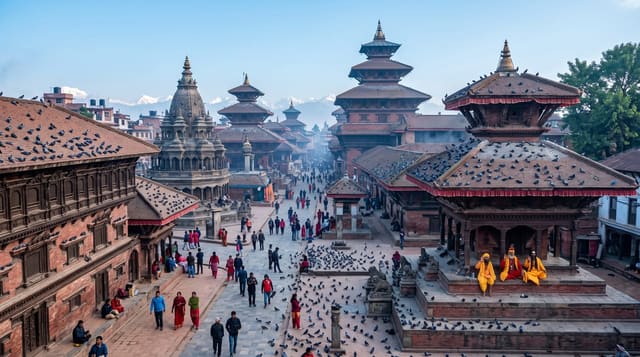
Pashupatinath is the most sacred Hindu temple in Nepal, a sprawling and deeply revered complex on the banks of the holy Bagmati River on the edge of Kathmandu. The spiritual centre of Shiva worship in the country and a UNESCO site, it is the nation's most important place of Hindu pilgrimage and, on the ghats along the river, of open-air cremation, where the dead are farewelled amid the smoke and ritual of the funeral pyres, a profound and moving glimpse into life, death and faith.
History
Pashupatinath is the oldest Hindu temple in Kathmandu, held to be pre-Vedic in origin, and in the Shiva Purana's story of the Pandavas, Shiva, hidden underground as a bull, reappears with his head at Pashupatinath and his hump at Kedarnath. The temple's existence is recorded as early as 400 CE; the Gopal Raj Vamshavali says it was built by the Licchavi king Prachanda Deva, another chronicle that Supuspa Deva raised a five-storey temple where a linga-shaped shrine had stood, and it was rebuilt by King Shivadeva, who reigned from 1099 to 1126, and given a roof by Ananta Malla. Since 1979 it has been one of the seven monument groups of the Kathmandu Valley World Heritage Site, an extensive precinct of 246 hectares with 518 smaller temples around the main pagoda (Wikipedia, Pashupatinath Temple).
What you'll find
- The main temple - the golden-roofed Shiva temple (inner areas Hindu-only).
- The cremation ghats - the riverside platforms of the funeral rites.
- The sadhus - the ash-covered holy men of the complex.
- The riverside shrines - the many temples and shrines along the Bagmati.
When to go
October to April for the best weather; the great festival of Maha Shivaratri, usually in February or March, draws vast crowds of pilgrims and sadhus and is an extraordinary, if overwhelming, time to visit.
What to expect
The cremations take place openly along the river and can be confronting; they are sacred funeral rites, to be observed only from a respectful distance, quietly and never photographed up close, out of decency to grieving families. The inner main temple is open only to Hindus. The ash-covered sadhus often expect payment for photos. It is a profound but intense and sombre experience.
Nearby
The Boudhanath Stupa and the Kathmandu durbar squares are nearby in the valley.
Key facts
Source: Wikidata, item Q380384, read on 18 October 2026.
What to pack for The Pashupatinath Temple
Chosen from what this place is for. Tap a kit for the full checklist.
- Head torch + spare batteries - Hands-free light is essential; caves are truly dark. Find on Amazon
- Comfortable walking shoes - Sightseeing means kilometres of pavement and cobbles daily. Find on Amazon
- Modest clothing - Shoulders and knees covered - the single most common requirement. Find on Amazon
- Grippy closed shoes - Cave floors are wet, muddy and slick with formations. Find on Amazon
Some links on this page are Amazon affiliate links - if you buy through them we may earn a small commission at no extra cost to you.
All packing kitsPlan your trip
Where to start if The Pashupatinath Temple is going on the list.
Booking links on this page are affiliate links - if you book through them we may earn a small commission at no extra cost to you. It never changes what we write about a place.
Opening times, ticket prices and seasonal closures change - check the official source before you go: official site.