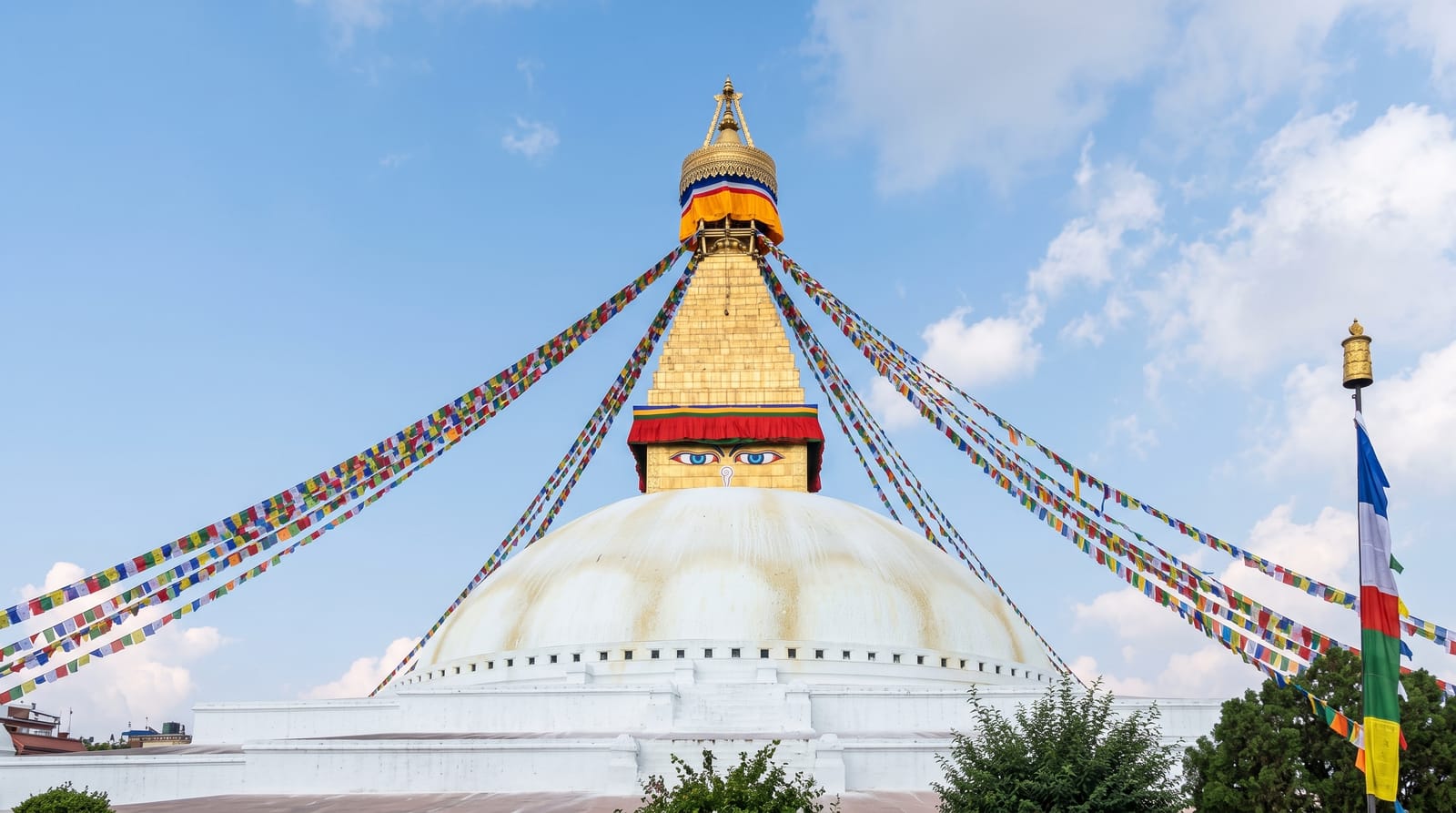
The Boudhanath Stupa
A white dome 36 metres high on the edge of Kathmandu, the centre of Tibetan Buddhist life in Nepal and part of the valley World Heritage listing.
Updated 19 October 2026
AI illustration
UNESCO World Heritage
Boudhanath is a white hemispherical dome about 36 metres high set on a stepped mandala base, with a gilded tower above it carrying the painted eyes on all four sides, and it is among the largest stupas in Asia. Its present importance is tied to the Tibetan community: Tibetans settled around it from 1959 and built more than fifty gompas in the surrounding streets, which turned a valley pilgrimage site into the working centre of Tibetan Buddhism in Nepal. The kora, the clockwise circuit around the base, runs continuously through the day and fills at dusk with people walking, spinning the wheels and lighting butter lamps. The spire was badly cracked in the 2015 earthquake and was rebuilt by 2016. It is part of the Kathmandu Valley World Heritage inscription.
History
The Gopalarajavamsavali says the town of Boudha was founded by the Licchavi king Shivadeva, around 590-604, while other chronicles date it to Manadeva, 464-505; Newar chronicles name the stupa, Khasti, among four found by King Vrisadeva around 400, or tell that Manadeva built it to atone for unwittingly killing his father, and an inscription links Shivadeva with it, perhaps as a restorer. The present structure was most likely built in the 14th century, and one text says the stupa gave birth to Tibetan Buddhism. From 1959 many Tibetans settled around it, in 1979 it became a World Heritage Site, and the earthquake of 25 April 2015 badly cracked its spire, after which the stupa was reconsecrated from 22 November 2015 with a new central life-tree (Wikipedia, Boudha Stupa).
What you'll find
- The dome and eyes - the white stupa on its mandala base.
- The kora at dusk - the circuit filling with walkers and butter lamps.
- The surrounding gompas - the monasteries built in the streets around.
- Rooftop terraces - the cafes looking down onto the stupa.
When to go
October to April for the weather. Dusk is when the circuit is busiest and most alive. Losar, Tibetan new year in February or March, brings the largest gatherings and full ceremonial.
What to expect
The streets around are heavily commercial, with shops and cafes aimed squarely at visitors. Walking anticlockwise or standing in the flow is discourteous. It is crowded at dusk and at festivals. The entry charge applies to the whole enclosure.
Nearby
Pashupatinath lies south; Kopan monastery is on the hill above.
Key facts
Source: Wikidata, item Q889902, read on 18 October 2026.
What to pack for The Boudhanath Stupa
Chosen from what this place is for. Tap a kit for the full checklist.
- Comfortable walking shoes - Sightseeing means kilometres of pavement and cobbles daily. Find on Amazon
- Modest clothing - Shoulders and knees covered - the single most common requirement. Find on Amazon
- A slim anti-theft daypack - Zips that close properly; keep it in front in crowds and on transit. Find on Amazon
- A scarf or shawl - To cover the head or shoulders on entry; women especially at mosques. Find on Amazon
Some links on this page are Amazon affiliate links - if you buy through them we may earn a small commission at no extra cost to you.
All packing kitsPlan your trip
Where to start if The Boudhanath Stupa is going on the list.
Booking links on this page are affiliate links - if you book through them we may earn a small commission at no extra cost to you. It never changes what we write about a place.
Opening times, ticket prices and seasonal closures change - check the official source before you go: official site.