Bungamati and Khokana
Two Newar farming villages south of Patan, one of woodcarvers and one that presses mustard oil by beam.
Updated 14 October 2026
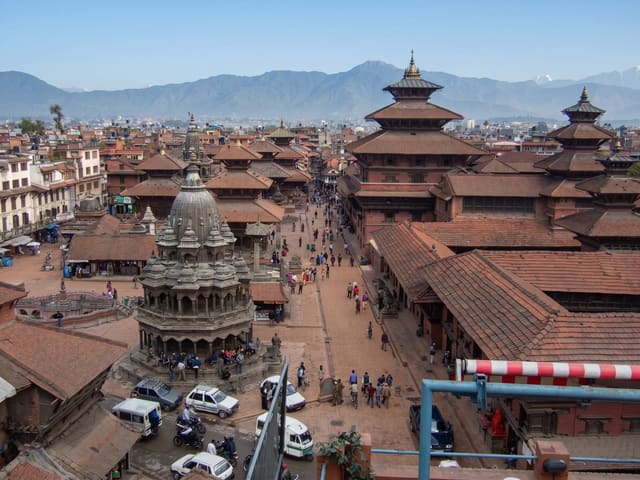
Bungamati and Khokana lie fifteen minutes apart on a ridge south of Patan, and both are Newar farming villages laid out around a central square with fields worked from the settlement. Bungamati is the home of Rato Machhindranath, whose image spends half the year here and half in Patan and is carried between them in one of the valley's great chariot festivals; the village is also a centre of woodcarving, with workshops around the square. Khokana is known for mustard oil, still pressed in a traditional wooden beam press in the village, and for a street plan of a single main road with side lanes that is unusual in the valley. Both were badly damaged in 2015 and rebuilding continues.
Highlights
- Woodcarving workshops - carvers working around the Bungamati square.
- The mustard oil press - the wooden beam press worked in Khokana.
- Newar village life - grain drying and farming worked from the squares.
- Rebuilding - reconstruction after the 2015 earthquake.
When to go
October to April for the weather; the Rato Machhindranath festival in spring is the great event at Bungamati. Grain drying in the squares happens after harvests in autumn.
What to expect
The 2015 earthquake destroyed a great deal in both villages, including the Machhindranath temple at Bungamati, and much of what stands is new. Woodcarving workshops are commercial and expect sales. Facilities are minimal.
Nearby
Patan lies north; Khokana and Bungamati are fifteen minutes apart.
What to pack for Bungamati and Khokana
Chosen from what this place is for. Tap a kit for the full checklist.
- Comfortable walking shoes - Sightseeing means kilometres of pavement and cobbles daily. Find on Amazon
- Modest clothing - Shoulders and knees covered - the single most common requirement. Find on Amazon
- A slim anti-theft daypack - Zips that close properly; keep it in front in crowds and on transit. Find on Amazon
- A scarf or shawl - To cover the head or shoulders on entry; women especially at mosques. Find on Amazon
Some links on this page are Amazon affiliate links - if you buy through them we may earn a small commission at no extra cost to you.
All packing kitsPlan your trip
Where to start if Bungamati and Khokana is going on the list.
Booking links on this page are affiliate links - if you book through them we may earn a small commission at no extra cost to you. It never changes what we write about a place.
Opening times, ticket prices and seasonal closures change - check the official source before you go: official site.