Etosha National Park
A great white salt pan teeming with wildlife - one of Africa's finest and most accessible safari parks, where elephants, lions, rhinos and vast herds gather at waterholes around a shimmering, vast salt flat.
Updated 21 October 2026
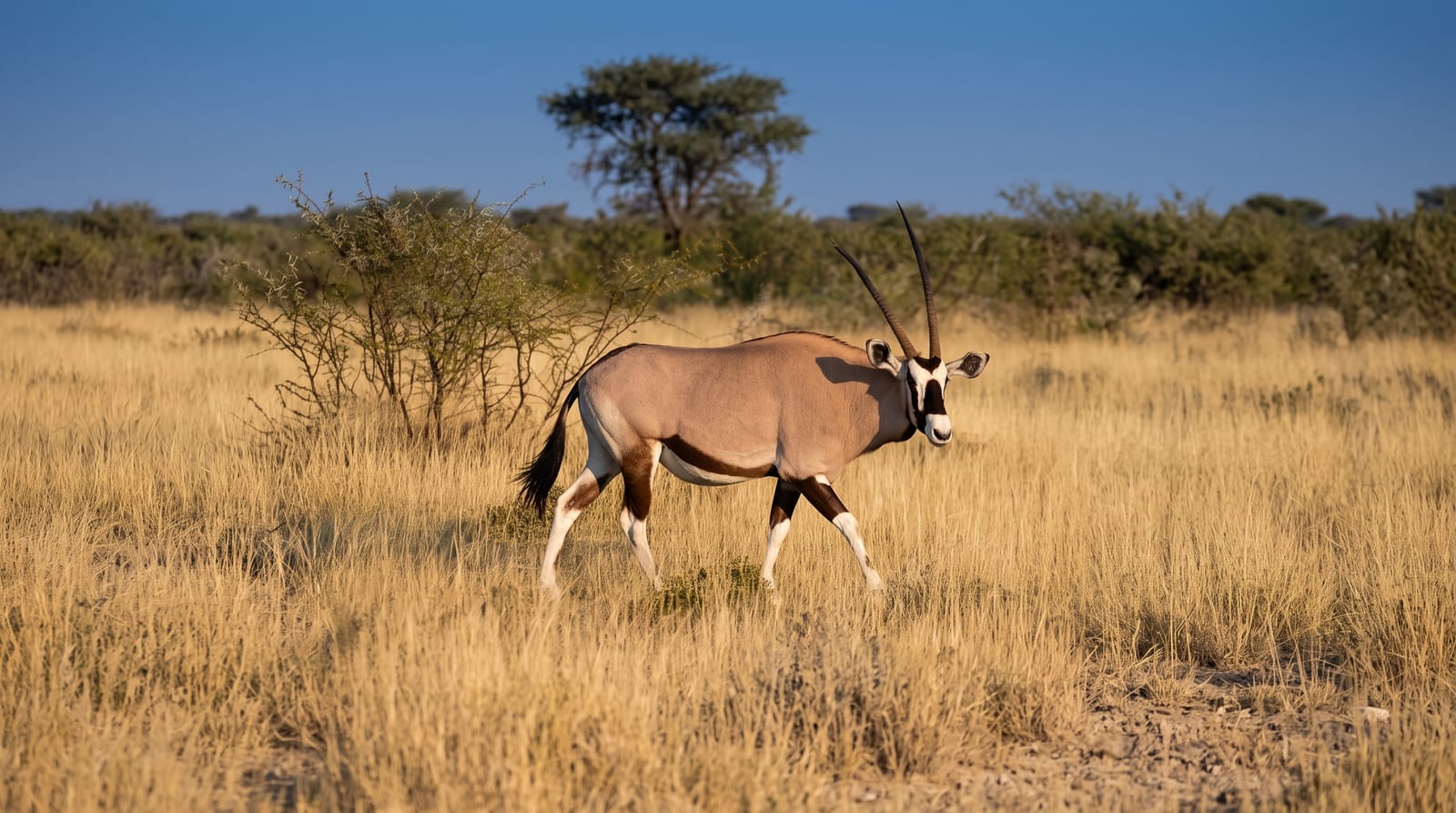
AI illustration
Etosha is one of the finest and most accessible wildlife parks in Africa, a vast reserve in northern Namibia built around the Etosha Pan, an enormous, shimmering salt flat so large it can be seen from space. In the dry season, the surrounding bush concentrates great numbers of animals, elephants, lions, giraffes, zebras, springbok and the endangered black rhino, around its many waterholes, where they gather to drink, making for superb and easy wildlife viewing, much of it possible on a self-drive safari.
History
The explorers Charles John Andersson and Francis Galton recorded the Etosha pan on 29 May 1851, travelling with Ovambo copper traders. The governor Friedrich von Lindequist proclaimed the area a game reserve in March 1907, it became a national park in 1967, and today it covers 22,270 square kilometres, almost a quarter of it the pan itself (Wikipedia, Etosha National Park).
The landscape
- The waterholes - the wildlife gathering to drink in the dry season.
- The salt pan - the vast, shimmering white Etosha Pan.
- The Big Game - the elephants, lions, giraffes and black rhinos.
- The floodlit waterholes - the night viewing at the rest-camp waterholes.
When to go
May to October, the dry season, is by far the best for wildlife, when the scarce water draws animals to the waterholes and the thin bush makes them easy to see; the green wet season disperses the wildlife but is beautiful and good for birds and newborns.
Practical notes
It is at its best in the dry season, when wildlife concentrates at the waterholes; in the green season the animals scatter and are harder to find. It is one of the easier and more affordable African parks, well set up for self-drive, though this means you find your own wildlife. The floodlit waterholes at the rest camps, where rhinos and elephants come to drink at night, are a magical highlight.
Nearby
Damaraland, the Skeleton Coast and the town of Tsumeb are within reach.
Key facts
Source: Wikidata, item Q675633, read on 18 October 2026.
What to pack for Etosha National Park
Chosen from what this place is for. Tap a kit for the full checklist.
- Broken-in walking shoes or boots - Grip and ankle support matter more than looks; never hike in brand-new boots. Find on Amazon
- Binoculars - The single best wildlife tool - even a compact pair transforms a sighting. Find on Amazon
- Layers + a waterproof shell - Mountain weather turns fast; a packable rain jacket saves the day. Find on Amazon
- A zoom camera or long lens - Animals rarely come close; reach beats megapixels. Find on Amazon
Some links on this page are Amazon affiliate links - if you buy through them we may earn a small commission at no extra cost to you.
All packing kitsPlan your trip
Where to start if Etosha National Park is going on the list.
Booking links on this page are affiliate links - if you book through them we may earn a small commission at no extra cost to you. It never changes what we write about a place.
Opening times, ticket prices and seasonal closures change - check the official source before you go: official site.