Gueliz
The French new town of 1913, laid out on avenues outside the walls, and where Marrakech's galleries and cafes are.
Updated 29 August 2026
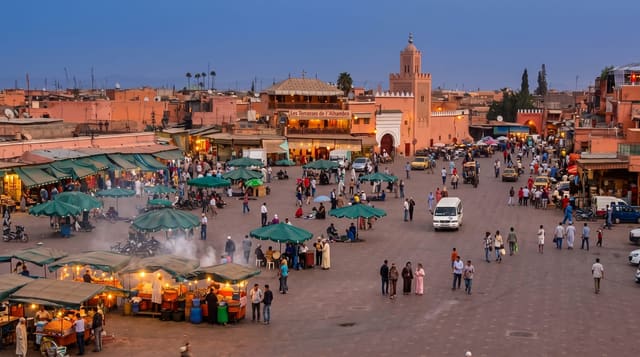
When the French took Marrakech in 1912 Lyautey's policy was to leave the medina intact and build a separate European town outside it, and Gueliz is the result - laid out from 1913 on a grid of wide avenues radiating from the Place du 16 Novembre, with the Koutoubia deliberately kept in the axis of the main boulevard so the two cities are visually linked. The architecture is a mixture of protectorate-era art deco and Mauresque, much of it now altered or replaced, with some good surviving facades on Boulevard Mohammed V and the side streets. What Gueliz is now is where the contemporary city works: galleries showing Moroccan artists, design and concept shops, cafes and restaurants aimed at residents rather than visitors, the Mohammed VI cinema, and the Majorelle garden and Saint Laurent museum on its northern edge. Prices are city prices rather than medina prices and nobody haggles.
Highlights
- A 1913 grid - wide avenues built outside the walls rather than through the medina.
- The Koutoubia axis - the minaret kept in the sightline of the main boulevard.
- Protectorate architecture - deco and Mauresque facades, altered but present.
- The contemporary city - galleries, design shops and cafes for residents.
When to go
October to April. Half a day, or an evening.
Good to know
Much of the original architecture has been replaced by recent building. It is a functioning modern district rather than a sight. Galleries keep irregular hours and close in August. It is a walk or a taxi from the medina.
Nearby
Jardin Majorelle and the YSL museum are north; the medina is south-east.
What to pack for Gueliz
Chosen from what this place is for. Tap a kit for the full checklist.
- Comfortable walking shoes - Sightseeing means kilometres of pavement and cobbles daily. Find on Amazon
- A slim anti-theft daypack - Zips that close properly; keep it in front in crowds and on transit. Find on Amazon
- A refillable water bottle - Many cities have public fountains; save money and plastic. Find on Amazon
- A light layer + compact umbrella - For museum air-con and a sudden shower. Find on Amazon
Some links on this page are Amazon affiliate links - if you buy through them we may earn a small commission at no extra cost to you.
All packing kitsPlan your trip
Where to start if Gueliz is going on the list.
Booking links on this page are affiliate links - if you book through them we may earn a small commission at no extra cost to you. It never changes what we write about a place.
Opening times, ticket prices and seasonal closures change - check the official source before you go: official site.