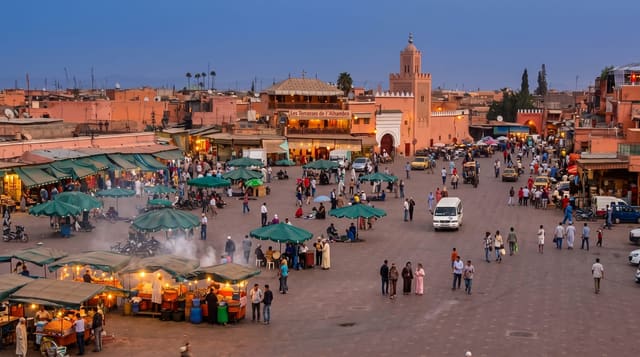
Bab el-Khemis Flea Market
Marrakech's salvage and antiques market at the northern gate, biggest on Thursdays, where the city's old furniture ends up.
Updated 29 August 2026
Bab el-Khemis means the Thursday gate and the market that has grown outside it runs every day but is biggest on Thursday, sprawling over open ground and side streets in a way that has nothing to do with the souks in the medina. What is sold is second-hand and salvage: doors and shutters taken out of demolished houses, painted cedar panels, ironwork, colonial furniture, lamps, carpets in bad condition, tools, car parts, clothes, and a good deal of junk. Dealers who furnish riads buy here, which is why the same objects reappear restored and expensive in Gueliz shops. Bargaining is harder than in the souks because the sellers are not working the tourist trade and are less practised at the theatre of it, which some people find easier. It is dusty, crowded and disorganised, and pickpocketing is a real risk in the press.
The main sights
- Architectural salvage - doors, shutters and painted panels from demolished houses.
- The supply chain - dealers buying here for the restored shops in Gueliz.
- Thursday at its largest - a daily market that spreads out on its named day.
- Blunter bargaining - sellers not working the visitor trade and less theatrical about it.
When to go
Thursday morning, October to April. Half a day.
Things to know
It is crowded and pickpocketing is a genuine risk - carry nothing loose. Much of the stock is junk and sorting it takes patience. Exporting old architectural material may need paperwork. There is no shade and it is dusty.
Nearby
The northern medina and the tanneries are inside the gate.
What to pack for Bab el-Khemis Flea Market
Chosen from what this place is for. Tap a kit for the full checklist.
- A reusable bag or container - For market produce and cutting down on packaging. Find on Amazon
- Wet wipes + hand sanitiser - Street food and washbasins do not always go together. Find on Amazon
Some links on this page are Amazon affiliate links - if you buy through them we may earn a small commission at no extra cost to you.
All packing kitsPlan your trip
Where to start if Bab el-Khemis Flea Market is going on the list.
Booking links on this page are affiliate links - if you book through them we may earn a small commission at no extra cost to you. It never changes what we write about a place.
Opening times, ticket prices and seasonal closures change - check the official source before you go: official site.