Monarch Butterfly Reserve
The oyamel forests where a continent's monarchs winter - millions of butterflies bending the fir branches of Michoacan's mountains, a UNESCO migration miracle.
Updated 18 October 2026
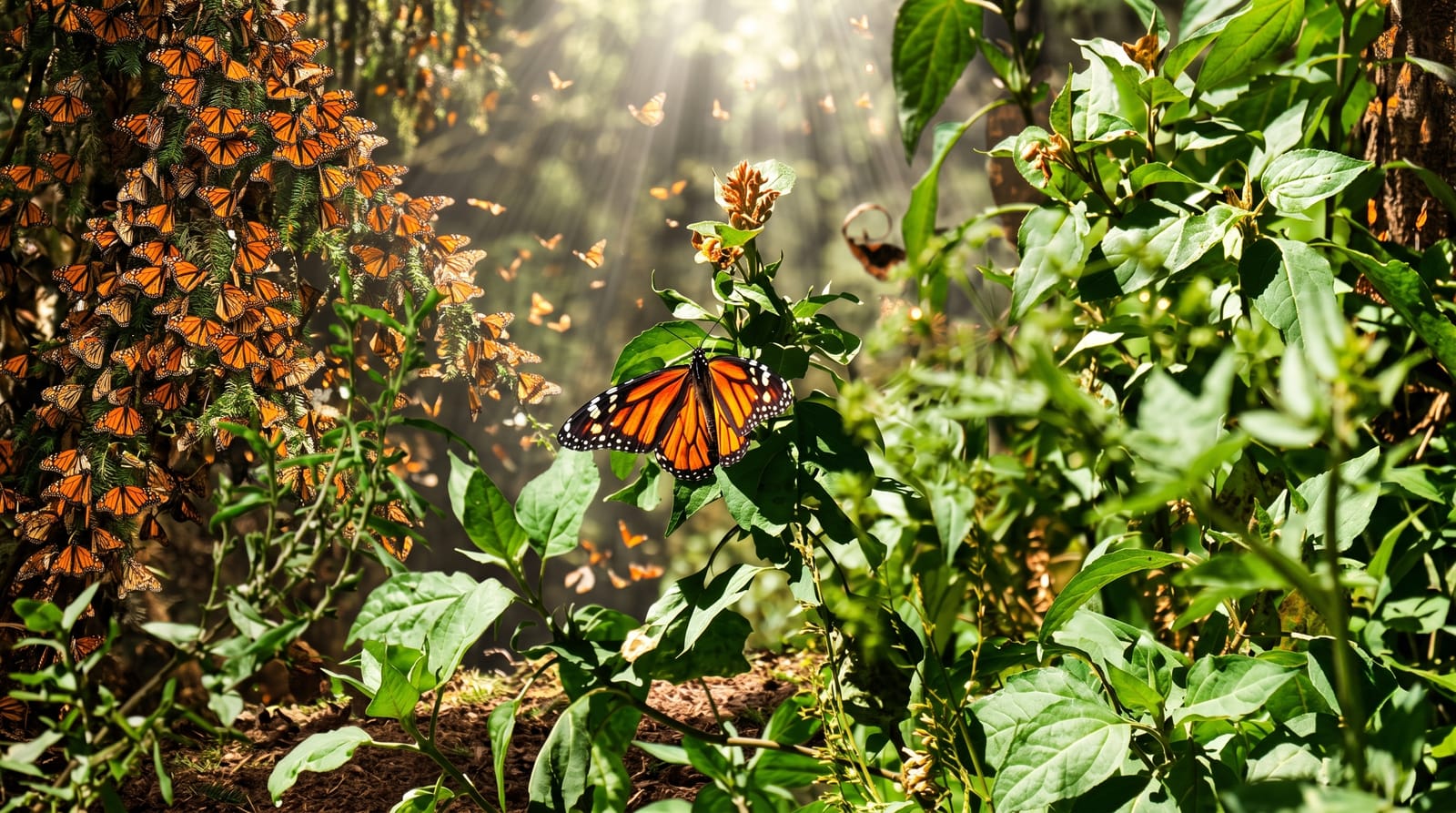
AI illustration
UNESCO World Heritage
Every autumn, monarch butterflies from across eastern North America - some having flown thousands of kilometres - funnel into a handful of high oyamel fir groves on the Michoacan-Mexico State border, and the result is one of the planet's great wildlife spectacles. Through the winter they cluster in their millions at around 3,000 metres, coating trunks and bending branches under sheer insect weight; on warm, sunny middays they lift into the air in drifting orange clouds that fill the forest with the sound of wings. The reserve was inscribed by UNESCO in 2008, and the sanctuaries of El Rosario and Sierra Chincua receive visitors from late November to March, always with local guides, on trails that climb through the firs to the roped-off colony edges. Silence is asked and rewarded - the spectacle is close, wild and strangely solemn.
History
The region was heavily logged in colonial times, and after the Mexican Revolution land grants returned much of it to the Otomi and Mazahua communities, who traditionally kept the upper mountains as communal forest and farmed family plots on the lower slopes. Researchers found the overwintering sites in 1975, and after long study of the migration President José López Portillo decreed the first protection in 1980; in 1986 the poet Homero Aridjis, founder of the Group of 100, persuaded President Miguel de la Madrid to give the sites special protection, and a decree of 9 October 1986 protected Sierra Chincua, Sierra El Campanario, Cerro Chivatí-Huacal, Cerro Pelón and Cerro Altamirano. A further decree in 2000 extended the federal reserve over these largely privately held lands, and in 2008 it became a World Heritage Site (Wikipedia, Monarch Butterfly Biosphere Reserve).
Highlights
- The clustered firs - branches bowed under millions of wings.
- The midday lift-off - orange clouds when the sun warms the colony.
- El Rosario's trail - the classic climb to the largest colony.
- Sierra Chincua - the quieter sanctuary over the ridge.
When to go
Late November to March, with January and February the dense heart of the season. Choose a sunny day if you can - the butterflies fly in warm midday light and sit tight in cold cloud.
What to expect
The trails climb steeply at 3,000-plus metres, so the altitude bites - horses are available for hire at the main sanctuaries. Colony locations shift and viewing is at a respectful rope's distance in enforced quiet. Cold mornings show still clusters, not flight; patience and midday timing make the visit.
Nearby
The town of Angangueo, colonial Morelia and the lakeside villages of Patzcuaro.
Key facts
Source: Wikidata, item Q852546, read on 18 October 2026.
What to pack for Monarch Butterfly Reserve
Chosen from what this place is for. Tap a kit for the full checklist.
- Broken-in walking shoes or boots - Grip and ankle support matter more than looks; never hike in brand-new boots. Find on Amazon
- Binoculars - The single best wildlife tool - even a compact pair transforms a sighting. Find on Amazon
- Layers for big temperature swings - Warm sun by day, near-freezing at night, even near the equator. Find on Amazon
- Layers + a waterproof shell - Mountain weather turns fast; a packable rain jacket saves the day. Find on Amazon
Some links on this page are Amazon affiliate links - if you buy through them we may earn a small commission at no extra cost to you.
All packing kitsPlan your trip
Where to start if Monarch Butterfly Reserve is going on the list.
Booking links on this page are affiliate links - if you book through them we may earn a small commission at no extra cost to you. It never changes what we write about a place.
Opening times, ticket prices and seasonal closures change - check the official source before you go: official site.