Snake Temple
A Penang temple where venomous pit vipers rest on the altars, in far smaller numbers than they once did.
Updated 20 October 2026
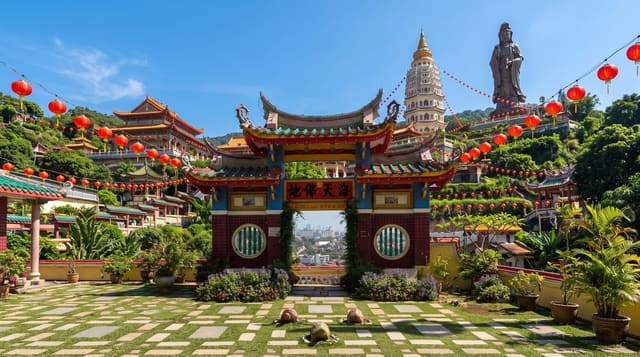
The temple was built in 1850 in honour of Chor Soo Kong, a Buddhist monk of the Song period, and the story attached to it is that after it opened the local pit vipers came in of their own accord and were allowed to stay. Wagler's pit vipers have been present ever since, coiled on branches and altar furniture in the main hall, sluggish in the incense smoke - which is the traditional explanation for their docility, though the more likely factors are cool shade and full stomachs. They are venomous, and although their fangs are often said to be removed, the temple itself does not encourage handling. The honest picture is that snake numbers have fallen sharply as the area around, near the airport and the industrial zone, has been developed, and a visit may find very few.
History
The temple honours Chor Soo Kong, a Buddhist monk of the Song dynasty remembered for healing the sick and sheltering snakes, and devotees come from as far as Singapore, Taiwan and China on his birthday, the sixth day of the first lunar month (Wikipedia, Snake Temple).
The main sights
- Pit vipers on the altars - Wagler's vipers resting among the incense and offerings.
- An 1850 Chinese temple - dedicated to the monk Chor Soo Kong.
- A snake farm alongside - a separate paid enclosure with more animals.
- Far fewer snakes than before - numbers down as the area was built over.
When to go
All year; the sixth day of the first lunar month is the temple's main festival. An hour.
Things to know
You may see only a handful of snakes, or almost none. The animals are venomous - do not touch or provoke them. The photo-with-a-snake offer is a paid extra and raises welfare questions.
Nearby
Penang International Airport is a few minutes away; George Town is north.
Key facts
Source: Wikidata, item Q182774, read on 18 October 2026.
What to pack for Snake Temple
Chosen from what this place is for. Tap a kit for the full checklist.
- Comfortable walking shoes - Sightseeing means kilometres of pavement and cobbles daily. Find on Amazon
- Modest clothing - Shoulders and knees covered - the single most common requirement. Find on Amazon
- A slim anti-theft daypack - Zips that close properly; keep it in front in crowds and on transit. Find on Amazon
- A scarf or shawl - To cover the head or shoulders on entry; women especially at mosques. Find on Amazon
Some links on this page are Amazon affiliate links - if you buy through them we may earn a small commission at no extra cost to you.
All packing kitsPlan your trip
Where to start if Snake Temple is going on the list.
Booking links on this page are affiliate links - if you book through them we may earn a small commission at no extra cost to you. It never changes what we write about a place.
Opening times, ticket prices and seasonal closures change - check the official source before you go: official site.