The Perhentian Islands
Two granite-and-jungle islands off the east coast with cheap diving, no cars and a monsoon that closes them entirely for months.
Updated 20 October 2026
AI illustration
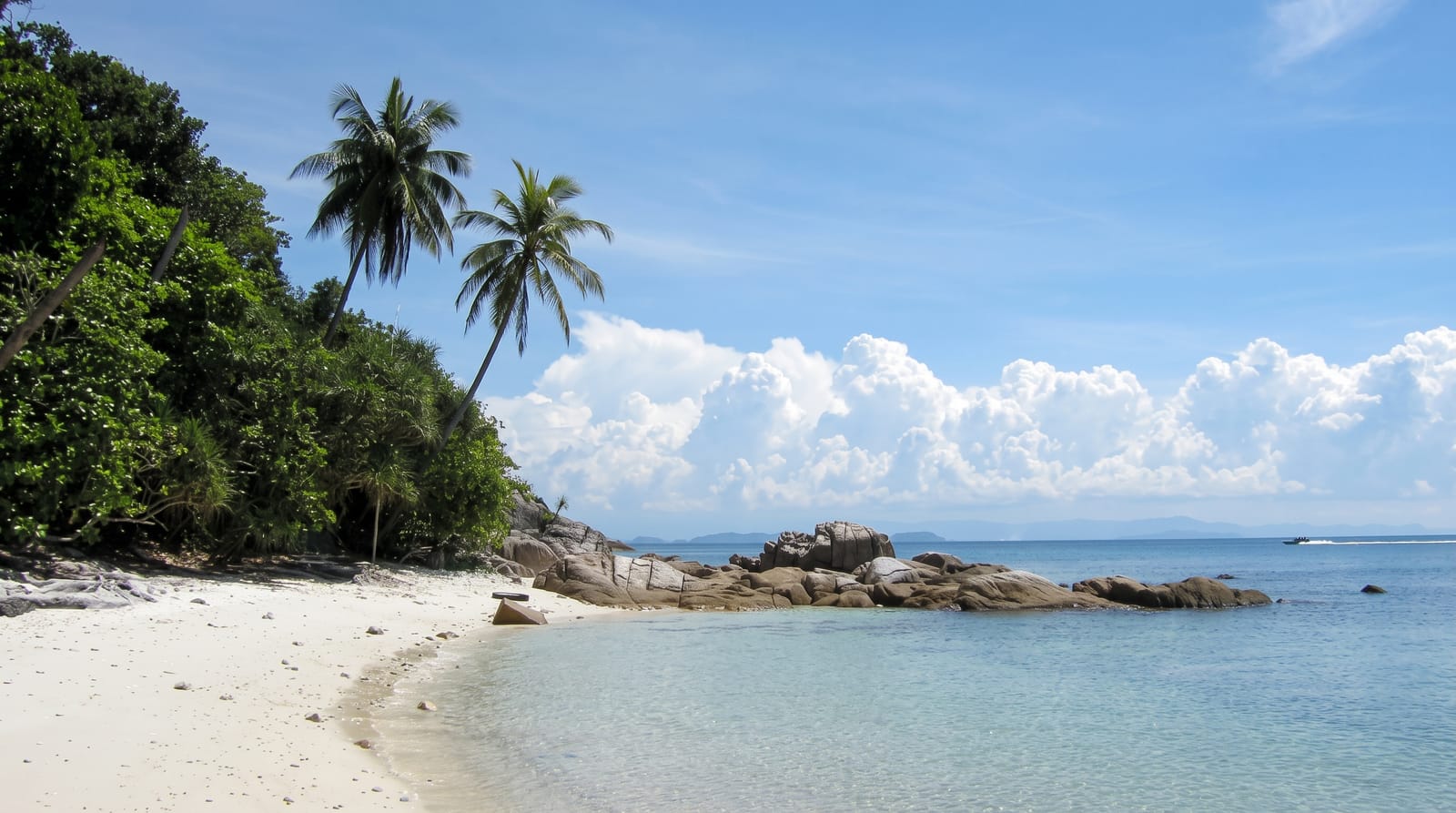
The Perhentians are two islands, Besar and Kecil, sitting in a marine park in the South China Sea, and their appeal is unfussy: white sand, clear warm water, granite headlands, jungle interiors and no roads or cars at all. Movement between beaches is by water taxi or by scrambling over jungle paths. Kecil is the backpacker island, with Long Beach and Coral Bay facing each other across a narrow waist you can walk in fifteen minutes; Besar is quieter and slightly more comfortable. The diving is inexpensive by regional standards and the marine park protects reefs where green and hawksbill turtles, blacktip reef sharks and, in season, whale sharks pass through. It is one of the cheapest places in Asia to qualify as a diver.
History
The name means "stopping point" in Malay, from the islands' role as a waypoint for traders between Bangkok and Malaysia, and British maps of the 19th and 20th centuries called them the Station Islands; for centuries they were sparsely settled by fishers (Wikipedia, Perhentian Islands).
Highlights
- Long Beach on Kecil - the main strip of sand, social and busy in season.
- Turtle Beach and Romantic Beach - quieter coves reached by jungle path or water taxi.
- Snorkelling at Shark Point - blacktip reef sharks in shallow water, a standard boat stop.
- Turtle nesting - green turtles come ashore on protected beaches in the summer months.
When to go
March to October. From roughly November to February the northeast monsoon shuts the islands down: boats stop, almost everything closes and the islands empty. Peak season is July and August, when accommodation is tight and prices rise.
What to expect
Facilities are basic and power and water can be intermittent; several places run generators on a schedule. There are no ATMs worth relying on and card payment is patchy, so bring cash. Water taxis are the only transport and the charges add up. Litter and rubbish handling have been a persistent problem on the busier beaches.
Nearby
Redang island is the more resort-oriented neighbour; the Terengganu coast has quiet fishing towns.
Key facts
Source: Wikidata, item Q2070782, read on 18 October 2026.
What to pack for The Perhentian Islands
Chosen from what this place is for. Tap a kit for the full checklist.
- Travel rod + reel - A packable multi-piece rod fits in a case and covers most holiday fishing. Find on Amazon
- Reef-safe sunscreen - High SPF that will not bleach the coral you are swimming over. Find on Amazon
- Your own mask + snorkel - A well-fitting mask is the single biggest comfort upgrade underwater. Find on Amazon
- Binoculars - The single best wildlife tool - even a compact pair transforms a sighting. Find on Amazon
Some links on this page are Amazon affiliate links - if you buy through them we may earn a small commission at no extra cost to you.
All packing kitsPlan your trip
Where to start if The Perhentian Islands is going on the list.
Booking links on this page are affiliate links - if you book through them we may earn a small commission at no extra cost to you. It never changes what we write about a place.
Opening times, ticket prices and seasonal closures change - check the official source before you go: official site.