Kirindy Forest
A dry deciduous forest north of Morondava that offers the country's best chance of seeing a fossa in the wild.
Updated 21 October 2026
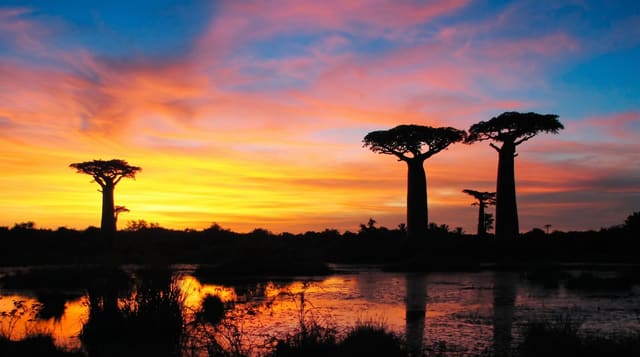
Kirindy is a research forest managed for conservation rather than a national park, and it has become known for one animal: the fossa, Madagascar's largest carnivore, a long-bodied relative of the mongooses that is genuinely hard to see anywhere else but turns up around the camp here, particularly in the mating season, usually September and October. The forest also holds Verreaux's sifaka, red-fronted brown lemurs, the giant jumping rat found only in this corner of the island, and on night walks the world's smallest primate, Madame Berthe's mouse lemur. The habitat is dry deciduous forest, leafless and grey for much of the year and startlingly green after rain. Accommodation is a simple camp in the forest, and most visitors combine it with the baobab avenue on the way in.
The landscape
- Fossa - Madagascar's largest carnivore, most likely around the camp.
- Verreaux's sifaka - the dancing sifaka of the western forests.
- Giant jumping rat - the endemic rodent found only in Menabe.
- Night walks - mouse lemurs, including the world's smallest primate.
When to go
The road is best April to November. Fossa are most visible in the mating season, usually September and October, which falls within the dry season.
Good to know
The camp is basic, with limited power and simple food. Fossa are wild and sightings are luck even in season. The forest is hot, dusty and thorny. Night walks are the highlight for many and require a guide. The road in is rough and slow.
Nearby
The Avenue of the Baobabs is south; Morondava is the base town.
Key facts
Source: Wikidata, item Q19462794, read on 18 October 2026.
What to pack for Kirindy Forest
Chosen from what this place is for. Tap a kit for the full checklist.
- Broken-in walking shoes or boots - Grip and ankle support matter more than looks; never hike in brand-new boots. Find on Amazon
- Binoculars - The single best wildlife tool - even a compact pair transforms a sighting. Find on Amazon
- Layers + a waterproof shell - Mountain weather turns fast; a packable rain jacket saves the day. Find on Amazon
- A zoom camera or long lens - Animals rarely come close; reach beats megapixels. Find on Amazon
Some links on this page are Amazon affiliate links - if you buy through them we may earn a small commission at no extra cost to you.
All packing kitsPlan your trip
Where to start if Kirindy Forest is going on the list.
Booking links on this page are affiliate links - if you book through them we may earn a small commission at no extra cost to you. It never changes what we write about a place.
Opening times, ticket prices and seasonal closures change - check the official source before you go: official site.