Kėdainiai Old Town
A Radvila market town in central Lithuania where Lutheran, Reformed, Catholic and Jewish communities built side by side.
Updated 1 September 2026
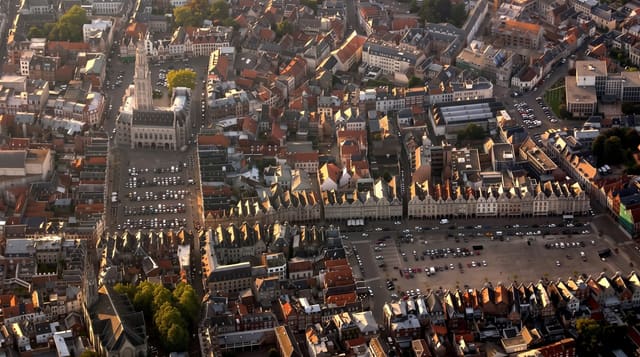
Kėdainiai belonged to the Radvila family, who as Calvinist magnates encouraged settlement by people of several confessions, and the old town preserves the result within a few streets: the Reformed church holding the Radvila mausoleum with sarcophagi in the crypt, a Lutheran church built by German craftsmen, Catholic St George's from the fifteenth century, and two surviving synagogues from a Jewish community that was substantial here for centuries and is commemorated in a museum in one of them. The Great Market square, the old apothecary and the Scottish merchants' quarter complete a compact centre restored over recent decades. Kėdainiai is also known nationally for cucumbers, celebrated with a festival. It is a straightforward stop between Kaunas and the north.
What you'll find
- The Radvila mausoleum - sarcophagi in the crypt of the Reformed church.
- Four communities' buildings - Reformed, Lutheran, Catholic and Jewish side by side.
- The Great Market square - the restored centre with its old houses.
- The synagogue museum - the multicultural centre in the old Jewish quarter.
When to go
May to September for walking the old town; the cucumber festival in July is the town's big event. Museums close on Mondays and keep short winter hours.
Before you go
The old town is small and can be walked in an hour. Several buildings are locked outside museum hours, including the mausoleum crypt. The modern town around is unremarkable. Interpretation is better than at most Lithuanian towns but still limited in English.
Nearby
Kaunas lies south; Panevėžys is north.
Key facts
Source: Wikidata, item Q12662003, read on 18 October 2026.
What to pack for Kėdainiai Old Town
Chosen from what this place is for. Tap a kit for the full checklist.
- Comfortable walking shoes - Sightseeing means kilometres of pavement and cobbles daily. Find on Amazon
- A slim anti-theft daypack - Zips that close properly; keep it in front in crowds and on transit. Find on Amazon
- A refillable water bottle - Many cities have public fountains; save money and plastic. Find on Amazon
- A light layer + compact umbrella - For museum air-con and a sudden shower. Find on Amazon
Some links on this page are Amazon affiliate links - if you buy through them we may earn a small commission at no extra cost to you.
All packing kitsPlan your trip
Where to start if Kėdainiai Old Town is going on the list.
Booking links on this page are affiliate links - if you book through them we may earn a small commission at no extra cost to you. It never changes what we write about a place.
Opening times, ticket prices and seasonal closures change - check the official source before you go: official site.