Kaunas Ninth Fort
An early twentieth-century fortress on the edge of Kaunas, kept as a memorial and museum, with a large concrete monument above it.
Updated 20 October 2026

AI illustration
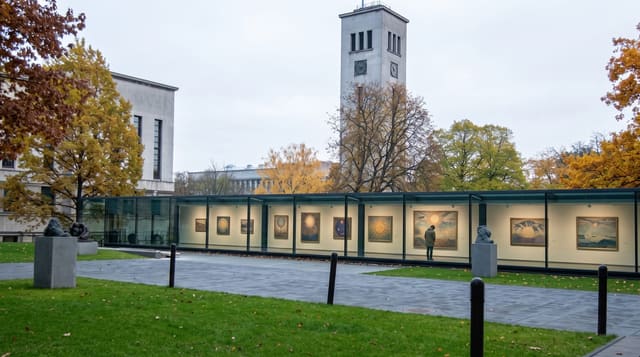
The Ninth Fort was built between 1902 and 1913 as the last of a ring of forts defending Kaunas, and it is the best preserved of them. During the 1940s it was used as a killing site, and it has been kept since as a memorial. The old brick casemates and cells are open, a museum building holds the documentation, and a concrete monument of 1984, thirty-two metres high, stands on the ridge above the fort.
History
By 1890 Kaunas was ringed by eight forts and nine gun batteries; the Ninth Fort, named after its number, was begun in 1902 and finished about a decade later, and from 1924 it was used as Kaunas Prison (Wikipedia, Ninth Fort).
What to look for
- The memorial - the vast concrete monument to the victims on the field above.
- The fort and cells - the tsarist fortress and the prison rooms.
- The museum - the exhibition on the killings and the occupations.
- The killing fields - the ground where the murders took place.
When to go
Year-round; it is a place for reflection rather than a season. Allow time and come in a frame of mind for a heavy, important visit.
Things to know
This is a Holocaust and occupation memorial, deeply sombre, and not a conventional sightseeing stop - go prepared for its weight. It sits on the edge of the city, a short trip out. Treat the whole site, especially the killing fields, with the gravity it demands.
Nearby
Central Kaunas and its modernist architecture are a short ride back; the Sugihara House tells a related story of rescue.
Key facts
Source: Wikidata, item Q665266, read on 18 October 2026.
What to pack for Kaunas Ninth Fort
Chosen from what this place is for. Tap a kit for the full checklist.
- Comfortable walking shoes - Sightseeing means kilometres of pavement and cobbles daily. Find on Amazon
- A slim anti-theft daypack - Zips that close properly; keep it in front in crowds and on transit. Find on Amazon
- A refillable water bottle - Many cities have public fountains; save money and plastic. Find on Amazon
- A light layer + compact umbrella - For museum air-con and a sudden shower. Find on Amazon
Some links on this page are Amazon affiliate links - if you buy through them we may earn a small commission at no extra cost to you.
All packing kitsPlan your trip
Where to start if Kaunas Ninth Fort is going on the list.
Booking links on this page are affiliate links - if you book through them we may earn a small commission at no extra cost to you. It never changes what we write about a place.
Opening times, ticket prices and seasonal closures change - check the official source before you go: official site.