Kaunas Modernist Architecture
The confident modernist city built when Kaunas was Lithuania's interwar capital - streets of clean 1920s and 30s architecture now on the UNESCO list.
Updated 18 October 2026

AI illustration
UNESCO World Heritage
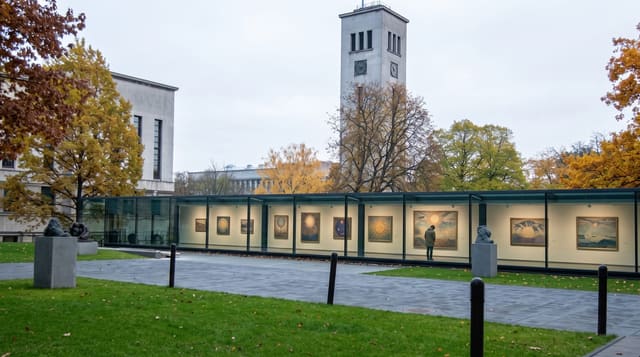
When Vilnius was lost between the wars, Kaunas became the temporary capital, and the young state built itself a modern city almost overnight. The result is a dense collection of 1920s and 30s modernist architecture, from the Christ's Resurrection church to banks, houses and the long avenue of Laisves aleja, now recognised by UNESCO.
History
Lithuania declared independence in 1918, and in 1919, with Vilnius held by Poland until 1939, the capital moved to Kaunas, until then a heavily militarised fortress town of the Russian Empire; government offices and the intelligentsia followed, and the city grew fast as people arrived from the Vilnius region and the rest of the country, taking in Žaliakalnis, Aleksotas and Vilijampolė in 1919 and Šančiai in 1932. Between 1919 and 1940 some 12,000 buildings went up in the new modernist style, among them the Officers' Club, the Central Post Office, the Church of the Resurrection and the Vytautas the Great War Museum, and Kaunas designs were copied in towns such as Klaipėda, Palanga and Šiauliai. Several of the buildings received the European Heritage Label in 2015, and on 23 September 2023 Modernist Kaunas: Architecture of Optimism, 1919-1939 became a World Heritage Site (Wikipedia, Modern architecture of Kaunas).
Highlights
- Laisves aleja - the long tree-lined pedestrian avenue lined with interwar buildings.
- Christ's Resurrection Church - the great white modernist church with a rooftop terrace.
- Bank and civic buildings - the confident architecture of the young republic.
- Modernist houses - residential streets of clean 1930s design.
When to go
Year-round, since this is architecture; low winter sun and summer greenery both flatter the facades. Guided modernism walks help decode what you are seeing.
Before you go
This is a city and a story to walk and read rather than a single ticketed sight, so a little background makes it far richer. Kaunas is workaday and less pretty than Vilnius at first glance; the reward is in the detail once you tune in. Many buildings are offices and homes, so interiors are mostly off-limits.
Nearby
Kaunas old town and castle sit at the end of Laisves aleja; the Ninth Fort and Pazaislis monastery are short trips out.
Key facts
Source: Wikidata, item Q64462328, read on 18 October 2026.
What to pack for Kaunas Modernist Architecture
Chosen from what this place is for. Tap a kit for the full checklist.
- Comfortable walking shoes - Sightseeing means kilometres of pavement and cobbles daily. Find on Amazon
- Modest clothing - Shoulders and knees covered - the single most common requirement. Find on Amazon
- Shelter suited to the place - Tent, tarp or hut booking - match it to the terrain and rules. Find on Amazon
- A slim anti-theft daypack - Zips that close properly; keep it in front in crowds and on transit. Find on Amazon
Some links on this page are Amazon affiliate links - if you buy through them we may earn a small commission at no extra cost to you.
All packing kitsPlan your trip
Where to start if Kaunas Modernist Architecture is going on the list.
Booking links on this page are affiliate links - if you book through them we may earn a small commission at no extra cost to you. It never changes what we write about a place.
Opening times, ticket prices and seasonal closures change - check the official source before you go: official site.