Tripoli
The country's second city, holding the largest concentration of Mamluk architecture outside Cairo and a soap khan still working.
Updated 20 October 2026
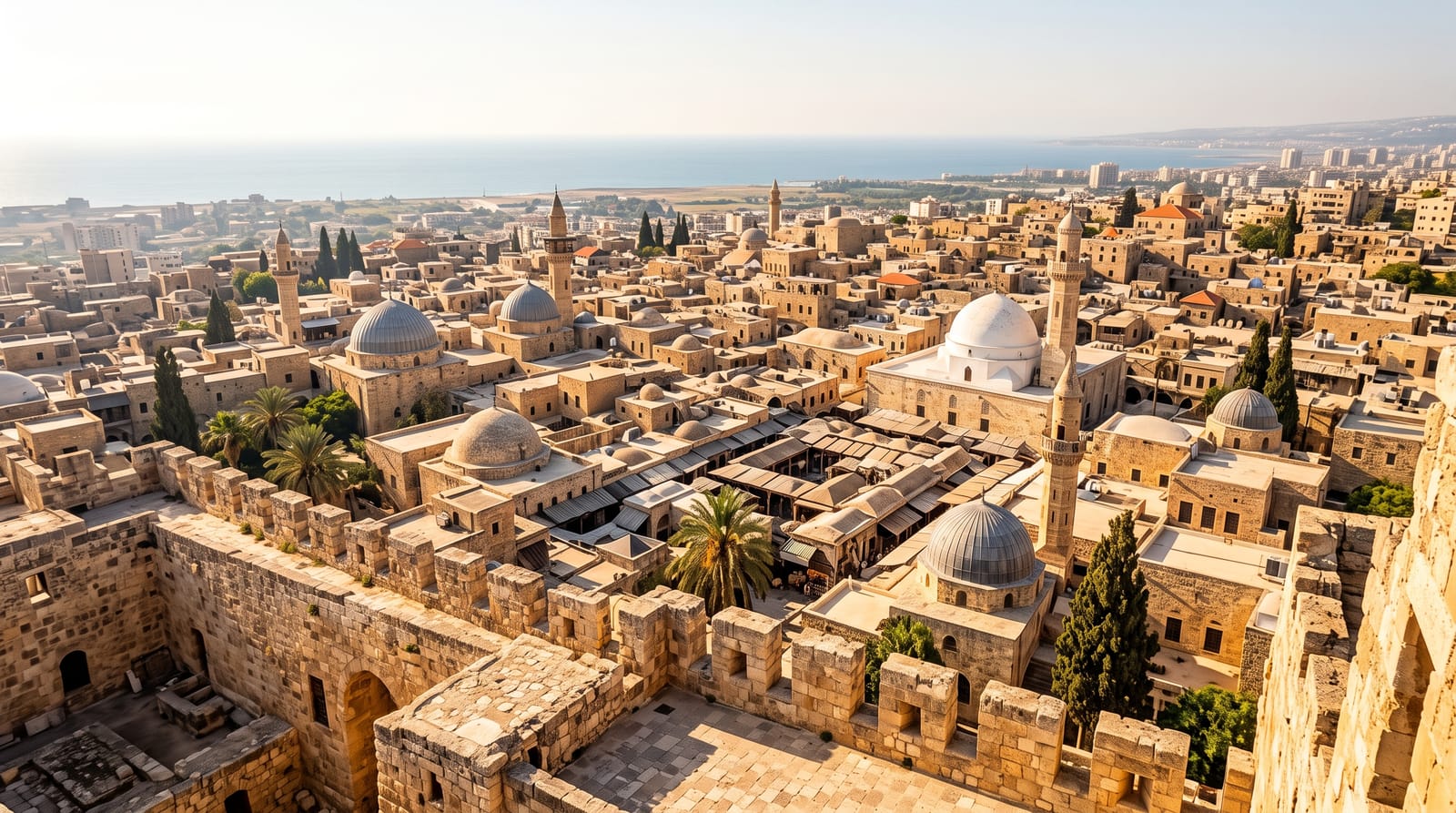
AI illustration
Tripoli's old city is a dense Mamluk quarter of madrasas, hammams, mosques and khans built in the fourteenth and fifteenth centuries, and the concentration is remarkable: dozens of listed monuments in a small area, most of them still in daily use rather than presented as sights. The souks run between them, divided by trade into gold, tailors, soap and copper, and Khan al-Saboun, the soap khan, still sells the olive oil soap the city has made for centuries. Above it all stands the Citadel of Raymond de Saint-Gilles, a Crusader fortress much rebuilt by later rulers, with a view over the whole quarter. On the coast, El Mina has a corniche, fish restaurants and boats to small offshore islands.
History
Settlement goes back to at least 1400 BC, and the city was founded as a Phoenician colony in the 8th century BC; the Phoenicians called it Athar and the Greeks Tripolis, which gave the Arabic Ṭarābulus. Under the Umayyads it became a centre of trade and shipbuilding, and under the Fatimids a centre of learning (Wikipedia, Tripoli, Lebanon).
What you'll find
- The Mamluk souks - trade-divided markets threading between madrasas and hammams.
- Khan al-Saboun - the soap khan, still producing and selling olive oil soap.
- The Citadel - the Crusader fortress above the old city, with the best overview.
- El Mina and the Palm Islands - the port quarter and boats to the offshore reserve.
When to go
Spring and autumn for comfortable walking; the old city is dense, shaded in the souks and hot in the open. Fridays change the rhythm of the quarter around prayers. Boats to the Palm Islands run in summer only.
Before you go
Tripoli receives few foreign visitors and there is very little tourist infrastructure: limited English, almost no signage on monuments, and few places set up for visitors. The old city is a working, crowded, poor quarter rather than a restored heritage zone, and many monuments are locked unless someone opens them. A local guide changes the day completely.
Nearby
Batroun and Byblos lie south along the coast; the Qadisha valley is inland.
Key facts
Source: Wikidata, item Q168954, read on 18 October 2026.
What to pack for Tripoli
Chosen from what this place is for. Tap a kit for the full checklist.
- Comfortable walking shoes - Sightseeing means kilometres of pavement and cobbles daily. Find on Amazon
- Modest clothing - Shoulders and knees covered - the single most common requirement. Find on Amazon
- A slim anti-theft daypack - Zips that close properly; keep it in front in crowds and on transit. Find on Amazon
- A scarf or shawl - To cover the head or shoulders on entry; women especially at mosques. Find on Amazon
Some links on this page are Amazon affiliate links - if you buy through them we may earn a small commission at no extra cost to you.
All packing kitsPlan your trip
Where to start if Tripoli is going on the list.
Booking links on this page are affiliate links - if you book through them we may earn a small commission at no extra cost to you. It never changes what we write about a place.
Opening times, ticket prices and seasonal closures change - check the official source before you go: official site.