Skazka Canyon
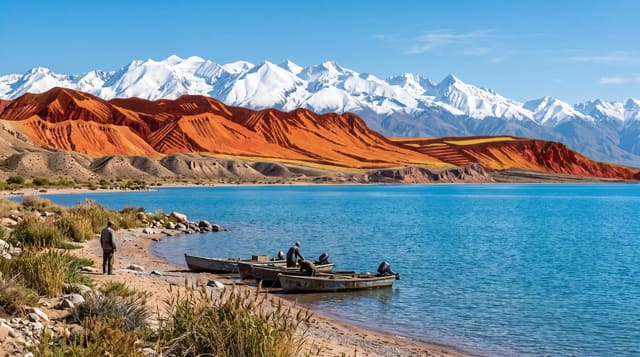
Eroded clay ridges in red, orange and purple on the south shore of Issyk-Kul, walked on narrow spines between gullies.
Updated 31 August 2026
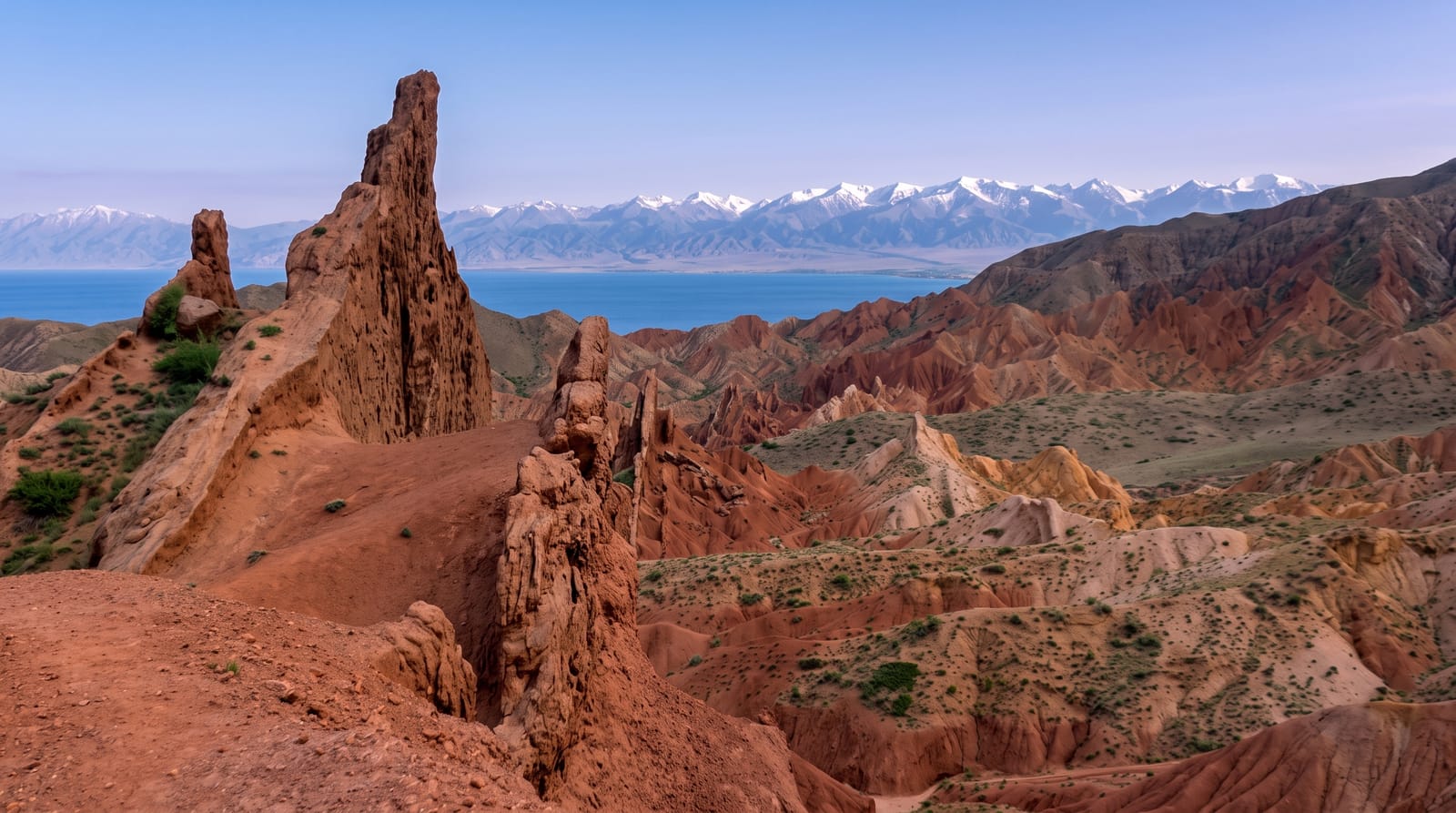
AI illustration
Skazka means fairy tale, and the name attaches to a stretch of soft clay and sandstone on the southern shore of Issyk-Kul that water and wind have cut into ridges, fins and hollows in bands of red, orange, ochre and purple. Local naming does the rest: the Great Wall, the Dragon, the Castle. It is small enough to walk in a couple of hours and disorienting enough that people lose the path regularly, since the gullies all look similar and the ridges connect in ways that are not obvious from below. The best of it is walking the narrow spines with the lake visible beyond and the Tien Shan on the far shore, especially in the last hour of light when the colour saturates.
What you'll find
- The Dragon ridge - the long serrated spine that gives the canyon its emblem.
- Coloured clay bands - red, orange and purple layers across the formations.
- The lake view - Issyk-Kul and the far mountains from the higher ridges.
- Sunset colour - the last hour, when the clay saturates.
When to go
May to October. Late afternoon is the best light by a wide margin. Avoid it during and immediately after rain, when the clay becomes greasy and the ridges genuinely dangerous.
Practical notes
The clay is slippery when wet and crumbly when dry, and the ridges have real drops with no barriers of any kind; people fall here. There are no marked paths, so getting turned around is normal. There is no shade and no water. It is a short stop rather than a destination, usually combined with the south shore drive.
Nearby
Bokonbayevo and the eagle hunters are west; Barskoon valley lies east.
Key facts
Source: Wikidata, item Q140681143, read on 18 October 2026.
What to pack for Skazka Canyon
Chosen from what this place is for. Tap a kit for the full checklist.
- Broken-in walking shoes or boots - Grip and ankle support matter more than looks; never hike in brand-new boots. Find on Amazon
- Layers + a waterproof shell - Mountain weather turns fast; a packable rain jacket saves the day. Find on Amazon
- Daypack with rain cover - 20-30 litres holds water, snacks, layers and a first-aid kit. Find on Amazon
- Offline maps + a power bank - Download the trail before you lose signal; carry backup charge. Find on Amazon
Some links on this page are Amazon affiliate links - if you buy through them we may earn a small commission at no extra cost to you.
All packing kitsPlan your trip
Where to start if Skazka Canyon is going on the list.
Booking links on this page are affiliate links - if you book through them we may earn a small commission at no extra cost to you. It never changes what we write about a place.
Opening times, ticket prices and seasonal closures change - check the official source before you go: official site.