San-Tash
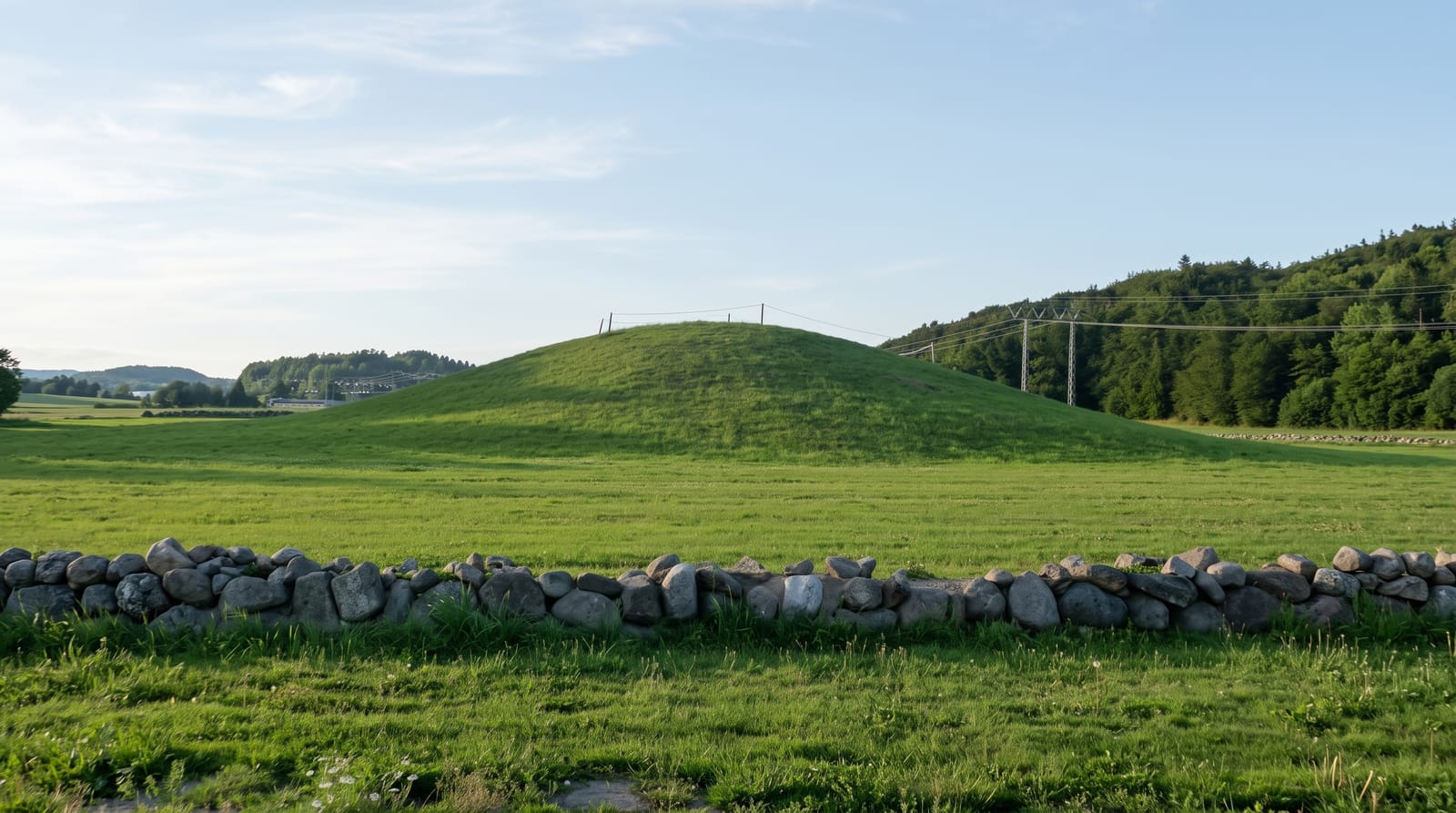
A field of stone mounds near the Karkara valley, tied by legend to Tamerlane's armies counting themselves.
Updated 31 August 2026
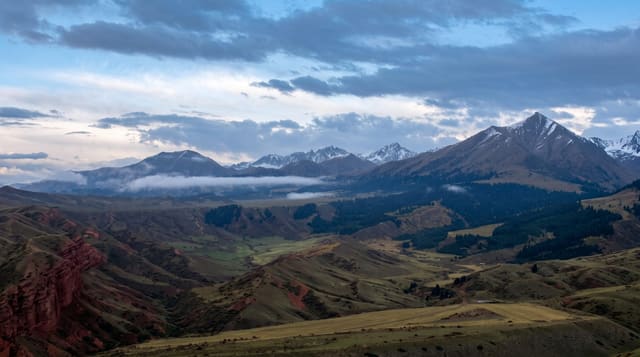
San-Tash means counting stones, and the name comes with a story: that Tamerlane, marching east, had each soldier place a stone on a pile, and on the return march take one back, so that the stones left standing counted the dead. It is a good story and it is almost certainly not the origin of what is there, which archaeologists identify as Bronze Age and Saka-period burial mounds, part of a large kurgan field on the plain between Issyk-Kul and the Karkara. What a visitor sees is heaps of stone and low earth mounds spread across open grassland with mountains behind, unfenced and unexplained beyond a sign or two. The interest is the setting and the story rather than anything visually dramatic.
The main sights
- Stone heaps - the mounds the legend is attached to.
- Kurgan field - burial mounds spread across the plain.
- Open grassland - steppe running to the ranges on both sides.
- The road east - the route toward Karkara and the Kazakh border.
When to go
May to October; the plain is snow-covered and the road difficult in winter. The site takes under an hour and is normally seen on the way to or from the Karkara valley.
Before you go
There is very little to look at: heaps of stone in a field, with minimal interpretation. The famous legend does not match the archaeology, which the signage does not clarify. There are no facilities. It works as a ten-minute stop rather than a destination.
Nearby
Karkara valley lies east; Issyk-Kul is west.
Key facts
Source: Wikidata, item Q20628885, read on 18 October 2026.
What to pack for San-Tash
Chosen from what this place is for. Tap a kit for the full checklist.
- Warm base layers - Merino or synthetic against the skin - never cotton, which chills when damp. Find on Amazon
- Comfortable walking shoes - Sightseeing means kilometres of pavement and cobbles daily. Find on Amazon
- An insulated + windproof jacket - A down or synthetic layer under a hard shell handles most cold. Find on Amazon
- A slim anti-theft daypack - Zips that close properly; keep it in front in crowds and on transit. Find on Amazon
Some links on this page are Amazon affiliate links - if you buy through them we may earn a small commission at no extra cost to you.
All packing kitsPlan your trip
Where to start if San-Tash is going on the list.
Booking links on this page are affiliate links - if you book through them we may earn a small commission at no extra cost to you. It never changes what we write about a place.
Opening times, ticket prices and seasonal closures change - check the official source before you go: official site.