Przhevalsky Museum
The grave and memorial museum of the Russian explorer who mapped Central Asia, above the eastern end of Issyk-Kul.
Updated 20 October 2026
Nikolai Przhevalsky died of typhus at Karakol in 1888 while setting out on a fifth expedition into Central Asia, and asked to be buried on the shore of Issyk-Kul. His grave is here on a bluff above the lake under a large monument topped by an eagle, with a small museum beside it holding maps, instruments, photographs and specimens from his journeys, including material on the wild horse that carries his name and which he described for science. The exhibits treat him straightforwardly as an explorer and naturalist; his role as an imperial military officer surveying territory is part of the same story and is worth knowing. The setting, in pines above the water, is calm and the museum is small and old-fashioned in a way that suits it.
History
The museum opened in 1957 to commemorate the explorer, and in its first three years it gathered about 386 exhibits, among them works and photographs from the archives of the Geographical Society (Wikipedia, Przhevalsky Museum).
What to look for
- The grave monument - the eagle-topped memorial above the lake.
- Expedition material - maps, instruments and photographs from the journeys.
- Natural history specimens - collections made on the expeditions.
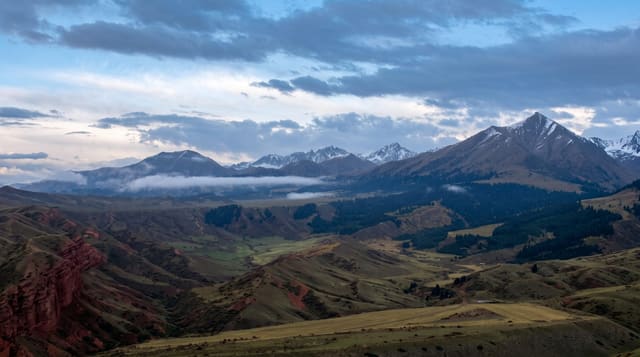
- The lakeside setting - pines and a view over eastern Issyk-Kul.
When to go
Year round; the museum is indoors and open through the winter, though hours shorten. It is a short trip from Karakol and usually combined with the town's other sights.
Practical notes
The museum is small and dated, with labelling mainly in Russian. It presents its subject in a celebratory register that skips the imperial context. The site takes under an hour. The lake view from the bluff is partly obscured by trees.
Nearby
Karakol lies south; the eastern shore road runs both ways.
Key facts
Source: Wikidata, item Q84737709, read on 18 October 2026.
What to pack for Przhevalsky Museum
Chosen from what this place is for. Tap a kit for the full checklist.
- Comfortable walking shoes - Sightseeing means kilometres of pavement and cobbles daily. Find on Amazon
- Shelter suited to the place - Tent, tarp or hut booking - match it to the terrain and rules. Find on Amazon
- A slim anti-theft daypack - Zips that close properly; keep it in front in crowds and on transit. Find on Amazon
- A warm sleeping bag + mat - Rated a little colder than you expect the nights to be. Find on Amazon
Some links on this page are Amazon affiliate links - if you buy through them we may earn a small commission at no extra cost to you.
All packing kitsPlan your trip
Where to start if Przhevalsky Museum is going on the list.
Booking links on this page are affiliate links - if you book through them we may earn a small commission at no extra cost to you. It never changes what we write about a place.
Opening times, ticket prices and seasonal closures change - check the official source before you go: official site.