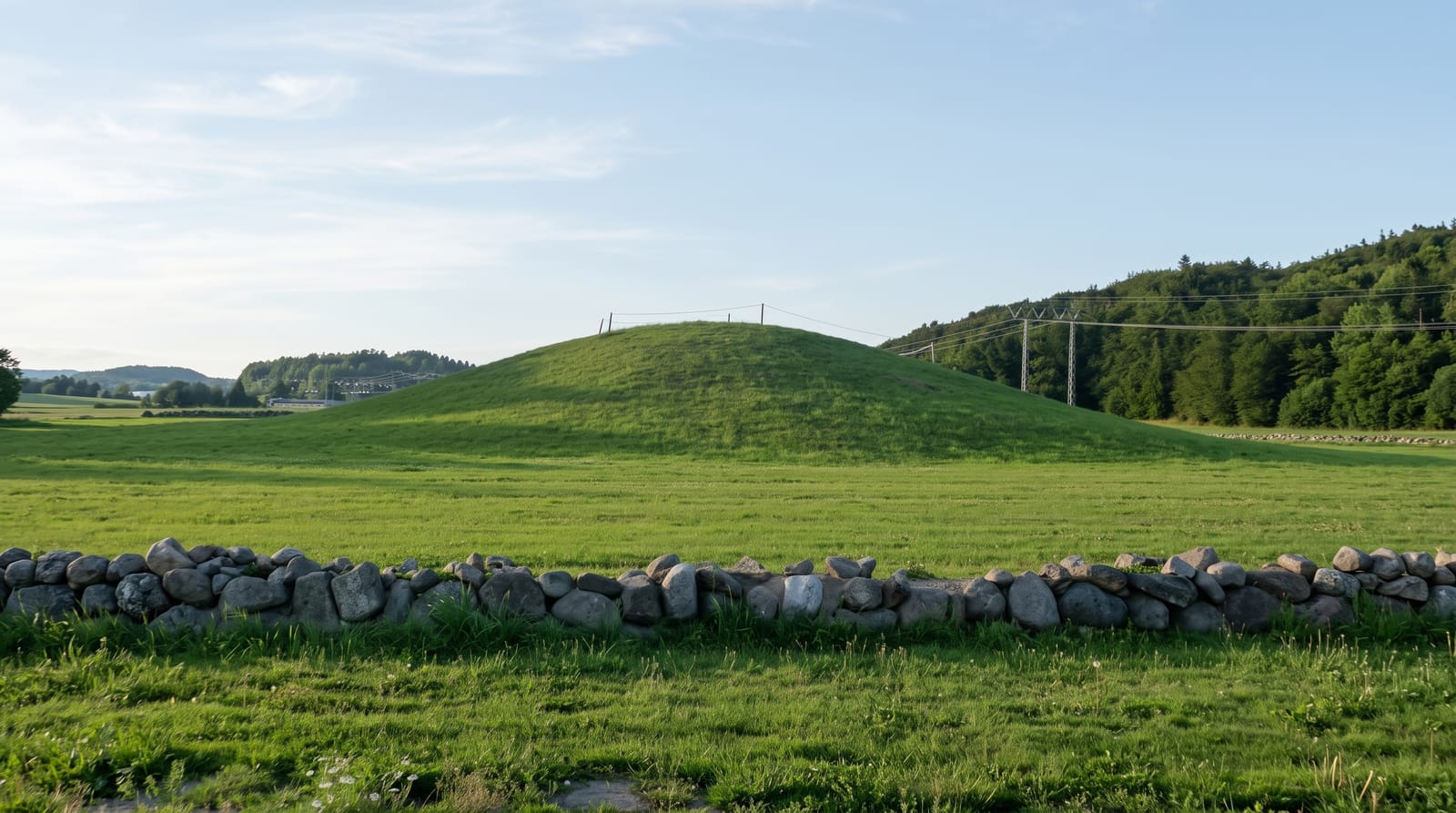
Berel Kurgans
Scythian-era burial mounds in the Bukhtarma valley where permafrost preserved horses, textiles and woodwork.
Updated 14 October 2026
The Berel cemetery in the Bukhtarma valley holds around seventy burial mounds of the Pazyryk culture, the Scythian-related horse nomads of the Altai, dating to roughly the fourth and third centuries BC. Their importance is preservation: water that entered the burial chambers froze into a permanent lens of ice within the mound, and the resulting permafrost kept organic material that normally rots, so excavations from 1998 onward recovered horses buried with elaborate harness and antlered headdresses, wooden and leather objects, felt and textiles, and the timber structure of the chambers themselves. Finds are in museums in Astana and Oskemen; a site museum and reconstructed mound stand in the valley.
The main sights
- The mound field - the line of kurgans across the valley floor.
- The excavated mound - the opened and displayed burial structure.
- The site museum - the explanation of the frozen tombs and their contents.
- The Bukhtarma valley - the Altai setting of the cemetery.
When to go
June to September, when the valley road is open; the area is snowbound in winter. Excavation seasons run in summer and work is sometimes visible. The site museum keeps limited hours.
Good to know
The major finds are in museums elsewhere, not on site. What remains is mounds in a field with limited interpretation. The valley is a long drive from Oskemen. Border zone permit requirements apply to parts of the area.
Nearby
Rakhmanov Springs lie up the valley; Katon-Karagay is west.
Key facts
Source: Wikidata, item Q25514691, read on 18 October 2026.
What to pack for Berel Kurgans
Chosen from what this place is for. Tap a kit for the full checklist.
- Comfortable walking shoes - Sightseeing means kilometres of pavement and cobbles daily. Find on Amazon
- A slim anti-theft daypack - Zips that close properly; keep it in front in crowds and on transit. Find on Amazon
- A refillable water bottle - Many cities have public fountains; save money and plastic. Find on Amazon
- A light layer + compact umbrella - For museum air-con and a sudden shower. Find on Amazon
Some links on this page are Amazon affiliate links - if you buy through them we may earn a small commission at no extra cost to you.
All packing kitsPlan your trip
Where to start if Berel Kurgans is going on the list.
Booking links on this page are affiliate links - if you book through them we may earn a small commission at no extra cost to you. It never changes what we write about a place.
Opening times, ticket prices and seasonal closures change - check the official source before you go: official site.