Sadu House
Bedouin weaving kept alive - the courtyard house where Kuwait's Al Sadu geometric textile art is woven, taught and honoured.
Updated 20 October 2026

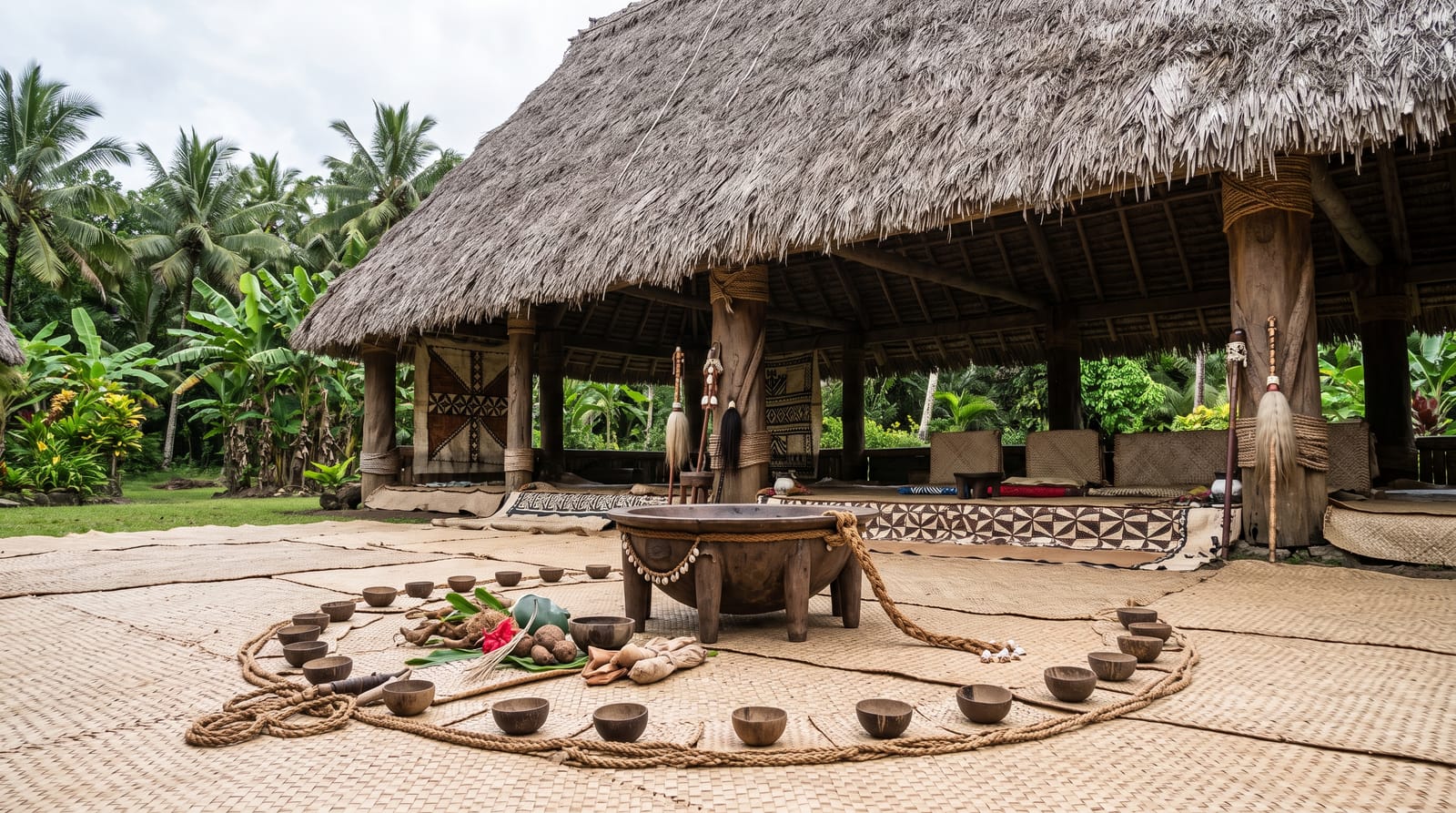
AI illustration
UNESCO Intangible Cultural Heritage
Al Sadu is the desert's geometry: the tight, warp-faced weaving Bedouin women worked on ground looms from goat hair and sheep's wool, patterning tent dividers, camel trappings and saddle bags in red-black-white bands whose motifs carried tribal identity across the sands. Sadu House - a coral-and-gypsum courtyard building by the sea - is the craft's guardian in Kuwait, running a weavers' cooperative, classes and exhibitions since 1980; UNESCO lists the tradition on its intangible-heritage rolls. Visitors watch weavers at the looms, read the motifs' meanings, and buy work whose proceeds sustain the women who make it.
History
The first house here, of mud, was ruined in the floods of 1936, and Youssef Al-Marzouq built the present one that year; it passed to Shereen Behbehani in 1938, the state bought it in the 1970s, and in 1980 the Al Sadu Society made it the home of Bedouin weaving, with 300 weavers registered by 1984 (Wikipedia, Sadu House).
Highlights
- The weavers at work - ground looms and flying shuttles in the courtyard rooms.
- The motif collections - pattern languages of the tribes explained.
- The house itself - coral-stone Kuwaiti architecture by the Gulf.
- The cooperative shop - textiles that fund the tradition's keepers.
When to go
Year round on weekday mornings for the best chance of weavers at the looms; exhibitions rotate through the cool season. Pair with the National Museum next door.
Good to know
It is a small, quiet institution - an hour or two of focused interest, not a spectacle; visitors expecting a large museum will find a living workshop instead, which is the better thing. Demonstration schedules vary - the looms may stand idle on quiet days. Prices in the shop reflect handwork, fairly.
Nearby
The National Museum, the Grand Mosque and the old souq quarter.
What to pack for Sadu House
Chosen from what this place is for. Tap a kit for the full checklist.
- Loose, light, long clothing - Covering up beats bare skin in the desert - and locals dress this way for a reason. Find on Amazon
- Comfortable walking shoes - Sightseeing means kilometres of pavement and cobbles daily. Find on Amazon
- Modest clothing - Shoulders and knees covered - the single most common requirement. Find on Amazon
- A wide-brim hat + sunglasses - Shade for your face and eyes where there is none overhead. Find on Amazon
Some links on this page are Amazon affiliate links - if you buy through them we may earn a small commission at no extra cost to you.
All packing kitsPlan your trip
Where to start if Sadu House is going on the list.
Booking links on this page are affiliate links - if you book through them we may earn a small commission at no extra cost to you. It never changes what we write about a place.
Opening times, ticket prices and seasonal closures change - check the official source before you go: official site.