The Gede Ruins
A lost Swahili town of coral-stone houses, mosques and a palace, swallowed by forest near the coast and abandoned for reasons still unknown.
Updated 31 August 2026
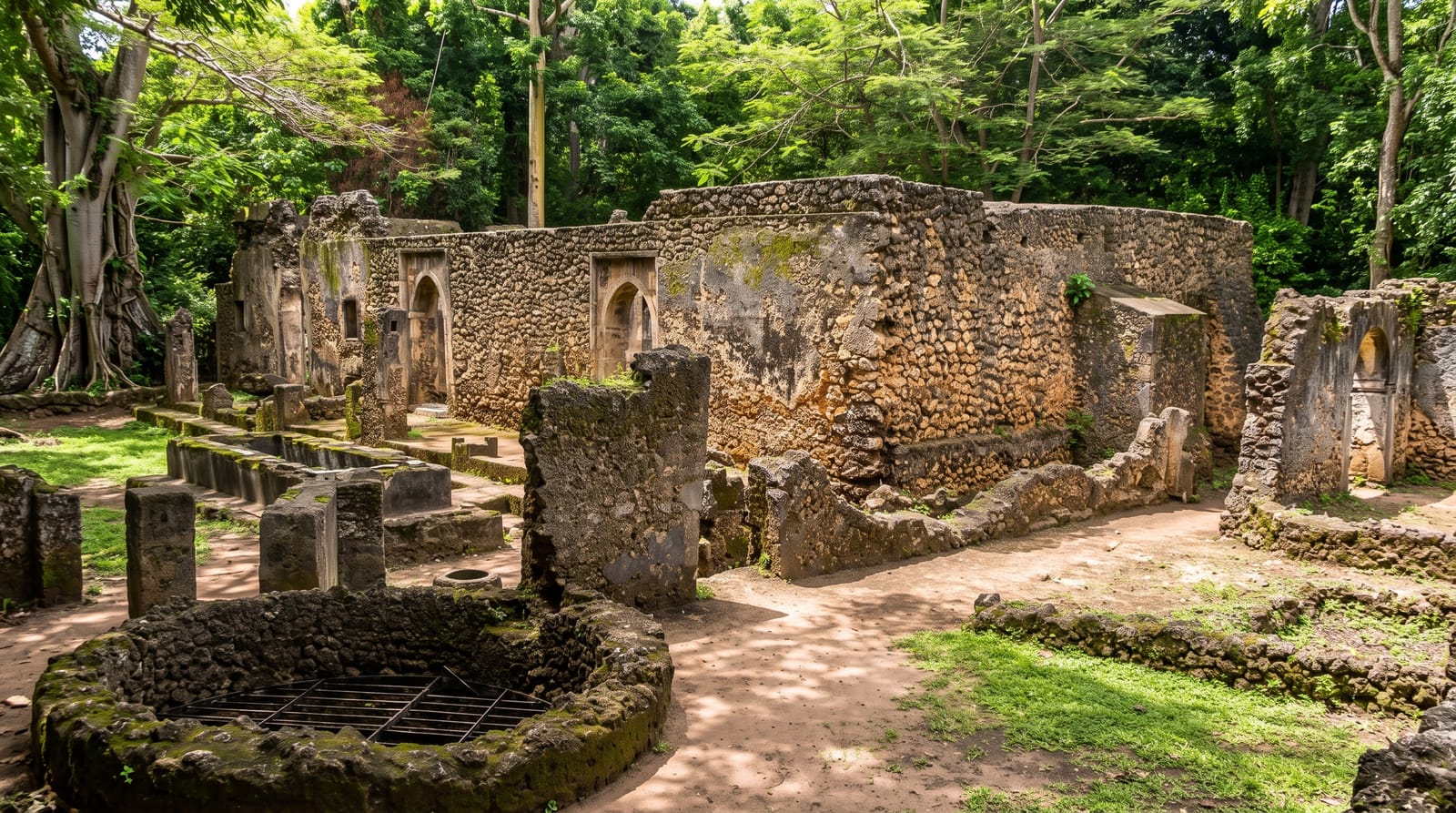
AI illustration
Gede was a prosperous Swahili town from around the thirteenth century, built of coral rag and lime in the style of the whole East African coast, with a great mosque, a palace, pillar tombs and streets of courtyard houses, trading in beads, porcelain and glass that came from as far as China and Persia, fragments of which have been dug up here. Then, some time in the seventeenth century, it was abandoned, and no one is certain why, with theories ranging from a falling water table to raids from neighbours. The forest closed over it, and what you walk through now is a ruin held in the roots of enormous baobabs and fig trees, with troops of golden-rumped elephant shrews rustling in the leaf litter and monkeys overhead. It is atmospheric in a way that a cleared site would not be, and a guide brings the town's layout and trade to life.
What's there
- The Great Mosque - the town's main mosque, its mihrab and columns still standing.
- The palace - the courtyards, audience hall and store rooms of the ruler's compound.
- The pillar tombs - the distinctive Swahili tomb form found along this coast.
- The forest - baobabs and figs growing through the walls, with elephant shrews below.
When to go
October to March is drier and more comfortable; the forest keeps the site shaded and cooler than the open coast at any time. Mornings are best for wildlife in the trees and for the light through the canopy. Guides wait at the entrance and are worth taking.
Practical notes
Without a guide the ruins read as low coral walls in the trees and the story is easy to miss, so take one. Paths are uneven and can be muddy after rain, and mosquitoes are present in the shade. The small site museum is modest. It is a half-day at most, and works best combined with the Watamu coast or the Arabuko-Sokoke forest next door.
Nearby
Watamu's beaches and Mida Creek are minutes away; Arabuko-Sokoke forest adjoins the site.
What to pack for The Gede Ruins
Chosen from what this place is for. Tap a kit for the full checklist.
- Reef-safe sunscreen - High SPF that will not bleach the coral you are swimming over. Find on Amazon
- Binoculars - The single best wildlife tool - even a compact pair transforms a sighting. Find on Amazon
- Comfortable walking shoes - Sightseeing means kilometres of pavement and cobbles daily. Find on Amazon
- Modest clothing - Shoulders and knees covered - the single most common requirement. Find on Amazon
Some links on this page are Amazon affiliate links - if you buy through them we may earn a small commission at no extra cost to you.
All packing kitsPlan your trip
Where to start if The Gede Ruins is going on the list.
Booking links on this page are affiliate links - if you book through them we may earn a small commission at no extra cost to you. It never changes what we write about a place.
Opening times, ticket prices and seasonal closures change - check the official source before you go: official site.