Sumo in Ryogoku
The heartland of Japan's ancient wrestling - tournament thunder at the Kokugikan, morning practice in the stables and chanko in the streets around.
Updated 29 August 2026
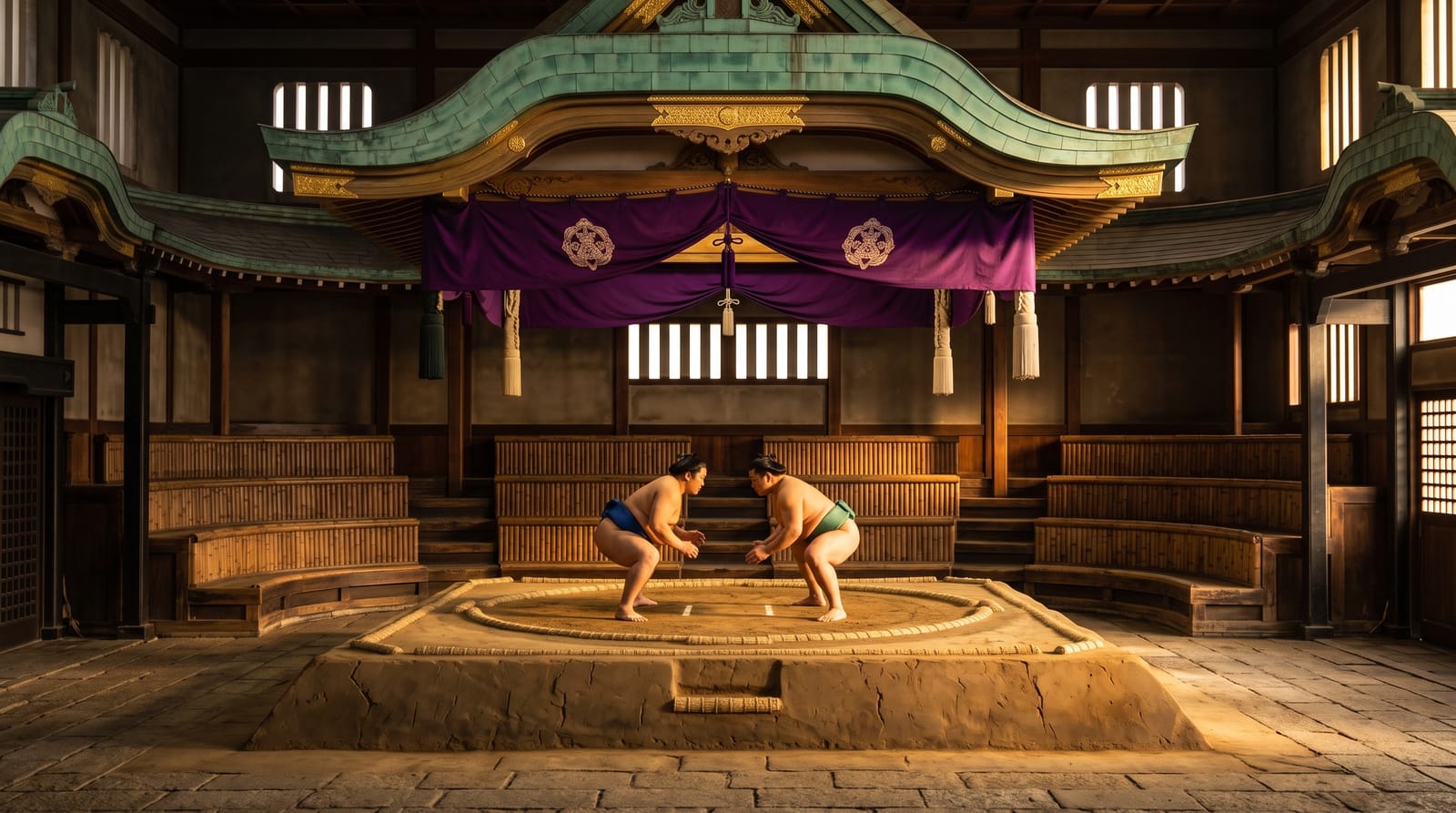
AI illustration
Sumo is older than almost anything else Japan still performs - a wrestling rite with Shinto roots in which two giants collide on a clay ring after minutes of salt-throwing, leg-stamping ceremony - and Ryogoku, east of the Sumida River, is its capital. The Kokugikan arena hosts three of the year's six grand tournaments, in January, May and September: fifteen days each, building from teenage hopefuls at dawn to the top division's silk-aproned ring-entering ceremony and the day's final bouts as the arena fills to a roar. The district wears the sport openly - wrestlers in yukata and topknots cycling to practice, stable buildings on quiet blocks, statues and banner-hung lanes, and restaurants ladling chanko-nabe, the protein stew of the training table. Between tournaments, guided morning visits to training stables show the brutal choreography of practice up close.
What to look for
- A tournament day - salt, ceremony and collisions building to the finale.
- The ring-entering ceremony - the top division's embroidered silk parade.
- Morning practice - stable training watched in disciplined silence.
- Chanko-nabe - the wrestlers' stew served across the district.
When to go
Tokyo's tournaments run fifteen days each in January, May and September - the last hours of each day, roughly 3.30 to 6 pm, carry the top bouts and the atmosphere. Outside tournaments, book a reputable stable-visit tour for morning practice.
Things to know
Good tournament seats sell out fast online - the cheapest arena-top seats are honest value, while ringside means accepting occasional airborne wrestlers. A full day is long; arriving mid-afternoon for the top division is the local's move. Stable practice has strict etiquette - silence, stillness, no flash - and tours enforcing it are worth their fee.
Nearby
The Sumida riverbanks, Tokyo Skytree and Asakusa's temple quarter across the river.
What to pack for Sumo in Ryogoku
Chosen from what this place is for. Tap a kit for the full checklist.
- Padded shorts - The one thing that makes a full day in the saddle bearable. Find on Amazon
- Comfortable walking shoes - Sightseeing means kilometres of pavement and cobbles daily. Find on Amazon
- Modest clothing - Shoulders and knees covered - the single most common requirement. Find on Amazon
- Helmet - Bring your own if you have a good one; rentals vary wildly. Find on Amazon
Some links on this page are Amazon affiliate links - if you buy through them we may earn a small commission at no extra cost to you.
All packing kitsPlan your trip
Where to start if Sumo in Ryogoku is going on the list.
Booking links on this page are affiliate links - if you book through them we may earn a small commission at no extra cost to you. It never changes what we write about a place.
Opening times, ticket prices and seasonal closures change - check the official source before you go: official site.